
What Worldview Soil Does Your Life Grow In
One of my closest friends gave me a scare when showing me the metal content in his garden, before letting me know he was smart enough to test the soil before testing the fruits of the soil. Evidently the previous owner buried huge amounts of automotive and other metalwork projects in his backyard. After digging up a few surprising artifacts, my friend had his soil and plants tested, and entirely disposed of the garden and soil upon finding every plant saturated with the same toxic contaminants. Filling in the excavated ground with proper nutrient-rich soil, his family became able to partake in the healthy produce.
Because a worldview is the set of beliefs we have about reality – how we think the world works and what is our place in it – it is the soil from which our thoughts, choices, responses, priorities, goals and direction in life are rooted in. If the worldview soil is filled with nutrients of accuracy or truth, you will have the harvest you expected. If the worldview soil is contaminated with inaccuracies, then our thoughts, values, goals and further beliefs, being rooted into the inaccuracies, bring the toxic taint into the produce of our lives, eventually sprouting unhealthy choices, behaviors and direction in life.
While the plants may grow almost entirely normal, the unseen toxins are still present and will still have consequences. The produce from your worldview soil will develop sometimes acute and immediate, and other times chronic and late-onset, tainted, wilted, and toxic results in your life.
Actually, You Start with Only 4 Types of Worldviews
Many assume determining truth about worldview beliefs is impossible, feeling overwhelmed by so many worldviews, so many opinions, so much information and misinformation. This is where my unique background, with advanced degrees in both physics and education leadership, allows me to understand and present this challenging topic in a straightforward way to determine the reliability, or lack thereof, of each worldview foundation.
Sure, there are many different worldview beliefs, which is to be expected as there are as many different belief systems as there are different human desires for what they want to believe. Nevertheless, there are only four general worldview types to consider.
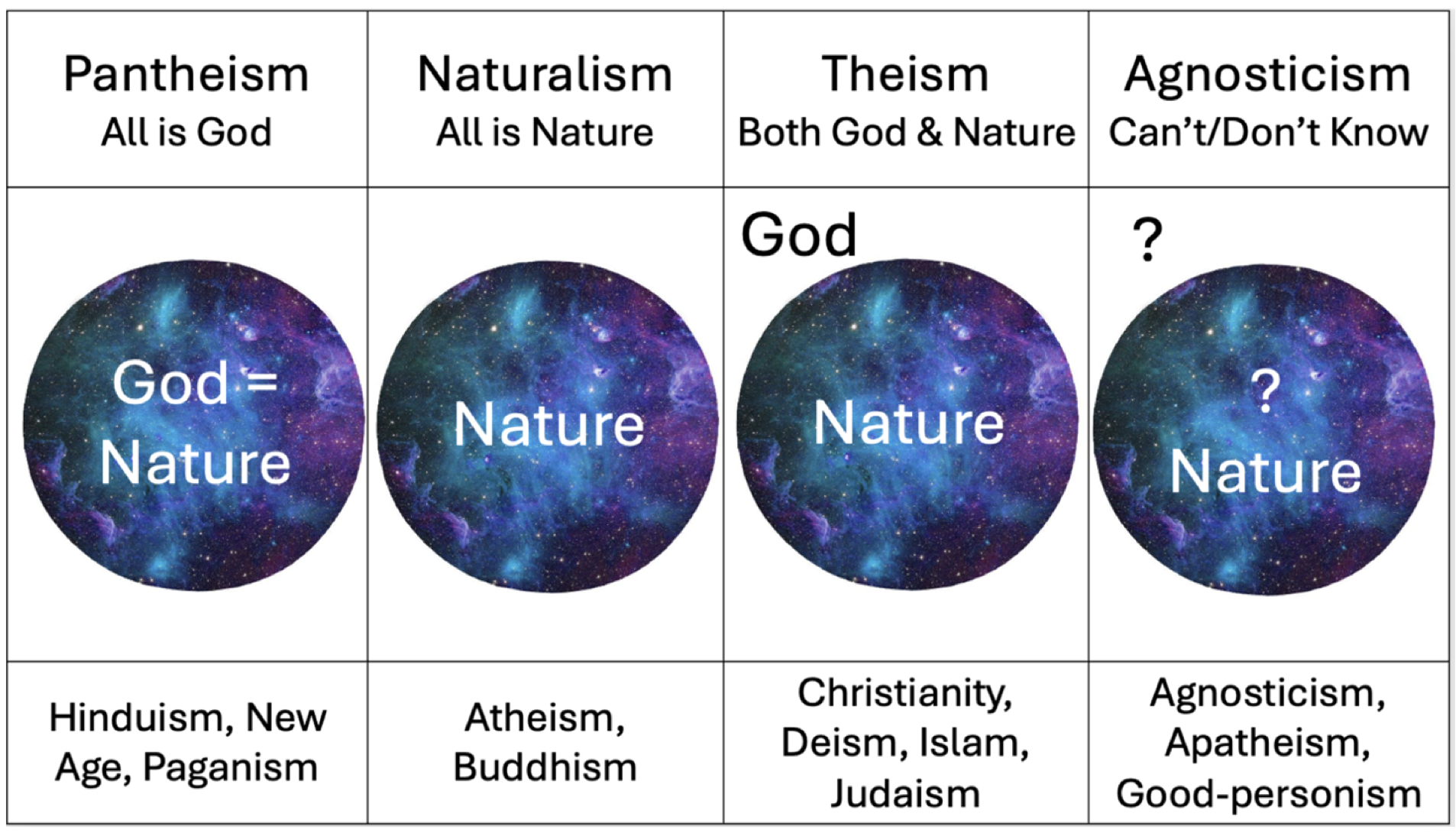
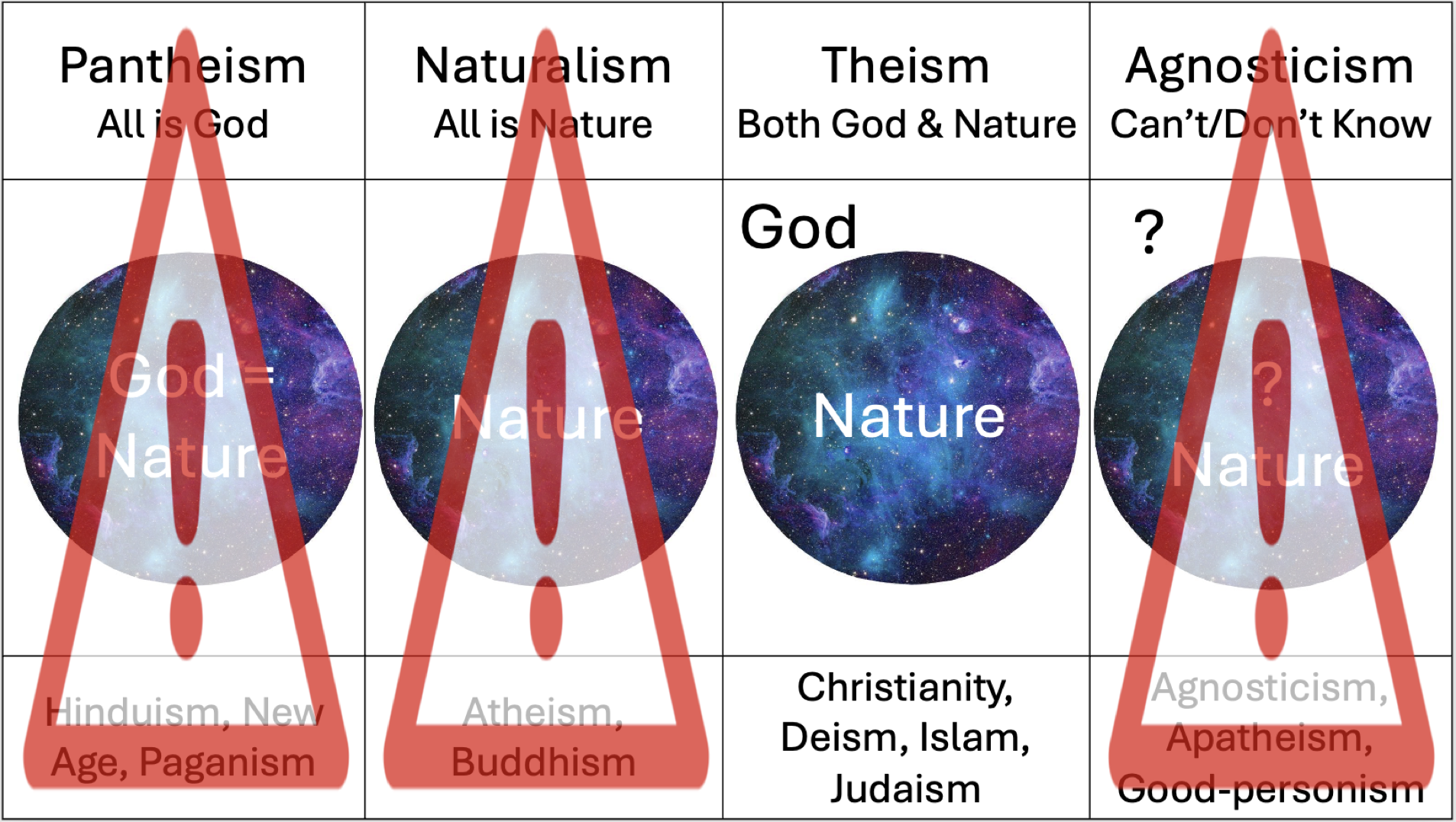
- Pantheism claims God and nature – all that exists – are one and the same.
- Naturalism or Materialism claims nature is all that exists, there is no God.
- Theism claims God exists independently from nature.
- Agnosticism claims we cannot know, or I currently do not know if God exists or not.
Examples of the main worldviews included in each category are at the bottom. An example of a belief system not precisely fitting in the four categories is Mormonism, yet, these four divisions still work as we will see later in this post.
The foundation, ground, or soil of any worldview is composed of its answers to what has come to be known as the “big questions” of life because these answers are what our thoughts, choices, values, etc., are rooted to, and so determine how we view and respond to the world.
- Origin: Where did the Universe come from? Does God exist?
- Meaning: Why are we here? What is our purpose?
- Human Condition and Choice: What is the human position and experience in the Universe? Are there choices that are universally best for us?
- Destination: Where are we headed? Is there something beyond this life?
Therefore, whether you can trust what grows from your worldview entirely depends upon whether its answers to those questions are accurate, or not. The worldview soils have already been tested, and now we will look over the results.
Why Should I Care? Can We Even Know Truth about Worldview Beliefs?
Before investing ourselves seeking answers, we first have to show this choice of worldviews is serious enough to make your investment necessary, and also that truth (whether a belief is accurate and safe, or inaccurate and dangerously unreliable) can be found.
If you want good motivation to seek answers about the accuracy of worldview beliefs, or want to expose foundational insecurity in Agnostic beliefs, or those claiming their worldview will not impact them much, then this is explained in the blogs found in the Why Should I Care and How Can I Know the Truth sections of the website:
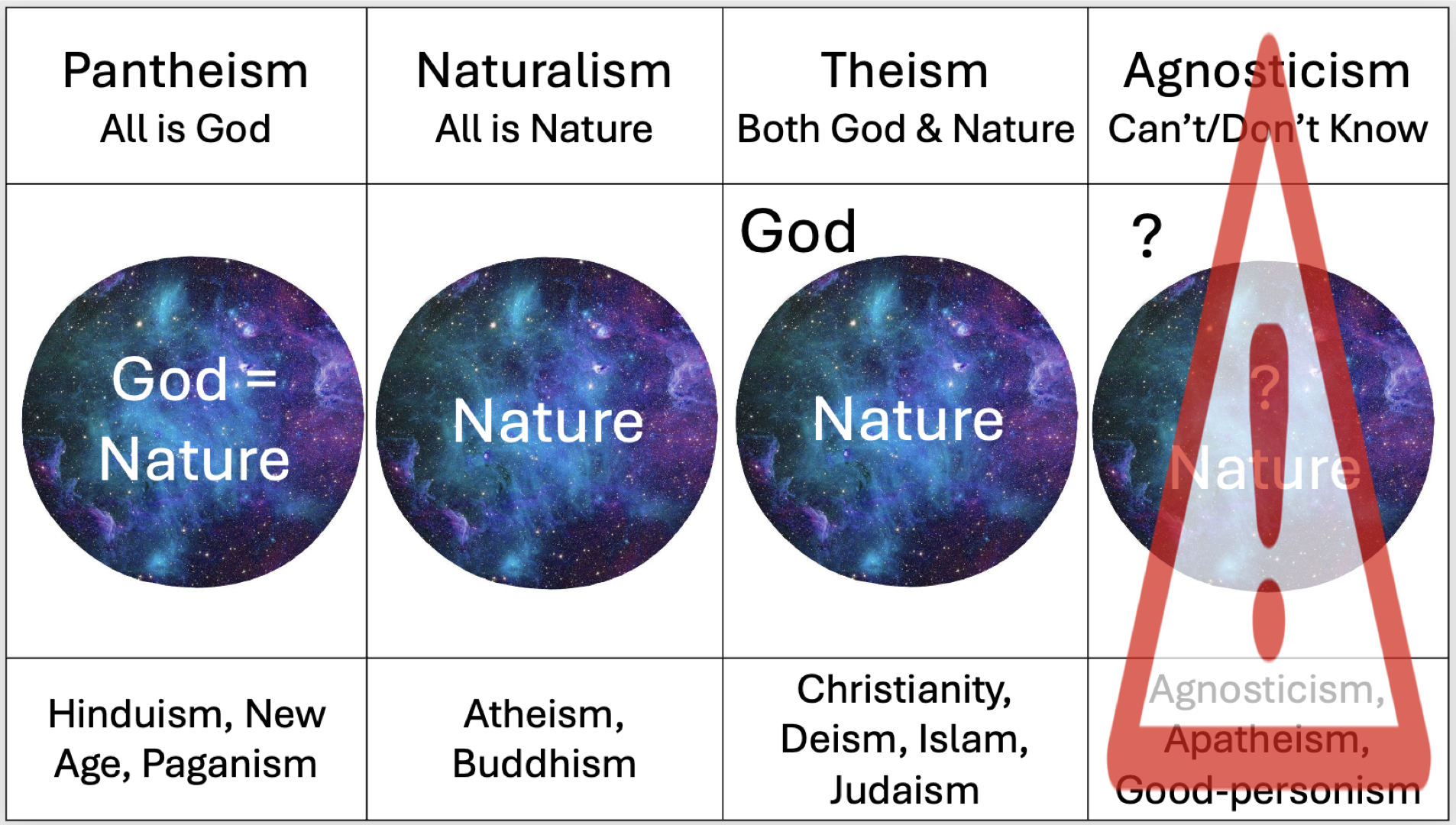
Does this mean agnosticism is proven false? No, but there are serious warning signs worldviews in the agnosticism category are inaccurate and dangerous to stand upon. The core or foundational belief in the category of agnosticism shows demonstrable, if not terminal cracks in the foundation. And there better not be more evidence against agnosticism, but there is …
ORIGIN – Where did it all come from? Does God exist?
If your choice of worldview is serious, and truth can be known, then what is the next step? 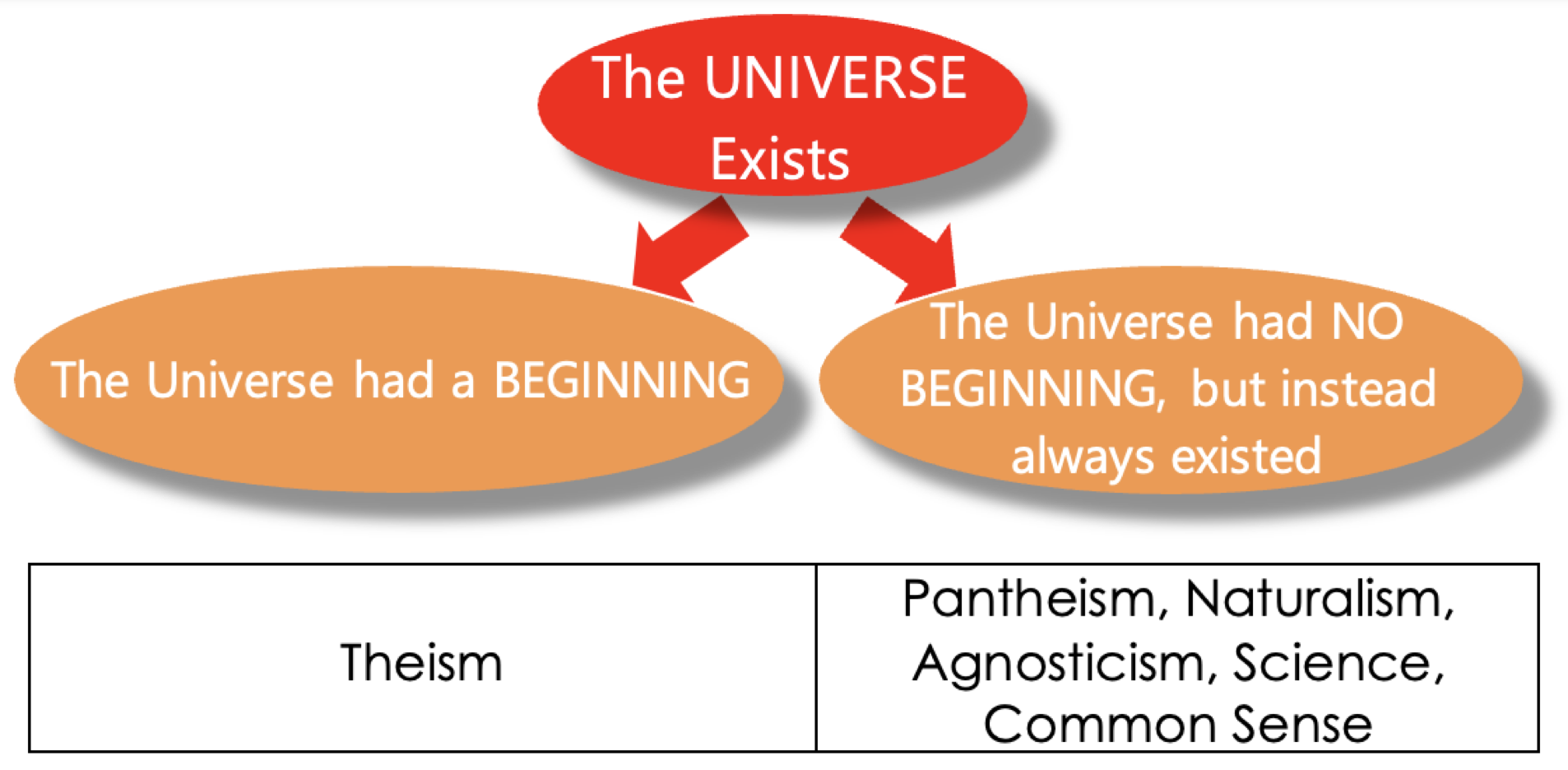
A logical place to begin is the beginning. All the different worldviews gave their respective answers to where it all came from. Even Mormonism, which does not precisely fit in one of the four worldview categories, still fits precisely in the box claiming the Universe is eternal without a beginning. Mormonism teaches our God was just a human like us, but lived the perfect Mormon life and therefore became a God of his own planet. And while he was human, our God had a God, and that God had previously lived right enough as a human to become a God and populate his own planet. And this process goes back infinitely in the past within our Universe. This chain of Gods goes back for eternity, and like Pantheist beliefs, Mormons believe all that exists is nature and the Gods that are a part of nature, even though Mormon Gods are not “one with the Universe”. Therefore, Mormonism and Pantheism claim nature and the Gods that are part of nature, or are “one with nature”, have existed eternally with no beginning and with nothing existing beyond.
If the Universe exists, then either the Universe had a beginning, or did not and is eternal. Only two options for us to choose from – simple. Even better, before all the evidence came in, every worldview provided an answer to this big question of our origins, and the worldviews divided clearly on this answer. Theist beliefs based on the Bible claimed there was a beginning, every other belief system, as well as science up to modern times and common sense throughout history all claimed there was no beginning; the Universe always existed and there was nothing beyond it.
Only two possible answers, simple, and the evidence makes the answer simple. All the evidence science has found confirms the Universe, all matter, energy, space, time, all nature, had a beginning. What does this mean?
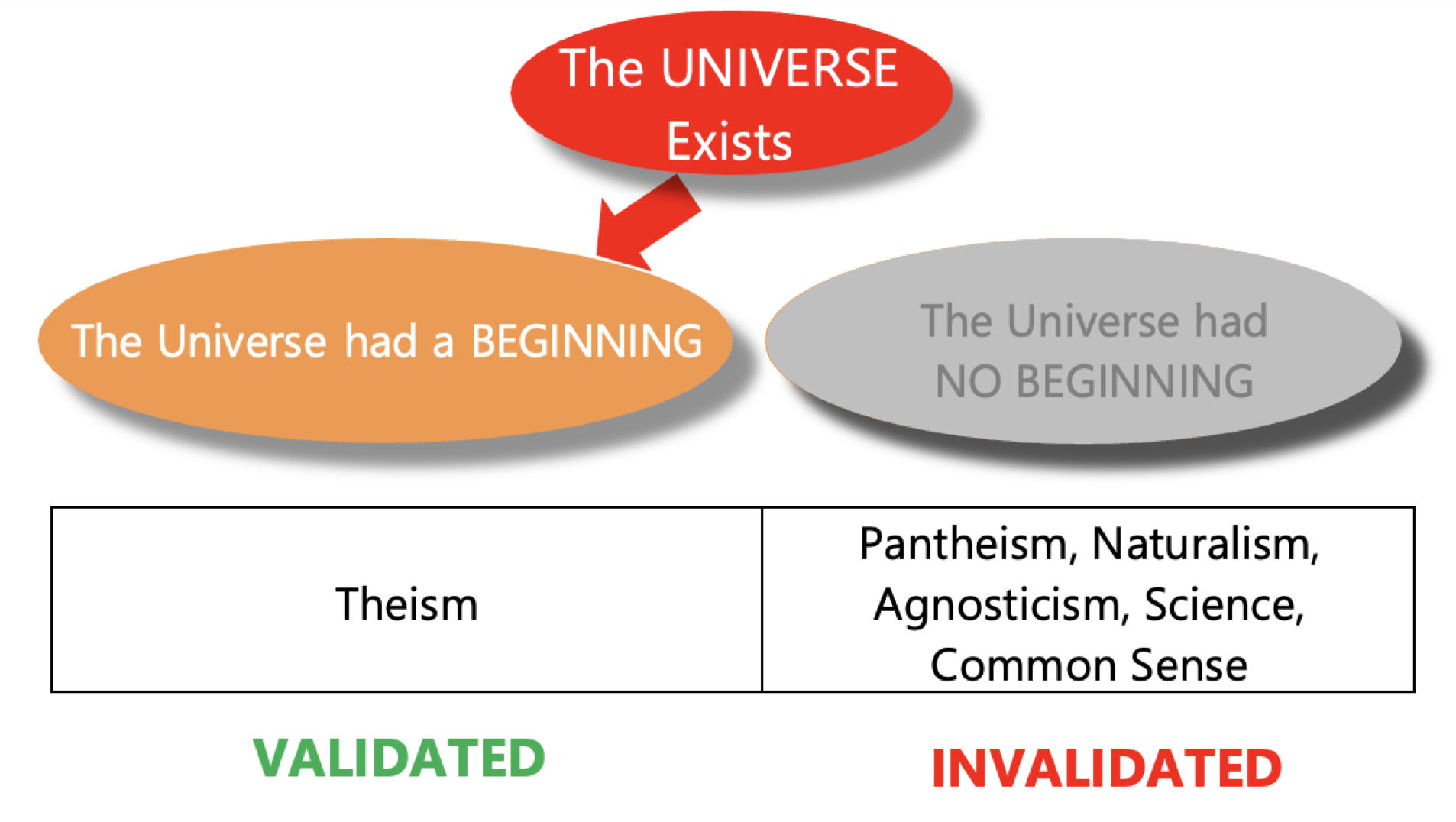
The question of where it all came from (our origin, and does it involve God) is the foundational question the other big questions are built upon. While every other belief system was INCORRECT on the most foundation-building answer, does it prove all these worldviews are false? No. But it does significantly shake their foundations providing serious warning of unreliability. Even if those having faith in these worldviews pivot and accept the beginning of the Universe now, there is no escape their worldview foundation has this substantial crack, and filling this crack with new ideas after the contradictory facts were discovered, cannot remove the crack of unreliability. Especially considering biblical theism was accurate, and simultaneously brought unequalled evidence of an intelligence beyond the knowledge capacity of humanity being involved with the Bible.
This hard evidence, from some of the greatest discoveries of modern science, breaks through all the opinions, perspectives, and beliefs to do an astronomical amount of damage to every worldview not based on the Bible. Simultaneously, the evidence provides support not only for biblical claims for the cause of the Universe, but also unparalleled evidence there is a God, or at least an immaterial, personal, purposeful Creator beyond all nature. The evidence and explanations are explained in the Show Me the Evidence: Science section of the website, primarily those blogs listed in the chart.
Therefore, the points made in these blogs are especially useful to do the following:
- Expose a foundational problem with every non-biblical worldview
- Respond to any challenge against the Bible, because if there is a God involved in the Bible, any other question or criticism becomes secondary
- Provide reasons from science to believe the accuracy of the biblical worldview
PURPOSE – Why are we here? What is the meaning or purpose of life, my life?
Again, only two options. Whether a piece of wood, electronic device, or a person, there may be a number of purposes something can serve, but to know its ultimate, objective or true purpose for which it was created – you must ask the creator. If humanity is simply the result of nature + chance, then unthinking, impersonal nature is incapable of providing universal or ultimate purpose as nature neither knows nor cares, meaning each person is left to choose purposes for their life.
Even further, if nature is all there is, then every atom and all activity in your brain is 100% controlled by antecedent conditions (how the system, your brain, began before the activity) and natural laws. As a result, even though you think you have some freedom to think, choose, act, love and believe what you want – you are wrong – science, logic and leading experts in diverse fields of study have determined if nature is all there is, then all things in your life are absolutely controlled, and not by you. This is no exaggeration, this is the fact of the matter.
On the contrary, if there is a personal and purposeful creator of the Universe, then only this creator is in the position to know and enforce what the ultimate meaning and purpose for life is, and can choose to communicate and encourage our reaching it. Not only are we capable of free will as there is a part of us, a spiritual component, existing beyond nature and natural laws if theism is true, but also we have both ultimate purpose and secondary purposes we choose in life.
Just because one option sounds more comfortable or nicer than the other is not evidence it is true. Yet, the actual evidence applying to this question is so well-established and vast, if you are betting your life’s foundation on there not being a personal, purposeful creator of the Universe – you are making an unimaginably bad bet – as science combined with mathematics can be used to calculate the odds of this bet.
Stephen Hawking states: “Though we feel we can choose what we do, our understanding of the molecular basis of biology shows that biological processes are governed by the laws of physics and chemistry and therefore are as determined as the orbits of the planets.” (Stephen Hawking, Grand Design, pp. 31-32)
Francis Crick, co-discoverer of helical structure of DNA, accurately in-line with the no-god-involved belief observes: “You, your joys and your sorrows, your memories and your ambitions, your sense of personal identity and free will, are in fact no more than the behavior of a vast assembly of nerve cells and their associated molecules.” (Francis Crick, The Astonishing Hypothesis, 1994, p. 3)
An Agnostic cannot know their purpose as they do not know whether Atheism (no purpose) or Theism (ultimate purpose) is correct. Atheism recognizes there is no freedom for a person to even “choose” a purpose. Pantheism must accept the same strange conclusion as Atheism because if God and nature are one and the same, then even a supposed God would be 100% controlled by nature and natural laws.
While science does not like using the terms “proven” or “disproven”, based on the evidence, SCIENCE DOES CLEARLY RECOGNIZE WHEN A CLAIM IS REASONABLE, OR ASTRONOMICALLY UNREASONABLE AND DANGEROUS TO RELY UPON. The science, math and logic involved in the Fine-Tuning argument make belief in pantheism, atheism, or agnosticism almost incalculably bad.
THE HUMAN CONDITION and CHOICES – What is the human position and experience in the Universe? Are there choices that are universally best for us?
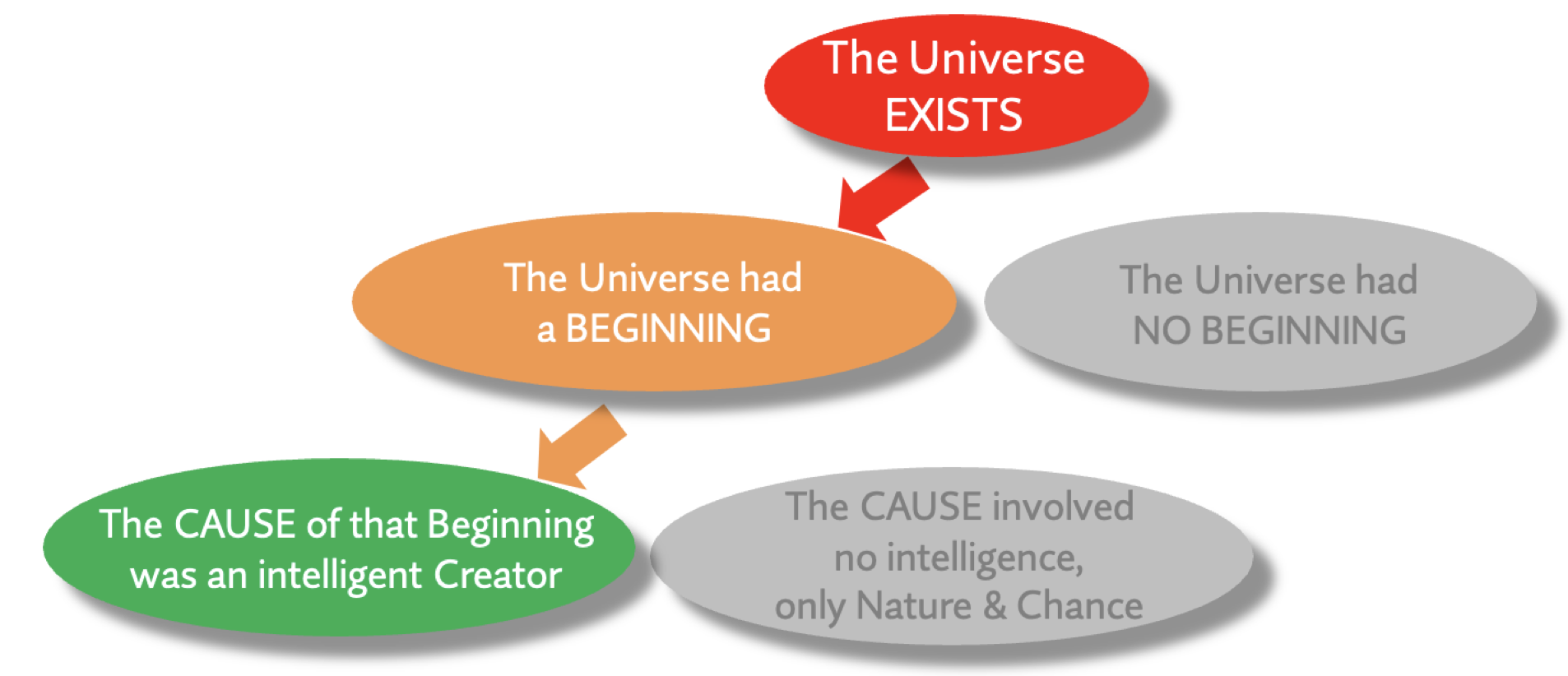
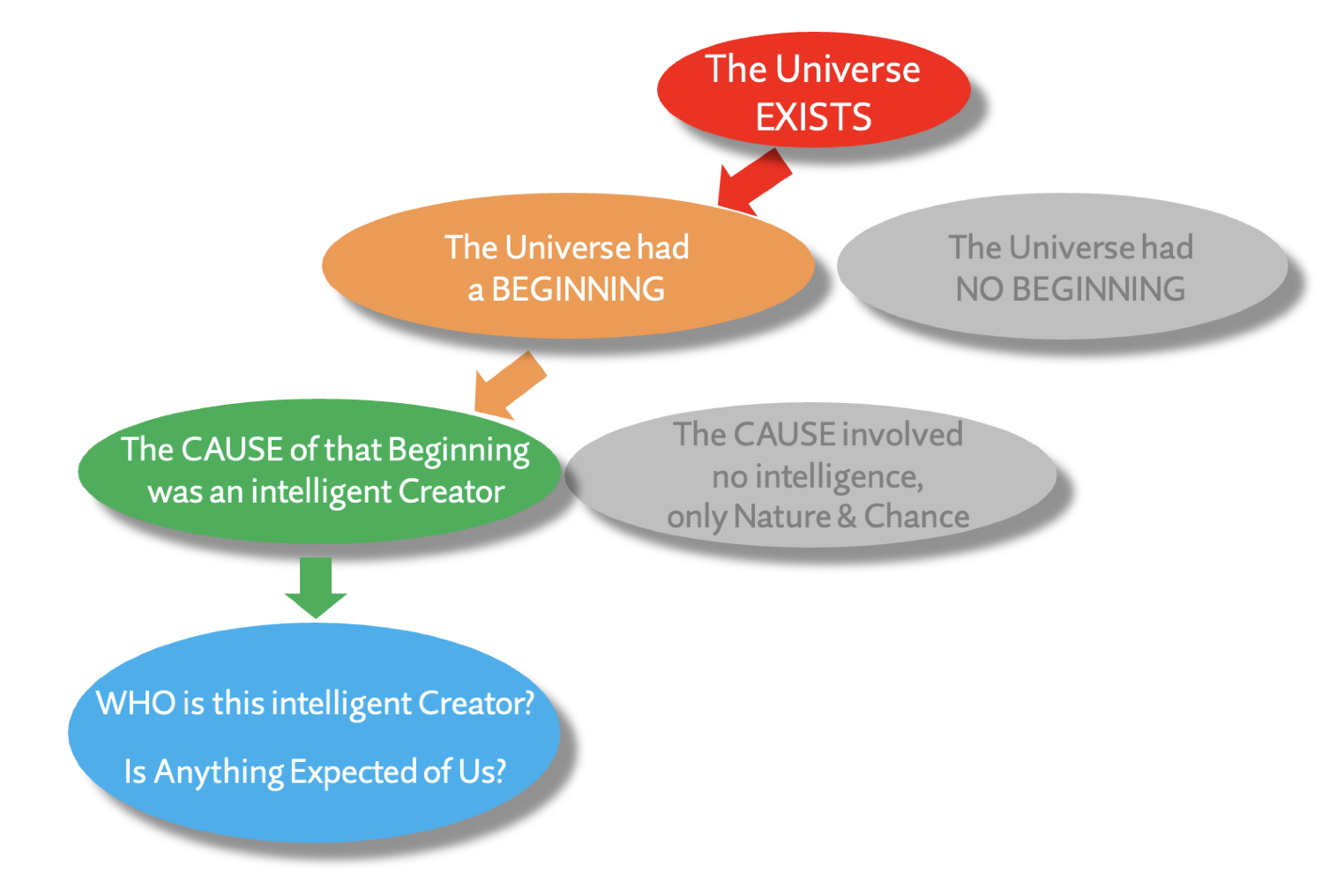 Atheism, agnosticism and pantheism were wrong about where we came from (our origins). Moreover, in all scientific and philosophical literature, there are only four possible causes of the Universe, three have been dropped by the scholarship for lack of evidence and fatal flaws, the one option remaining, which also meets the necessary properties only theism predicted – is an immaterial mind. Once again, atheism and agnosticism got this wrong, as did pantheism as their Gods are part of nature, not immaterial and beyond all nature. This is supplemented by the fine-tuning of the Universe for our existence, displaying the hallmarks of a personal creator.
Following the flowchart, we encounter critical (more likely terminal) cracks in the foundation of every non-theist and non-biblical worldview, while at the same time amassing amazing evidential support there is a personal creator in a position to know what situation each of us are in, and what choices are universally best for us. The question now is: Did this Creator become disinterested and distant (as Deists believe), or communicate who this purposeful creator is and what is expected of us?
Think about it, if there is such a Creator endowing us with purpose and value, and loves and wants to encourage us to reach what this Creator knows is the best for us, how could we know? A spiritual being would reach to us spiritually, and while I have those experiences, these are personal, and very difficult to quantify or carry meaning to others. How else could God set communication to us apart from all other claims people would invent?
The communication through written word or a person (prophet) would at least have to demonstrate something beyond human capacity.
And we have exactly that. As already noted, the Bible provided numerous, clear, specific predictions about the beginning and cause of the Universe, which went against every other belief system and science, and were confirmed precisely by some of the greatest discoveries of modern science thousands of years later. This is not possible for people. Only those worldviews tied to the Bible can claim this absolutely unique distinction and level of reliability. There are many more examples I can provide separating the Bible from any other communication throughout history, but the ones provided are enough as they are unmatched.
The next logical question, do any of these worldviews tied to the Bible (Christianity, Islam, Judaism), which all contradict each other, further establish itself beyond any other? You can do a study yourself: throughout the Bible a pattern is clear, miracles or other confirming evidence are clustered around individuals revealing further communication from God, in order to establish clear authority. Does such verification exist uniquely for Christianity, Islam or Judaism, and is there any negative evidence exposing these belief system’s inaccuracies and contradictions? I am not aware of any verification for Islam or Judaism, but do have documented examples of terminal errors, which will be covered in later books. But, instead of focusing on the negative evidence against other two belief systems, we will focus here on the positive evidence for the key figure where the divergence between these three worldviews occur – Jesus – because the unparalleled confirmation provided for Jesus is more interesting, and sets Christianity on a level beyond any other belief system.
One unprecedented aspect of the Bible requiring input from God is consistent predictions and markers, written even hundreds of years before Jesus, picking out Jesus precisely from the collection of any person to have ever existed on Earth.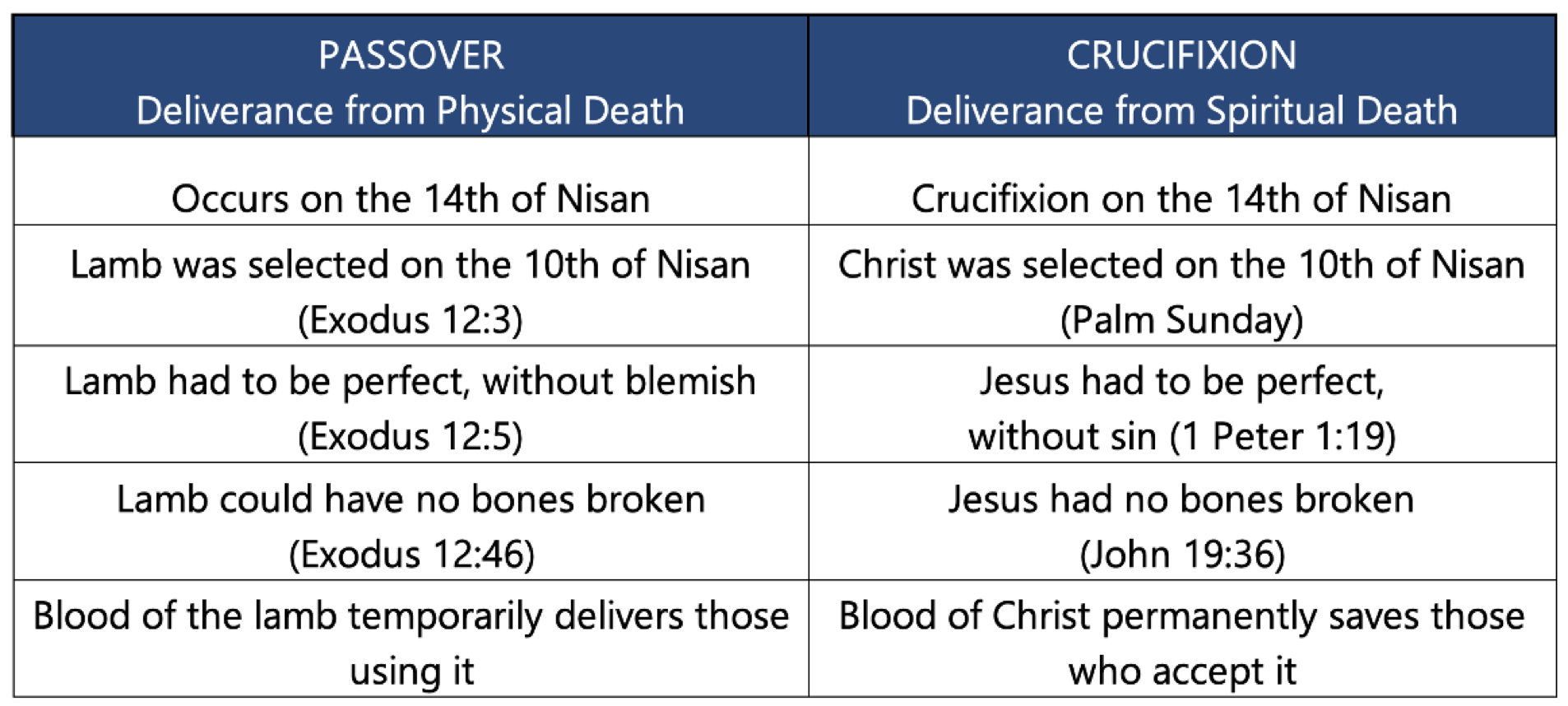
Think about that. Try to come up with numerous predictions about a person who would impact the world more than any other, and simultaneously hope other people in different times and locations across hundreds of years would combine their predictions with yours, and these collected predictions in the Bible were so precise as to pinpoint a single person in all time who would go on to match these predictions and change the world. This is picking, hundreds of years prior, 1 person precisely out of around 100,000,000,000. People can not do this, which makes this a good test for truth.
Certain figures, events, or objects in the Old Testament (OT) are understood as foreshadowing Christ and his work. This is a form of predicting what will come in the future with knowledge beyond human capability. This tremendously broad typology[1] study is interesting to investigate, but even brief coverage makes the point more than noteworthy, and necessary to account for. For example, the major Jewish holiday of Passover can be compared directly to Jesus’ crucifixion.
[1] Wikipedia explanation: https://en.wikipedia.org/wiki/Typology_(theology). Example of a typology of Christ article: https://bible.org/seriespage/9-typology-christ
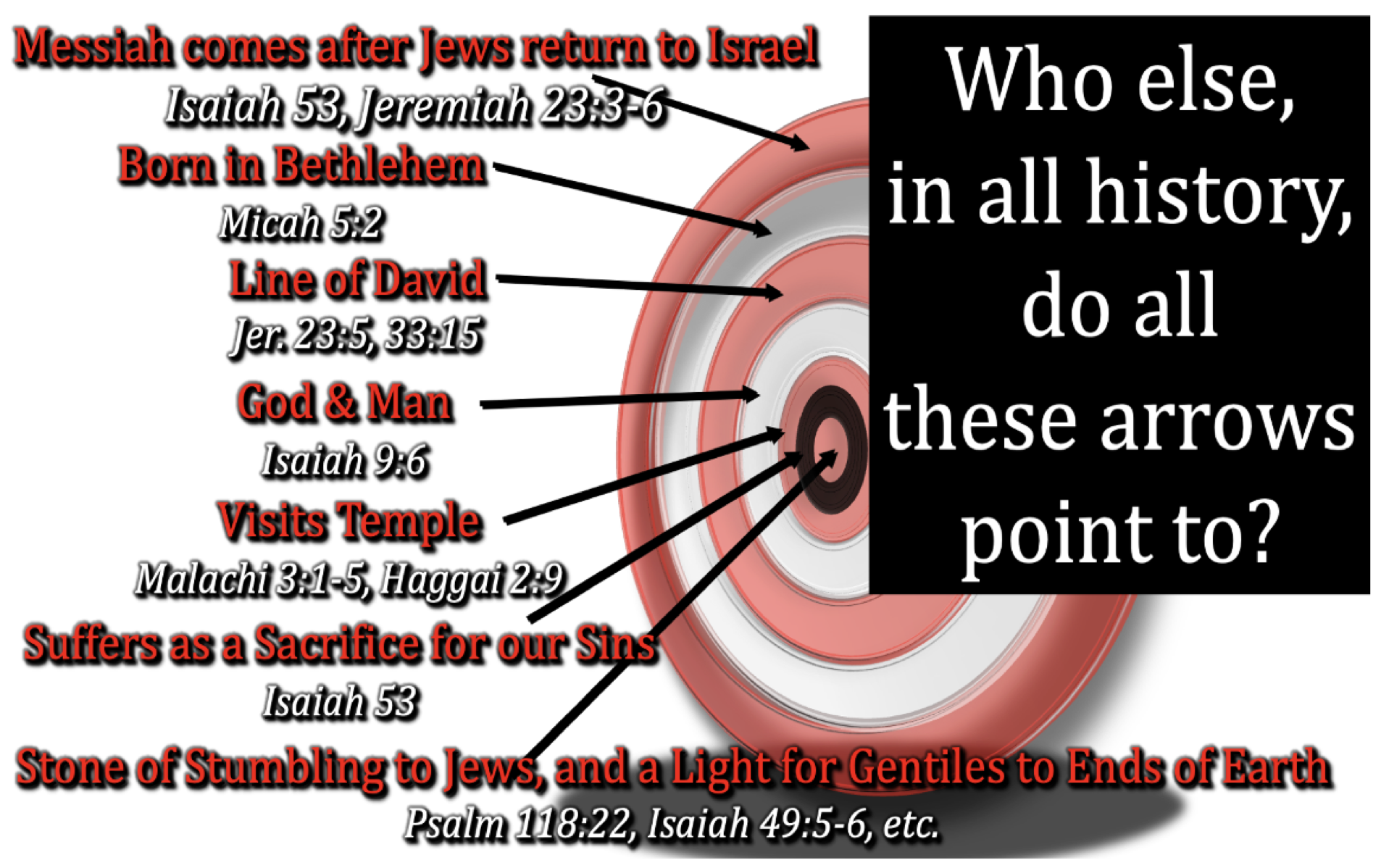 Predicting, or guessing, numerous defining characteristics and future experiences of a person you are claiming will be the Messiah, and so specifically and accurately only one person in all history will fit is not humanly possible, otherwise we would have had numerous examples of this throughout all of history, and many, many others able to come convincingly close. Where are those other examples?
We only need to look at a few here as they are enough to show how each prophecy about the Messiah (Savior or Christ) brings in the restrictions of who can fit more and more, until eventually only one person is left within the confines prescribed by the prophecies. This is illustrated below by each prophecy having a circle of people who could potentially fit within its requirement as a ring around the target, and as each prophecy is added, the circle of possible candidates on the target gets smaller and smaller, until eventually reaching a bullseye where only one person can fit.
Why didn’t the Bible, or the founders supposedly bringing in new communication from God provide such confirmation for Islam or Judaism, for Mohammad or Jewish rabbis who changed the course of Judaism after the crucifixion and loss of the Second Temple? On the other hand, Jesus’ extraordinary claim provided an extraordinary checkable event, and based on even the minimal facts accepted by the consensus of scholarship, there is a small number of possible explanations of what happened to Jesus, all have been rejected by both non-theist and theist scholars, except for the one that is supported by the evidence beyond any other theory – Jesus is who he and the Bible claimed.
If Jesus’ claim is accurate, then the purposeful creator God did not remain distant, but as predicted in the Old Testament, came as one person in all history who is Yahweh (God), to personally communicate who he is and his purpose for us and the world. And in doing so, demonstrated how serious the human condition is (this is the bad news) and how secure our future can be (this is the “gospel” or good news) if choosing to place our hope in the demonstrated authority and reliability of the biblical God.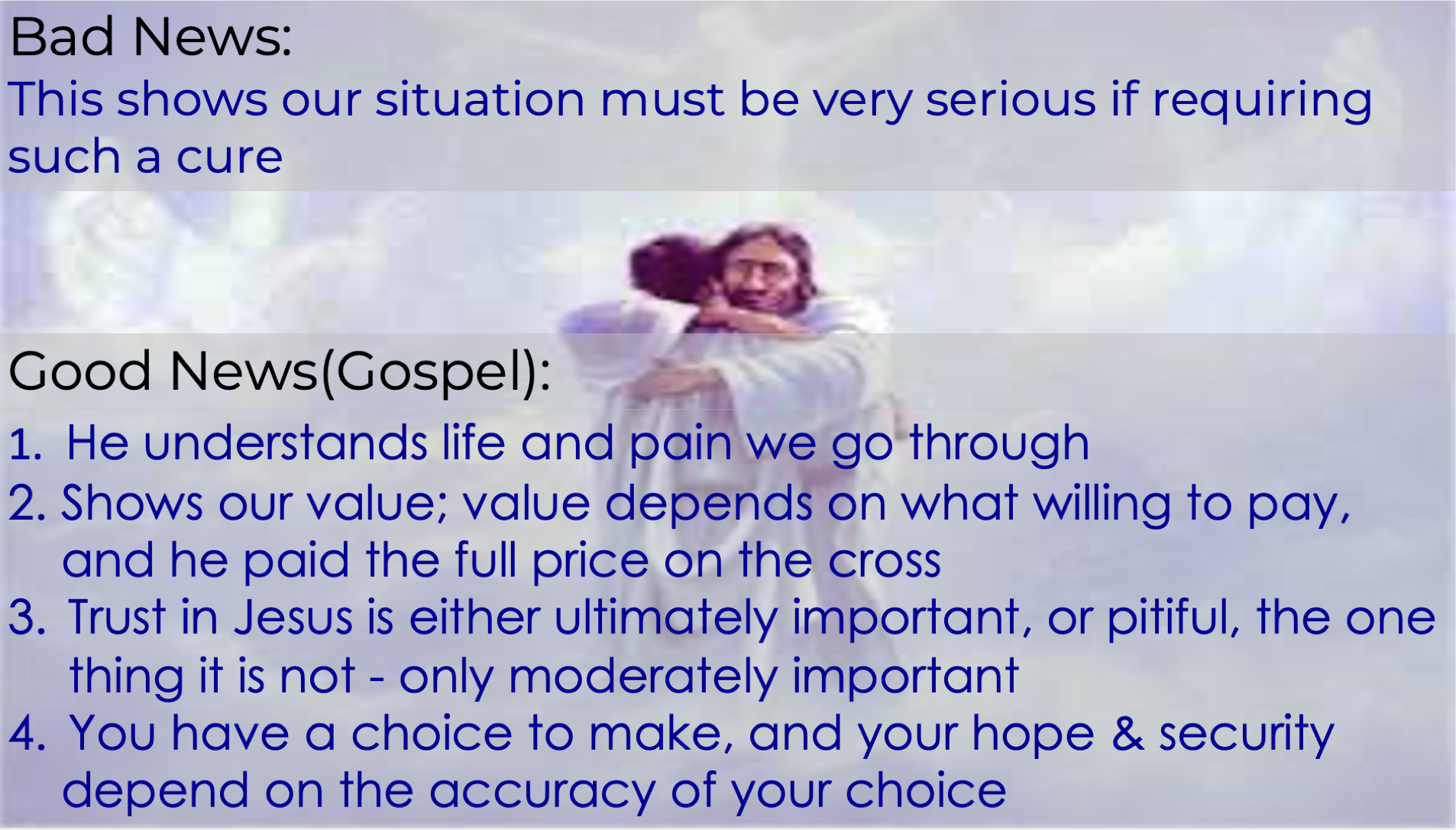
Christianity’s explanation of what the human condition is and that there are choices, which we must make to dramatically impact the positive/negative consequences reality will inevitably bring to us, has all the supportive evidence discussed previously.
Regarding likely the most impactful person in history, whom the calendar and countless lives pivot upon, who made a claim unlike any other in its width and depth of meaning to your life, with support from unprecedented predictions and a checkable event, leaving you with only one supported option on a level none other remotely approaches – if you want to be reasonable, then you better have the best reasons for your choice. If you want to have a reliable hope in your choice, you cannot be ignorant to the evidence. If you want to be intellectually honest and considered rational, then you cannot engage in fallacious thought processes like presuppositional bias of rejecting miracles, or the fallacy of rejecting the one option with supportive evidence and hoping for another option or different evidence to come and support your desired no-God-involved option. It is your choice, but choices always have corresponding consequences delivered by a reality uncaring about your preferences, excuses, or hopes. Not trying to be harsh, but hoping to steer some from an even harsher reality bearing down on a poor choice.
Each person has a destination they are closer to every passing moment, and the comprehensive case of evidence supports the biblical claim: much of what you experience along the way, and your destination depend where you stand on the most important figure in history, and possibly the most significant in your life.
Our DESTINATION
What are the basic answers each worldview gives for the final big question, what is our final destination?
- Naturalism: When a human dies, their body begins decomposing into the component molecules making up the body. That is all.
This life is all there is, with nothing after, so whatever adds the most joy, and avoids the most discomfort is the best you can hope for, and there is no final justice for anything we do, or anything happening to us at all after we die.
- Pantheism: Even for those belief systems claiming reincarnation, eventually, one escapes the trap of “self” and suffering and merges into a single consciousness, one with all the Universe.
If a pantheist religion, like Hinduism, were accurate, then the bad you did is a concern, because you would have to worry about Karma and being reincarnated as a dung beetle, or something equally awful like having to suffer as a running back for the Detroit Lions.
Of course, with what we know in astrophysics, eventually all of the Universe will die a “heat death”, when all possible energy or order or capacity to do anything will have been entirely used up (a state called maximum entropy), and there will be a cold, dark, dead Universe.
- Agnosticism: Doesn’t have an answer, but agnostics will fall off that fence they are straddling, unprepared, into the one worldview destination that does fit reality.
- Theism: Your choices in this life determine your transition into existence after this life.
For Islam, fulfilling religious obligations and living a virtuous life can invoke Allah’s mercy, and some claim martyrdom provides immediate entrance to paradise, but in the end it is entirely in the hands of Allah’s mercy, regardless of how one lives, Allah can decide one’s destination on his whim.
For Judaism, there is no single unified belief. The range of beliefs include Olam Ha-Ba, resurrection of the body, Gehinnom, and a small minority in Jewish mysticism believe in reincarnation.
For Christianity, one either wants a relationship with God and accepts the need for Jesus to allow that relationship, or does not want the relationship or wants to go another way, and will be separated from all that goes with God.
All the worldviews in naturalist, pantheist and agnostic categories were exposed as incorrect in their foundational claims of (1) where we came from (origins), both in the beginning and cause of all nature, and are based on a phenomenally bad bet concerning (2) why we are here (purpose), and must rely upon unreasonable beliefs when compared against the reasons supporting Christianity’s claim and unique verification of the answer to the (3) human situation (human condition and choices that are best for us). Therefore, why believe any of those worldview claims are trustworthy about the final big question: (4) our destination?
In fact, if naturalist or pantheist views are correct all that exists is nature or part of nature, and therefore every person is entirely controlled by initial conditions and natural laws, then we cannot choose our purpose, thoughts, choices, direction or destination in life anyway as they are entirely determined.
There is a clear distinction, an ominous gap in evidential support, when the different worldviews are compared. I don’t have enough faith to believe atheism, agnosticism, pantheism or any belief other than biblical theism, as all the rest show a consistent trend of having faults exposed by reality, while, as expected by the law of noncontradiction, only one worldview is inherently set apart by reality with a comprehensive and trending case of evidence no other belief can reach.
Moreover, aside from reassuring my mind, only one worldview touches the heart with a lasting or secure joy.
This picture always makes me sad, and happy.
It hurts seeing anyone who suffers from lack, and wonderful to see a face of pure joy.
All the work put into this website is because we want people to get their new shoes. This life is wearing out for all of us, from the moment we put it on. And if the claim of Jesus is true, then you not only get a new one to put on, but can also try it on now (further explanation is given in the blog Only Way to Lasting Joy).
This is an unmatched claim that comes with an unmatched gift and results in unmatched joy.
- Where we fail, God pays the penalty himself from the cross
Unlike every other belief system, it is not about what we have to do, but what has been done for us.
- The only way to lasting and secure peace, possibilities, hope and joy
The reason why Christ provides the only security in these essential aspects is because they are not dependent on you, your control, or what life brings, but on an Authority in a position to know and ensure the outcome.
- The claim comes with unmatched verification & reasons to trust
The reality is: everything we value and have in life is fragile, like being carried in a wet paper bag. Eventually, the bottom will fall out, whether during life or at its end. But if Jesus’ offer of eternal life is true, an after-life where the pains and evil of this life have been removed, and a direct relationship with this Creator begins, and is backed by evidence no other claim can match, then you have unmatchable reliability, and equivalent security for hope and lasting joy.
Naked Beliefs
The Bible is the reason why Christianity is already naked to the world. The entire body of biblical belief is bared in specific detail – you can simply read it – and has been studied more than any other source. This open exposure of the full biblical model, in all the diverse topics of life it covers, also provides critics every detail to analyze and challenge, leading to Christianity being the most scoured over and common target of critics through books, television, media commentary, etc.
In a balanced discussion between two or more competing options, one should expect equal time covering the positive AND negative evidence for each worldview, but this is not how it happens. Most discussions of beliefs with those who follow a different worldview than my own, primarily consist of the positive evidence for and the negative evidence against Christianity, while almost no discussion, positive or negative, for the body of beliefs of the opposing worldview.
While I enjoy answering people’s questions and challenges, having to be the one to do all the heavy lifting of providing positive support for my beliefs, and answering negative points, without equivalent evaluation of the other side, leaves the discussion unbalanced and often unproductive. This is not just the critic’s fault for not carrying their burden of proof by providing positive points for their position, but also the fault of the Christian being criticized for not noting negative knowledge of naked atheism, or whatever worldview the critic attached to their life.
A strong offense in this case has the goal of winning the person, not the argument, meaning if our intellectual attacks on another person’s faulted beliefs encourage them to move to beliefs that reliable fit reality, then the other person is the real winner as they walk away with their life and future better.
There will be full books provided, as time permits, giving more in-depth explanation and analysis of the invalidation of all the other worldview beliefs, because:
Neither naturalism, pantheism, nor agnosticism are enough. Not intellectually robust, scientifically sound, philosophically grounded, historically displayed, or common sense reliable. What all other worldviews are able to provide does not satisfy the mind, fill the heart, create lasting desire, or carry us to places where we’d want to stay. Dressed up, other belief systems can be comfortable, even look impressive and cause some desire, especially in the short term, but long-term, these unreliable worldviews do not age well.