
Bad Ideas Create Victims
We usually do not pay much attention to ants, or their habits, but there is a real interesting habit certain ants have towards the caterpillar of the Large Blue butterfly.
This caterpillar secretes a sweet substance, which attracts worker ants, then lays immobile. The ant colony organizes to carry the immobile caterpillar to the nest, and protects the caterpillar from predators to continue getting more of the sugary food.
Anyone who studied biology may be thinking, “We just found a great example of symbiosis, where two entirely different species mutually benefit and support each other!” Symbiosis in nature is beautiful, unfortunately for the ants, this is not what’s going on in this particular situation.
The nested caterpillar begins to seek out and gorge itself on the ant larvae. Now the ant colony must contain at least 200 ant grubs, if not, or if too many caterpillars were brought in, the ant colony will be wiped out. (Gadhave, Kiran. “The Curious Case of the Large Blue Butterfly” — a Conservation Success Story”, Entomology Today, April 4, 2014)
As strange as this phenomenon is, people often do the same in their relationships, and in their beliefs. Sometimes people or ideas making us feel good also hide a harmful habit, yet we bring and keep them within the confines of our lives. Once inside, we often glimpse what is under the façade and have opportunities to remove the threat, or continue in our current comfort, while our future is being devoured.
Ideas, on the other hand, do not have feelings to hurt, and have value only to the extent of providing accurate guidance to reality, truth. Further, inaccurate ideas inherently injure us and those we care about, making it our obligation to remove inaccurate ideas like a disease carrying parasite attempting to feed on your life. Bad ideas create victims.
If what we brought into our lives is a person, growth and healing beyond the harmful tendency (for example, substance abuse) is possible, and even if the person cannot stop hurting you at that time, they still can be shown love and support, but at a safe distance. But what if we bring wrong ideas into our life?
Weak minds talk about other people
Average minds talk about events
Growing minds talk about ideas
Maybe a bit harsh as there are times to talk about other people and events, but there is something interesting and special talking about ideas, and something missing and odd about not getting deep into the ideas guiding your life.
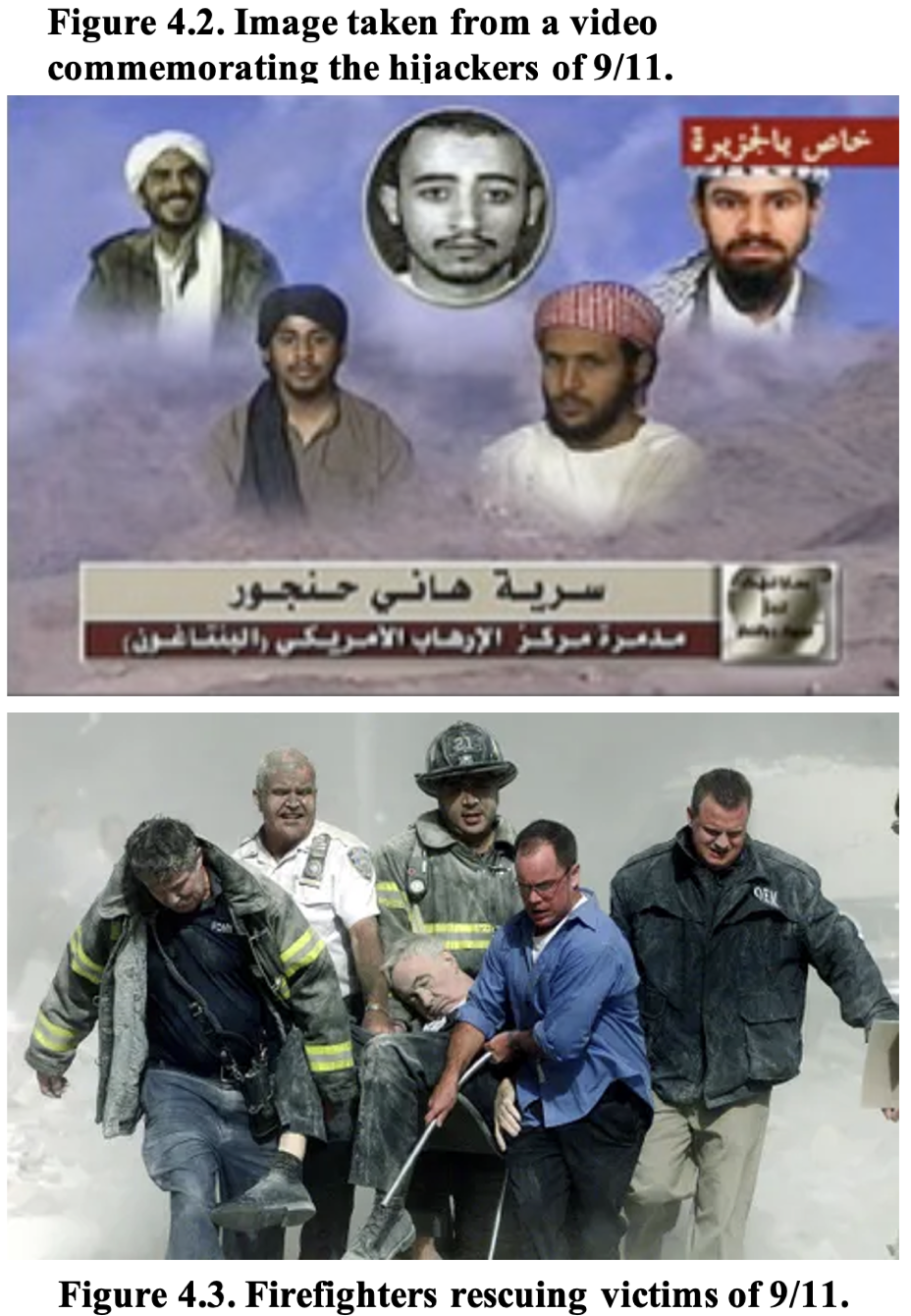 After all, who are the heroes of 9/11? The acts of those who planned, carried out, and celebrate 9/11 are either good, bad, or entirely neutral, depending on whether the ideas of the hijackers were true or not, and whether good/bad, right/wrong actually exist regarding ideas, beliefs, choices, and actions.
From extreme world events to serious events in our own personal lives, can the choices we make truly be judged right or wrong, good or evil? Once again, it depends what worldview is accurate. You have to decide for yourself to accept one of the two following options: Either the worst person you ever knew about has actually done nothing truly wrong and has no absolute responsibility for their actions, or we all have a moral Authority providing a standard of true good and evil we will be absolutely accountable to.
This topic plays a major role throughout your life and in the “hot topics” of our culture, yet people’s lack of understanding about morality is mortifying. So, let’s highlight the basics of what to look for in morality and choices, which will enable you to see the funny and sad and interesting show our world constantly plays before us.
An added benefit is this subject has been studied so much, by so many scholars in so many times and places, it has hardened the findings into solid evidence applicable to the existence of God. Below is a formal logical argument, which basically means: if the premises are true, then the conclusion is logically inescapable. If the premises are only probably true, then whatever level of likelihood they are true is the same likelihood the conclusion is true.
The Moral Argument
Premise 1: If God does not exist, objective moral values & duties do not exist.
Premise 2: Objective moral values & duties do exist
Conclusion: Therefore, God exists.
After reading parts 1-3, you will have a foundation to properly view and judge the crazy behavior in this world, and in your own life. Further, you will have another hard and smooth stone to throw at the different belief claims about God, and watch which belief systems logically crumble.
To approach this big question requires three steps. First, we will let you decide if true or objective good and bad even exist, and define what we mean by “objective morality” versus “subjective morality.” Second, we will look at where morality comes from. Finally, we will apply what we know about morality to the different belief systems, and have clear bottom-line answers to many interesting questions, such as:
- Are people involved in social justice issues Warriors or Whiners?
- Can atheists be more moral than theists?
- Was 9/11 good, bad, or neutral? What about my most important political issues?
- And most impactful, if objective morality exists, then what worldview belief must be accurate, and which worldviews are exposed as inaccurate?
Evidence from Infant Studies (Strong Data)
Summary of Studies
Together, these findings strongly suggest that moral evaluation and response is not merely learned, but instead emerges from an innate cognitive framework, pointing toward a universal moral structure embedded within human nature. Moral evaluation (judging good vs. bad behavior) appears before language, cultural conditioning, or formal teaching.
Researchers such as Kiley Hamlin, Karen Wynn, and Paul Bloom (from famous Yale studies), Marco Schmidt and Jessica A. Sommerville, Alessandra Geraci and Luca Surian have demonstrated:
- Suggests an innate moral framework, not purely learned behavior.
- Indicates early sense of justice, not just preference
- Prefer helpful individuals over harmful characters
- Suggests moral reasoning includes accountability, not just liking kindness
- Show early signs of approving punishment for wrongdoing
- Even before speech, humans expect fairness and equity
- Suggests morality includes norms, not just preferences
- Reinforces that fairness is socially evaluative, not random
- Points toward shared moral standards
- Morality is built into human nature, though shaped by culture
- Supports the idea of a universal moral foundation
A. Hamlin, Wynn, & Bloom (Helper vs. Hinderer Study)
Hamlin, J. Kiley, Karen Wynn, and Paul Bloom. “Social Evaluation by Preverbal Infants.” Nature 450 (November 22, 2007): 557–59. https://doi.org/10.1038/nature06288.
Researchers like Paul Bloom and Karen Wynn at Yale tested:
- Infants (6–10 months) watched a character struggle to climb a hill.
- One character helped, another hindered.
- Babies overwhelmingly preferred the helper.
Explanation
- Babies as young as 6–10 months:
- prefer “helpers” over “hinderers”
- show early signs of fairness expectations
- react negatively to harmful behavior
Meaning
- Moral evaluation (judging good vs. bad behavior) appears before language and teaching.
- Suggests an innate moral framework, not purely learned behavior.
B. Bloom (Broader Synthesis of Moral Innateness)
Bloom, Paul. Just Babies: The Origins of Good and Evil. New York: Crown, 2013.
Explanation
- Synthesizes decades of infant research
- Argues humans are born with:
- Moral instincts
- Empathy
- Justice intuitions
Meaning
- Morality is built into human nature, though shaped by culture
- Supports the idea of a universal moral foundation
C. Hamlin & Wynn (Punishment and Justice)
Hamlin, J. Kiley, and Karen Wynn. “Young Infants Prefer Prosocial to Antisocial Others.” Cognitive Development 23, no. 1 (2008): 30–44. https://doi.org/10.1016/j.cogdev.2007.08.001.
Explanation
- Infants not only preferred “good” characters
- They also showed preference for punishing bad actors
Meaning
- Indicates early sense of justice, not just preference
- Suggests moral reasoning includes accountability, not just liking kindness
D. Schmidt & Sommerville (Fairness Expectations)
Schmidt, Marco F. H., and Jessica A. Sommerville. “Fairness Expectations and Altruistic Sharing in 15-Month-Old Human Infants.” PLoS ONE 6, no. 10 (2011): e23223. https://doi.org/10.1371/journal.pone.0023223.
Explanation
- Infants expected equal distribution of resources
- When fairness was violated, babies showed surprise (longer looking time)
Meaning
- Even before speech, humans expect fairness and equity
- Suggests morality includes norms, not just preferences
E. Geraci & Surian (Preference for Fair Individuals)
Geraci, Alessandra, and Luca Surian. “The Developmental Roots of Fairness: Infants’ Reactions to Equal and Unequal Distributions of Resources.” Developmental Science 14, no. 5 (2011): 1012–20. https://doi.org/10.1111/j.1467-7687.2011.01048.x.
Explanation
- Infants preferred individuals who distributed resources equally
- Showed rejection of unfair distributors
Meaning
- Reinforces that fairness is socially evaluative, not random
- Points toward shared moral standards
Cross-Cultural Moral Patterns
Summary of Studies
Anthropological, psychological, and cross-cultural research consistently reveals that while moral expressions vary, the underlying principles remain strikingly consistent. Studies spanning dozens of societies show universal expectations of fairness, cooperation, reciprocity, and harm avoidance. Researchers such as Jonathan Haidt, Oliver Scott Curry, and Donald Brown demonstrate that these shared moral patterns are not culturally invented from scratch, but rather emerge from a common human framework. What differs across cultures is not the existence of morality, but its application and emphasis—suggesting that morality is best understood as a universal structure expressed through cultural diversity.
Anthropological research shows consistent moral themes across societies:
- Fairness (don’t cheat)
- Loyalty (support your group)
- Harm avoidance (don’t hurt others)
- Authority/respect
- Reciprocity
A. Moral Foundations Theory (Jonathan Haidt)
- Found similar moral instincts worldwide
- Cultures differ in emphasis—not in having morality at all
B. Moral Foundations Across Cultures — Haidt & Joseph
Haidt, Jonathan, and Craig Joseph. “Intuitive Ethics: How Innately Prepared Intuitions Generate Culturally Variable Virtues.” Daedalus 133, no. 4 (2004): 55–66. https://doi.org/10.1162/0011526042365555.
Explanation
- Proposes universal moral foundations shared across humanity:
- Care / harm
- Fairness / cheating
- Loyalty / betrayal
- Authority / subversion
- Sanctity / degradation
- Cultures differ in emphasis, not existence
Meaning
- Morality is structured and universal at the core, even if expressed differently
- Supports a common moral architecture across cultures
C. Global Study Across 60 Societies — Curry et al.
Curry, Oliver Scott, Daniel A. Mullins, and Harvey Whitehouse. “Is It Good to Cooperate? Testing the Theory of Morality-as-Cooperation in 60 Societies.” Current Anthropology 60, no. 1 (2019): 47–69. https://doi.org/10.1086/701478.
Explanation
- Analyzed ethnographic data from 60 diverse cultures
- Found 7 universal moral rules, including:
- Help family
- Help group
- Return favors
- Be brave
- Respect property
Meaning
- No society studied viewed these behaviors as immoral
- Strong empirical evidence that cooperation-based morality is universal
D. Human Universals — Brown
Brown, Donald E. Human Universals. New York: McGraw-Hill, 1991.
Explanation
- Anthropological survey identifying traits found in all known cultures
- Includes:
- Moral codes
- Rules against unjustified harm
- Expectations of fairness
Meaning
- Morality is not culturally invented—it is culturally expressed from shared human nature
E. Moral vs. Social Conventions — Turiel
Turiel, Elliot. The Development of Social Knowledge: Morality and Convention. Cambridge: Cambridge University Press, 1983.
Explanation
- Shows children across cultures distinguish:
- Moral rules (harm, fairness) → universal, authority-independent
- Social conventions (dress, etiquette) → culture-dependent
Meaning
- Even children recognize:
- Some rules are universally binding
- Others are arbitrary
This distinction appears cross-culturally
F. Fairness Across Societies (Economic Games) — Henrich et al.
Henrich, Joseph, et al. “In Search of Homo Economicus: Behavioral Experiments in 15 Small-Scale Societies.” American Economic Review 91, no. 2 (2001): 73–78. https://doi.org/10.1257/aer.91.2.73.
Explanation
- Used economic games (e.g., Ultimatum Game) across 15 cultures
- Found:
- People consistently value fairness
- Reject unfair offers—even at personal cost
Meaning
- Fairness is not just Western—it appears globally embedded
- Cultural variation affects degree, not existence
G. Cooperation as a Human Universal — Boyd & Richerson
Boyd, Robert, and Peter J. Richerson. The Origin and Evolution of Cultures. Oxford: Oxford University Press, 2005.
Explanation
- Shows large-scale cooperation is a defining human trait across societies
- Moral systems consistently reinforce:
- Cooperation
- Punishment of defectors
Meaning
- Moral norms supporting cooperation are cross-cultural constants
Neuroscience Evidence
Brain imaging shows:
- Moral decisions consistently involve:
- prefrontal cortex (reasoning)
- amygdala (emotion)
- insula (disgust/empathy)
Damage to these areas can:
- reduce moral sensitivity
- alter ethical decision-making
Suggesting morality is biologically grounded
Evolutionary Explanations
From an evolutionary perspective:
- Cooperation increases survival
- Groups with moral norms outcompete those without them
- Traits like:
- empathy
- guilt
- fairness
…have adaptive value
So morality may be: “built-in tendencies shaped by survival pressures.”