Brief Answer:
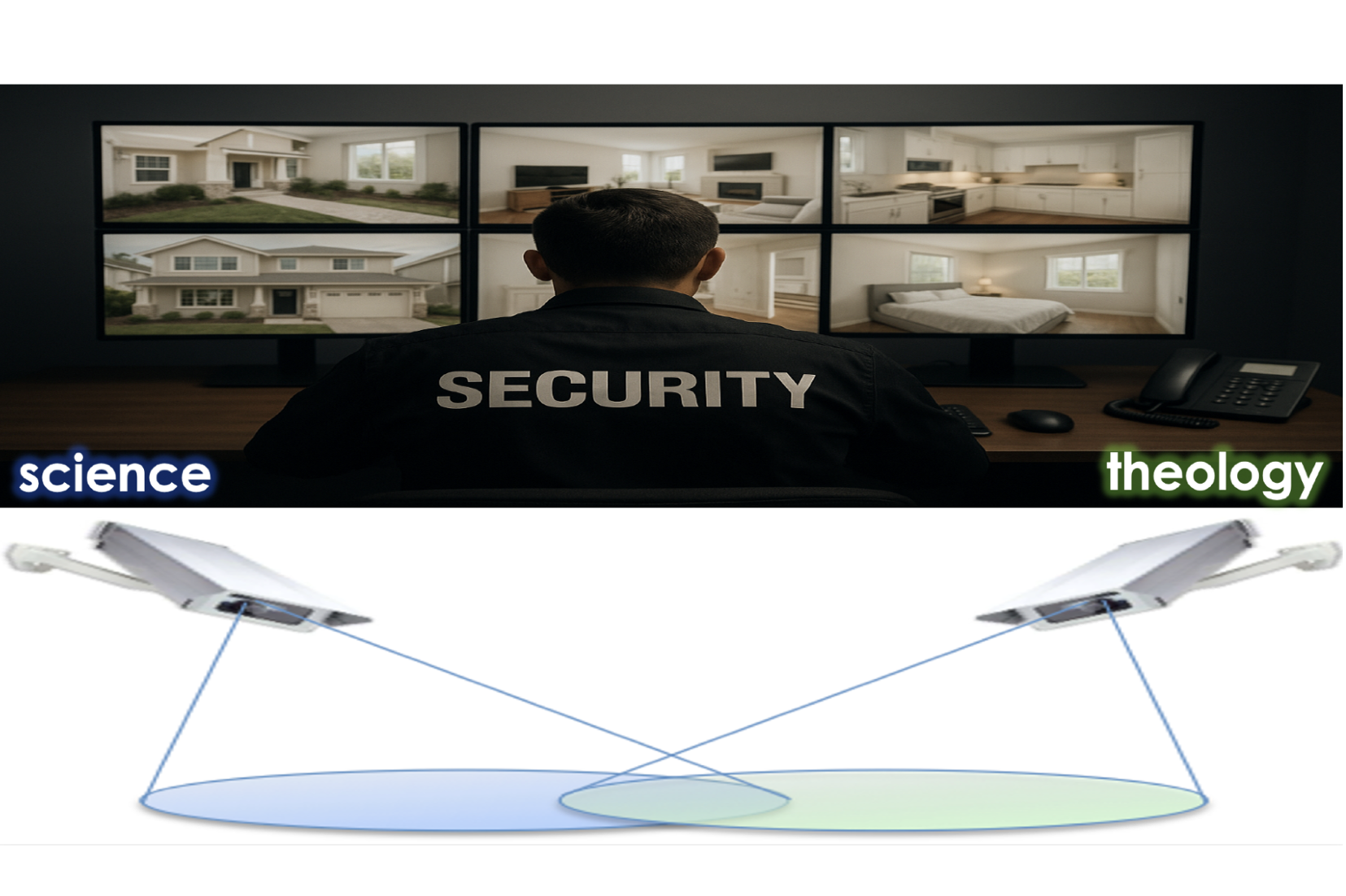
Science and theology are not friends or foes, but different fields of study using different methods or fields of view to gain knowledge about reality, much like different security cameras offering unique angles of the same scene.
If both the science camera and theology camera turn to the same aspect of the universe, or reality, they together provide a wider field of vision, and not only more knowledge, but also a very productive way to verify or discredit the accuracy each point of view provides.
Detailed Answer:
Since childhood we naturally and efficiently integrate different sources of knowledge when facing a problem to solve, or decision to make. On your next drive, you may find yourself fast approaching a traffic light that is “orange,” somewhere between a yellow and red light. Within just moments you naturally use viewpoints including physics (not actually doing a napkin calculation, but considering momentum and road friction); history, you consider similar occurrences yourself or others have had; observation, check for any nearby police officers; and ethics, wondering if you may put others at risk of injury, to arrive at a conclusion to either stop or pass through.
Most choices in life are best visualized when multiple valid viewpoints, or sources of knowledge, are combined to provide a comprehensive view of the subject. The question then arises: what, if any, interplay occurs between differing sources of knowledge, particularly ones as influential as science and theology? I do not use the phrase “science and religion” because “religion” concerns how people organize around different belief systems, while “theology”, being the study of the nature of God and corresponding beliefs, is much more comparable to science.
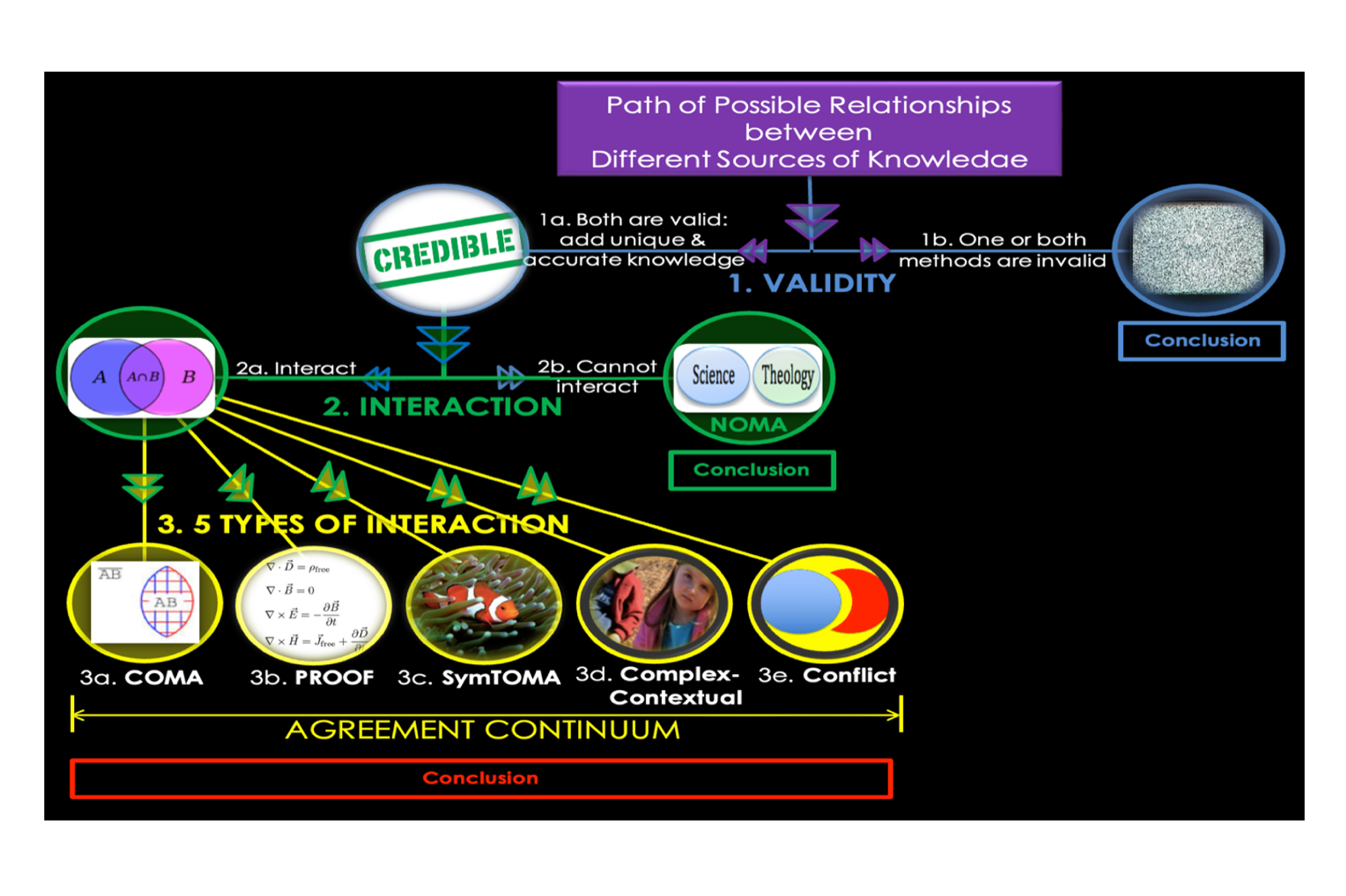
While the scholarship diverges and offers several models of the relationship between science and theology, studying this vast scholarship displays two unexpected and significant features: (a) each different model contains accurate points, and (b) each is also restricted to only being applicable to a specific part of the relationship between science and theology. Taken together, these features lead directly to a new comprehensive model of the interaction between science and theology and any other field of study, which I call SymTOMA.
This model and corresponding evidence is presented in the booklet you can find with the link: Cameras of the Watcher.
This booklet progresses though: an illustration, a decision tree moving through each intersection of possible relationships, thought-provoking examples, a successful predictive model, allows for analysis not only of science and theology, but also between any source of knowledge, provides opportunities for researchers to quantify and graph trends in their respective fields, and finally, goes beyond simply explaining the relationship or history between science and theology by highlighting objective measurements of what we most want to know – which theology is accurate and reliable on a level contradictory theologies cannot reach.
And think about it: since different theologies contradict each other on foundational beliefs, reality cannot help but lead to science having a primarily conflicting relationship with every non-accurate theology, and a symbiotic relationship with the accurate theology.