The Evidence is in: Some amazing stuff to know about our Universe
So, why a Universe so big if it is just for us? Answer: because it had to be JUST PRECISELY that big!
Choice among a RANGE OF OPTIONS: A dime’s difference
The natural sciences have discovered a vast and growing number of constants, quantities, initial conditions (things in place at the beginning of the Universe), balances, and aspects of the Universe that had to land just where they did, or life would not exist. For example, consider the entire mass (mass is a measure of how much matter is in something) is in the Universe, then realize if the Universe’s mass or mass density (a measure of how much mass is in a certain volume) just happened to be slightly different, then we would not be here to think about it.
Scientists have found if the mass density of the entire Universe just happened to be different by more than 1 part in a quadrillion quadrillion quadrillion quadrillion (1 in 1060), then we would not be here. In other words, if by chance, out of all the possible values for the mass density, our value had differed by less than the mass of a dime, then the balance within the Universe would be thrown off, and no life would be possible.
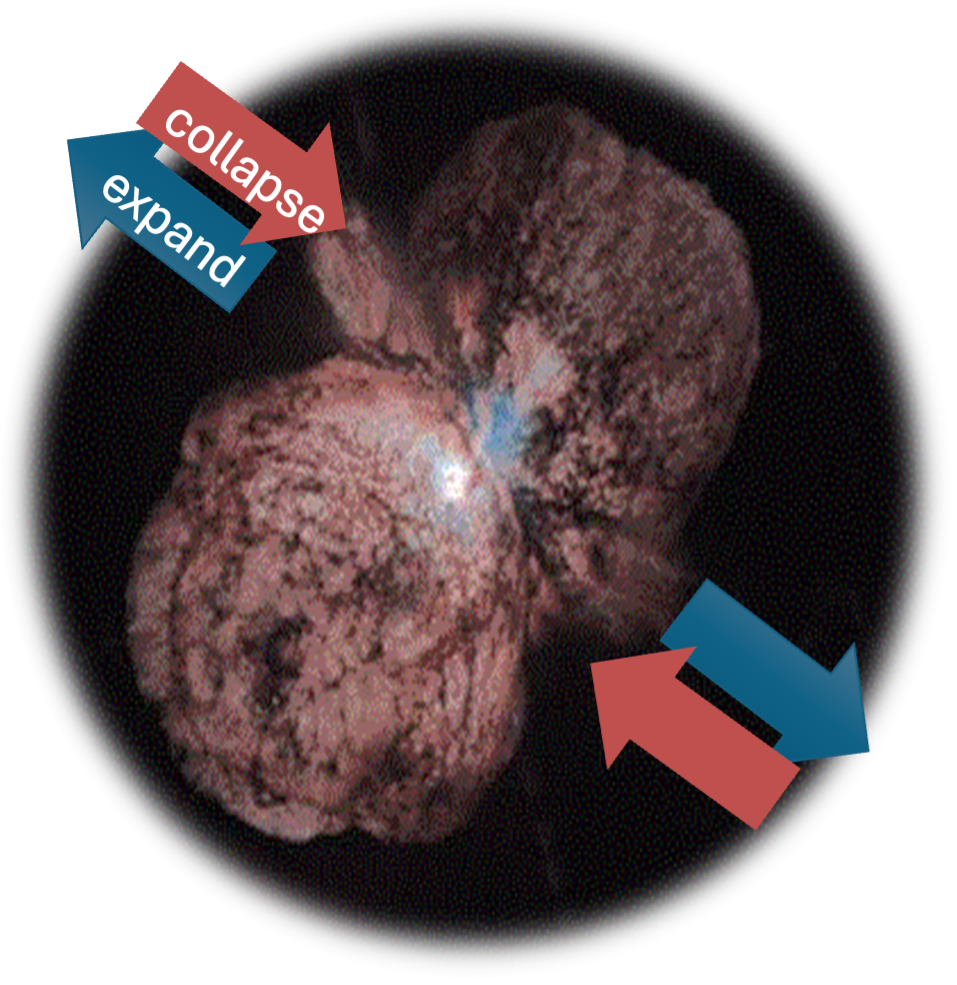
Why? Because, especially at the beginning of the Universe, two massive forces acted against each other: GRAVITY, which depends on how much mass is involved, acts to pull everything together, and an EXPANSION force, which acts to push things apart. If there had been a tiny bit less mass, then the expansion force would have dominated too much, spreading the Universe out so fast only hydrogen and helium gas would form – no life. If just a bit more mass, then gravity would have dominated right at the beginning, and the Universe would have been pulled back together in a big crunch, resulting in mostly black holes and neutron stars, again – no life.
The mass density difference would also cause other imbalances. The Universe came into existence phenomenally small and dense and hot, and immediately started expanding and cooling off. Within the first 3-4 minutes of its existence, the Universe’s temperature fell through a range of 200 billion °C down to 17 billion °C. This latter temperature is similar to the core of our Sun, which allows nuclear fusion to start combining (H)ydrogen atoms into (He)lium and releases the remaining energy in the form of heat and light.
If the Universe had less mass or mass density, then it would have cooled faster, had less time to fuse H into He, and resulted in a Universe incapable of producing elements heavier than He, such as Carbon (C), Nitrogen (N), Oxygen (O) and other elements necessary for life—we would have a hot air balloon Universe—no life. If there just happened to be a bit more mass at the beginning, then too much H would be fused into He, and we would end up having a heavy metal Universe, Metallica fans would be pleased, but no fans would exist because the Universe would only be composed of metals of Iron (Fe) or heavier—and again, no life possible.
So how did it all begin with the perfect balance of gravity and expansion, and just the right mass to enable the creation of all the elements needed for life, when it could have began with any other amount of mass and have no life? Only two possibilities, either an intelligent agent ensured the precise condition was met, or it happened naturally by chance.
The first time listening to astrophysicist Hugh Ross explain this in a lecture, I did the calculation myself as it seemed ridiculous, yet was stunned when the calculation matched his statement about less than a dime’s difference would make all the difference. When these fine-tuned features of our Universe were initially discovered, many assumed reasons would be found to explain away the incredible coincidences. For example, maybe another factor in the expansion of the Universe made the mass density work out without the mathematical need for a purposeful designer. We will look into this possibility. However, there is another factor involved, a pattern has been found in this study of the Universe: fine-tuning features do not go away, they have only grown in number arithmetically and in evidence exponentially against coincidence, and the precise expansion of space is an example.
Could some natural explanation be found? What is the trend?
Some, whose worldview includes God, may be thinking this is “proof God exists,” but it isn’t, because:
- God is not trying to “prove” his existence (see the response to the question: “Why does God seem hidden?” in the FAQ section).
- An intelligent creator may have used primarily natural means to arrive at the precise value.
- Or, there may be something further involved we are still ignorant of, which may explain it by nature and chance only. This example of mass density was chosen for a reason, being a good example of a time when theists have to remain open, as is equally expected of non-theists, and just follow the evidence where it leads. There is a theory, with reasonable evidence, the Universe had an extra-rapid expansion, or inflationary period, for the smallest fraction of a second near the beginning of the Universe, and additionally, something in the fabric of space itself causes expansion, potentially enabling the Universe to have expanded just right, regardless of mass.
Would this mean this fine-tuning example is totally explained naturally? No, because ever since scientists first realized there are quantities, constants and other factors set precisely within the unfathomably precise range required for life, these examples have only grown and been found to be more amazing as further discovery goes on, and this is a good example because if expansion takes care of the mass density fine-tuning, why is this expansion just right? The answer has now been found, and follows the trend of a constant increase of mind-blowing fine-tuning evidence.
What Makes Our Universe Expand?
The expansion of space comes from what has been called dark energy, it is the space energy density, which we cannot see but is all through the fabric of space, and is stretching out space. The larger the surface area of the Universe becomes the more powerful the force of expansion, so the bigger the Universe gets, the faster it spreads apart.
Once again, if expanding too slowly, gravity would compress all things in the early Universe to black holes and neutron stars, and with such force molecules, atoms, and life could not exist. On the other hand, if expanding too rapidly, gravity would be incapable of forcing gas and dust together to produce any stars at all, and no life possible.
How likely was it that out of all the possible values the expansion force could have taken, it landed on just the value needed for life? If, by chance, this space energy density differed by 1 part in 10120, no life could exist (Stephen Hawking and Leonard Mlodinow, The Grand Design, 161–62). Therefore, while the need for the mass density to be precisely fine-tuned can be explained by the expansive force of space energy density, all this does is push the question back a step and into an even more amazingly tight prescription. Stephen Hawking and Leonard Mlodinow regard this fact as “the most impressive fine-tuning” (Hawking, 161). Now, the likelihood the precise balance was attained by chance just moved from a likelihood of 1 in 1060 to the unfathomable 1 chance in 10120.
Hoping to Win the Mega-Millions Jackpot? Over and Over Again?
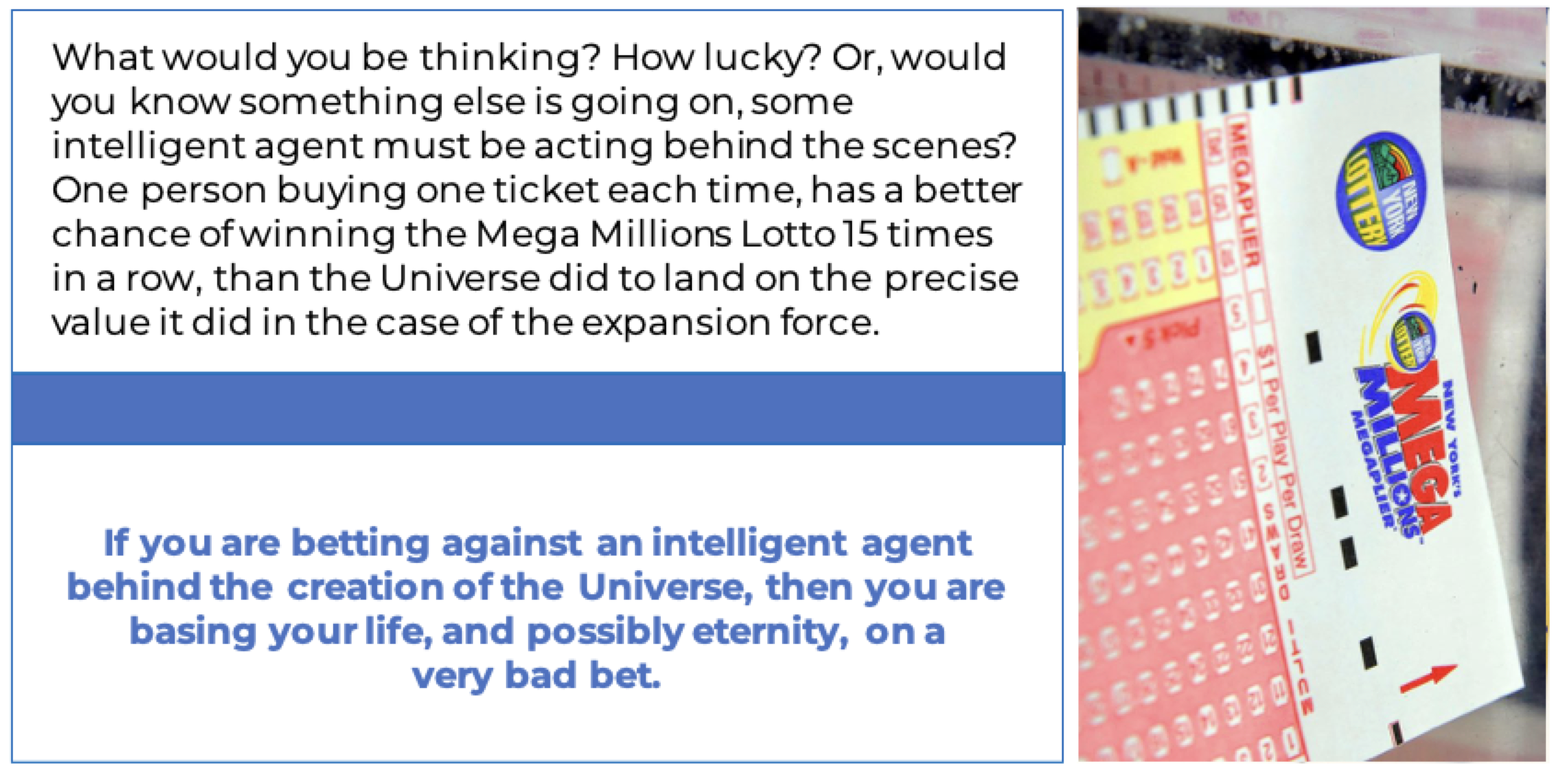
Whenever someone invokes chance as their explanation, they place their claim in the mathematician’s calculation for analysis. One year the Mega Millions State Lotto caught my attention with a payoff of two hundred million dollars. While standing in line at a convenient store, I checked the numbers and calculated the odds (this is what I typed into my calculator for the lottery odds: =((52! – 47!) / 5!)*52). Let’s put 10120 into a situation where you can see the significance of this number. If one person won the Mega Millions State Lotto, so what, someone had to win eventually. But now imagine this same person getting greedy, and buys one ticket for the next drawing, and wins again, and again, 15 times in a row.
The Highest Example of Man-Made Precision
In a lecture, Hugh Ross described the most sensitive device ever produced by man, the LIGO gravity wave detector, and even worked with some members of the Cal Tech and MIT scientists and engineers who created it. This instrument is so sensitive it can detect a change in distance one-hundred-millionth the diameter of a hydrogen atom (10-21). Amazing precision.
The precision required for the Universe to just happen to land on the exact space energy density value required for life, displays more than a trillion, trillion, trillion, trillion, trillion, trillion, trillion, trillion times greater precision than LIGO, and correspondingly, whatever caused this precision was at least a trillion, trillion, trillion, trillion, trillion, trillion, trillion, trillion times more knowledgable, capable and better funded than the Cal Tech and MIT scientists & engineers who designed humanity’s most precise instrument.
The Fine-Tuned Universe
The example above is amazing, but not alone, so we will now give a view of how strong the evidence is for a Purposeful Creator and corresponding Purposeful life for us.

Wherever science looks, whether at the four fundamental forces of physics operating throughout the whole universe, initial conditions at the very beginning of the Universe, or at the smallest units in our Universe, there is displayed fine-tuning of values and systems all throughout nature and ALL fitting within their respective precise ranges, all in combination with each other, to fit the pattern or requirements for our life to have a window of time to operate here. Exactly fitting the hallmarks of an intelligent agent discussed in the previous blog.
For example, to have life on any planet you would need galaxy clusters, a galaxy, a solar system, a star, and a planet with an incredible list of just-right features. You can obtain a list of these features, as well as hundreds of accompanying references from peer-reviewed literature in the best coverage of the topic I have found, and double-checked through interactions with Hugh Ross at Reasons to Believe, www.reasons.org/links/hugh/research-notes. Dr. Ross left atheism for theism, yet if you are worried about bias, not only has the data come from non-theist peer-reviewed scientific studies and literature, the references are provided for you to check yourself.
The list has hundreds, moving towards a thousand, fine-tuned features, and the personal cause of the Universe model has been presented to the most renown universities, science-oriented audiences and scholars across the world, especially to those who do not share the worldview of Dr. Ross. If you’d like to see an example of how highly educated atheist scientists respond to this information, look up Hugh Ross and Victor Stenger debate at Cal Tech to around 700 skeptics. Universally those scholars do accept the fine-tuning of the features. The only disagreement between these scientists and the fine-tuning is over the mathematic probabilities assigned to some features, however, the disagreement typically only goes to a maximum of a couple dozen zeros. The probability of getting all the fine-tuned features exactly as they need to be in combination for life to exist is on the order of 1 chance in 101000+, a couple dozen zeros is insignificant in this comprehensive case.
For those who do not like dealing with numbers, Pierre-Simon Laplace, who produced important developments in mathematics, statistics, engineering, physics and astronomy, also correctly noted probabilities are nothing but common sense reduced to a calculation. Currently, we will look at just a few fine-tuning features, and then provide others in future blogs.
Every time you look at the Moon, you are seeing a bizarrely perfect feature of the Earth’s development meeting preconditions for life. A planet at Earth’s distance from the Sun is not supposed to have a moon like ours, and instead should, and did, have a toxic atmosphere, unstable wobble of its axis of rotation, higher rotation speeds with tremendous winds, and lack of heavy and radioactive elements.
Then came the Moon, a freak of nature. Scientists understood the Earth is abnormal as all those features mentioned somehow changed and became life-permitting. Because fine-tuning had become an accepted part of Universe, it led scientists to predict and look for a reason why our moon was the way it was and how it came to be just right for life on Earth.
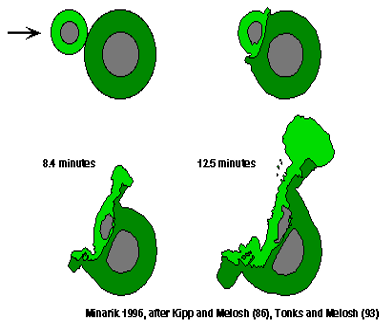
Answers have been published, including the computer simulation shown in the image. An object around the size of Mars slammed into the early Earth, at the right velocity and angle to rid Earth of much of its toxic atmosphere, form a moon able to slow down the rotation rate, stabilize the rotation axis tilt, and enrich the Earth’s core with iron and radioactive elements to sustain a long history of plate tectonics, land formation, and production a magnetic field (David J. Stevenson. “Making the Moon”. Physics Today, November 2014; Canup, R., Asphaug, E. Origin of the Moon in a giant impact near the end of the Earth’s formation. Nature 2001; 412, 708–712).
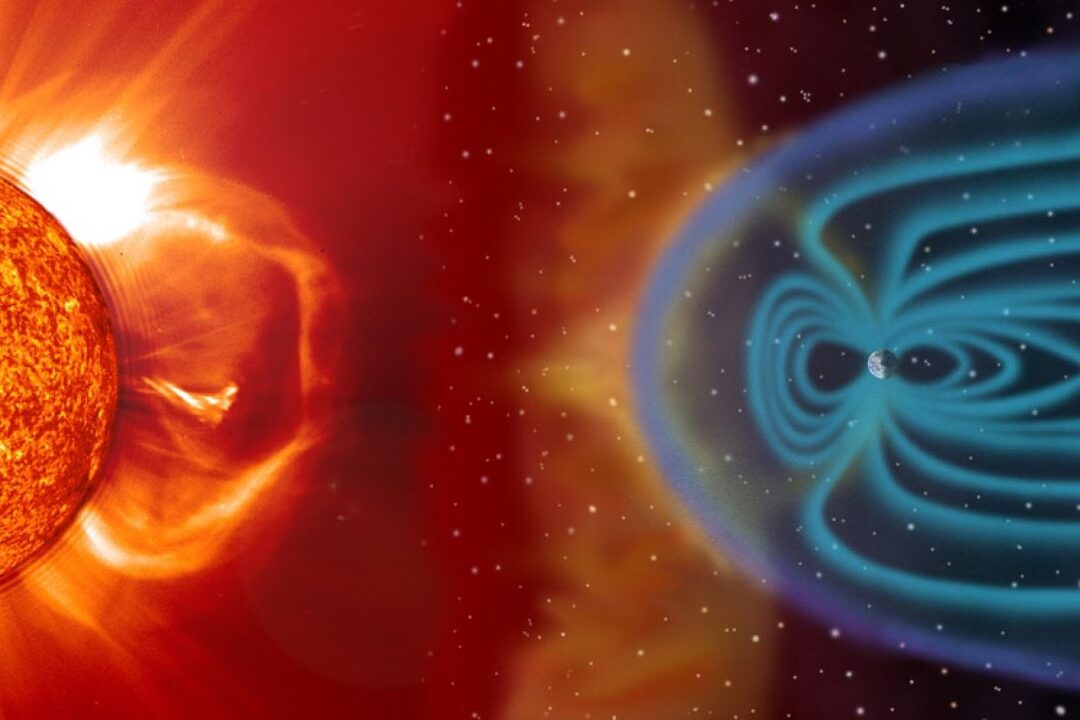
The convection motion of molten iron in the core of earth was then able to create and sustain a magnetosphere, which is like a force field you see in sci-fi movies. An article from The Universe Today (How Does the Earth Protect Us From Space?), as well as others from NASA, describe how this unique feature protects us from “a dangerous Universe that’s always trying to kill us.” Cosmic (meaning from objects in space) and solar (from the Sun) radiation damages DNA, causes cancer, and wreaks other havoc, and the solar winds (charged particles coming from the Sun) would erode our atmosphere. We are kept safe from these dangers as the magnetosphere forces these charged particles away from the Earth. As you may notice from the illustration, the magnetosphere is not like a bubble, but more like a magnetic field with field lines angling in toward the poles. This does allow some radiation to funnel in toward the poles, but aside from the fact the poles are not population centers, the radiation that does get through the magnetosphere collides with another line of defense, the ionosphere, and results in a beautiful display of our protection, the aurora borealis (the Northern Lights).
Going to the subatomic size features, Stephen Hawking asserted if the negative charge of the electron “had been only slightly different, stars either would have been unable to burn hydrogen and helium or else they would have exploded”, and goes on to note the ratio between the size of every proton and electron in every atom is just where it needs to be for molecules to be able to form, and with so many other examples, “The remarkable fact is that the values of these numbers seem to have been very finely adjusted to make possible the development of life.” Physicist Mike Strauss’ studies of the strong nuclear force, which is what binds protons and neutrons within the nucleus, show if the force were only 2% stronger than it happens to be, only heavy elements form with very destructive radioactive properties, but if this force was only 5% weaker, then memorizing chemistry’s periodic table would be so easy as only Hydrogen would exist.
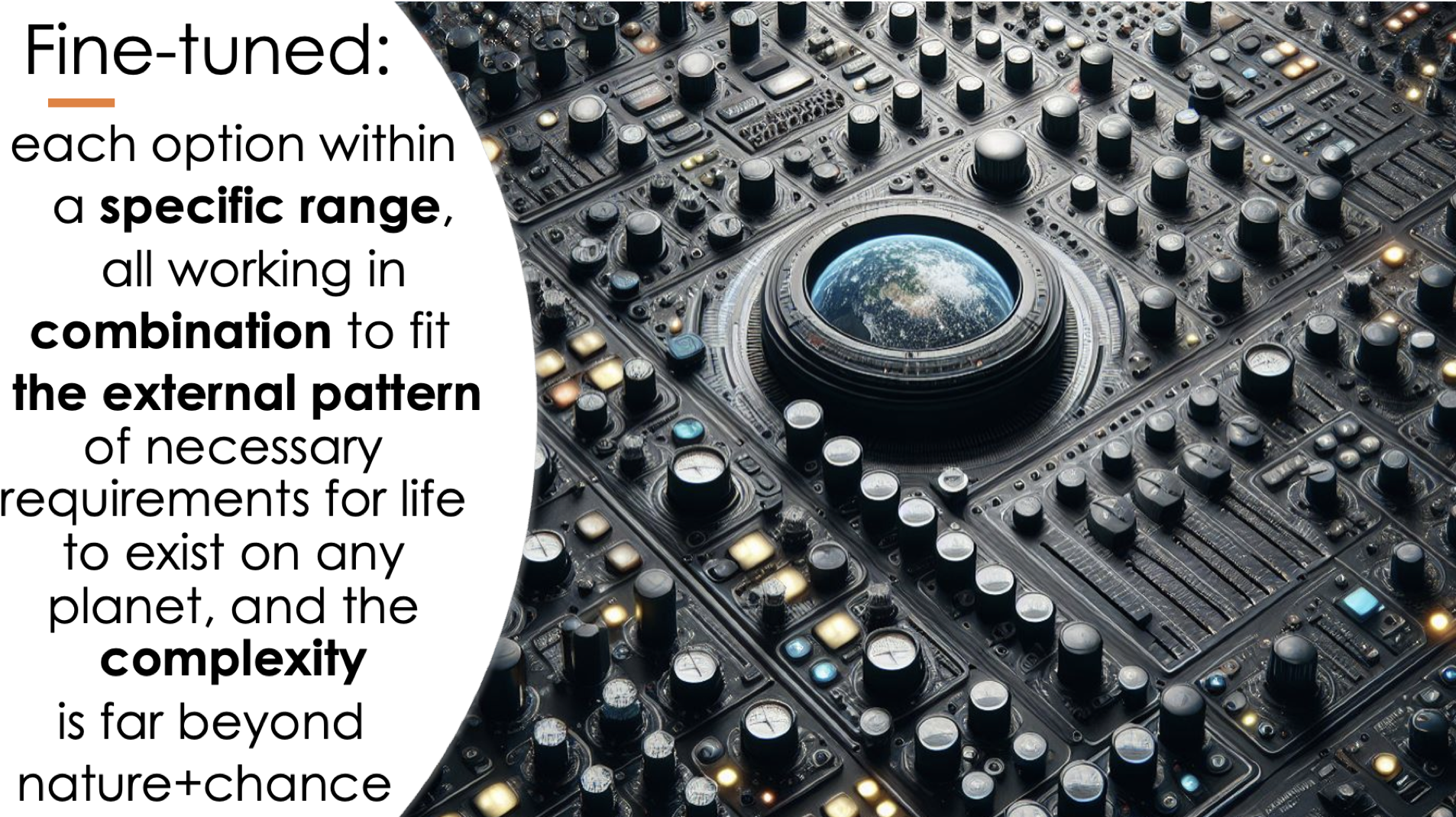
These are just several examples, but already one can realize the significance. If you walked into an empty music studio, which was playing your favorite song, and while you stood in front of the control board, made up of hundreds of dials, you slightly bumped one dial and the music instantly stopped and was replaced by static noise – what would you be thinking? Did the board, by chance, arrive at the exact configuration to play your song, or was a purposeful agent, who knew you, involved? We see the same thing with the Universe. The hallmark features of intelligence are demonstrated:
A Logical Answer: The Teleological Argument
We can use these scientific facts in inescapable philosophical arguments. There is a logical argument known as the teleological argument, and if the premises of this argument are true, then the conclusion is inescapable. If the premises are most likely true, then the conclusion is most likely true. If a premise is false, then the argument cannot take us to its conclusion.
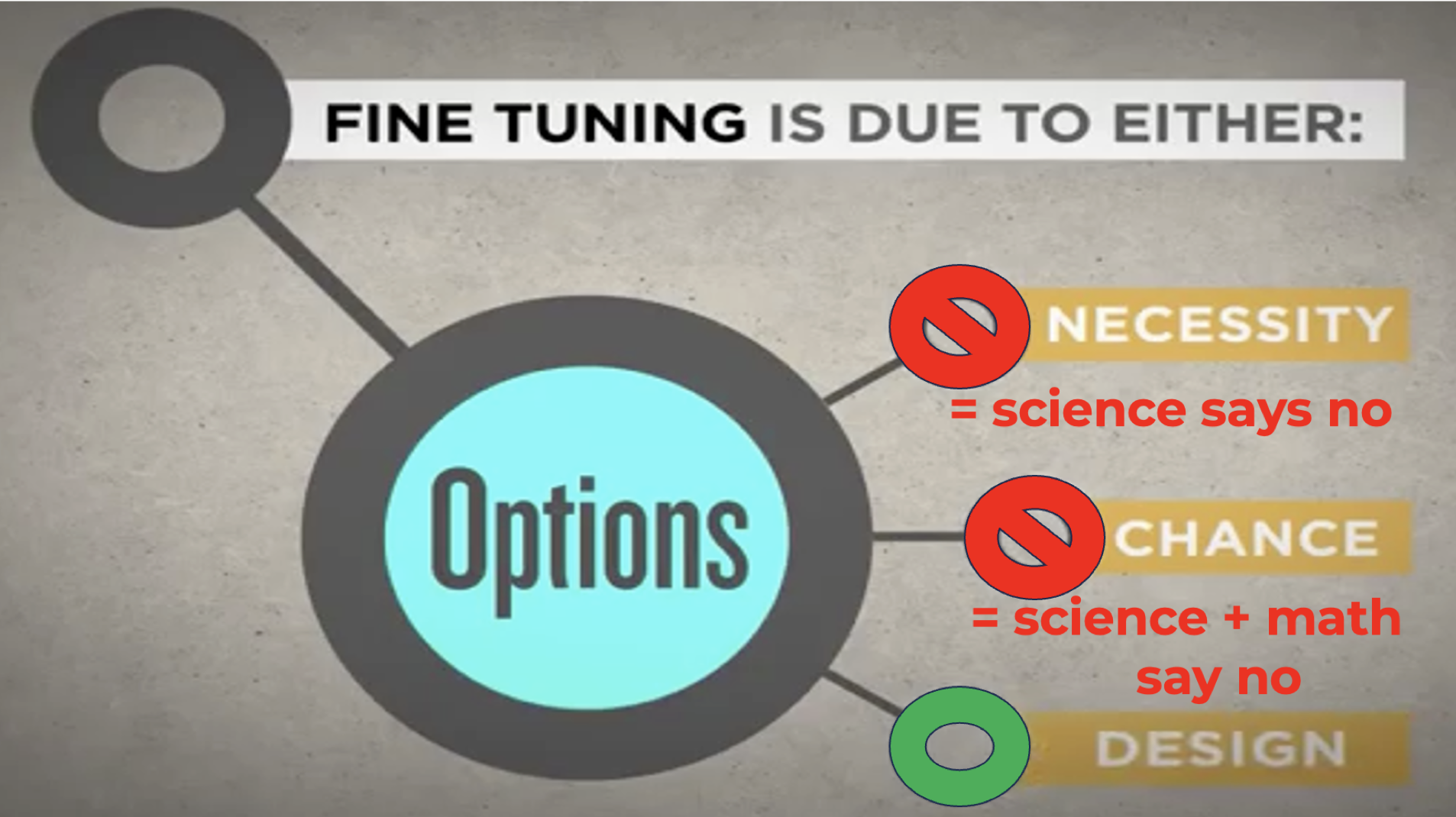
Premise 1: The fine-tuning of the Universe is the result of (a) physical necessity, (b) chance, or (c) purposeful design.
Premise 2: It is not the result of (a) physical necessity or (b) chance.
Conclusion: Therefore, it is the result of (c) purposeful design.
Premise one simply provides the options. As far as premise two, to believe in the first option, “physical necessity”, you would have to show the initial conditions, constants and quantities in nature HAD TO BE WHAT THEY ARE, IT IS IMPOSSIBLE FOR THEM TO BE ANYTHING DIFFERENT. However, contrary to this idea, the consensus in science recognize these features of nature are independent of the laws of nature, and there is no reason why these values couldn’t be different from what they are. Summarized by award-winning physicist and agnostic author Paul Davies, “the physical universe does not have to be the way it is: it could have been otherwise.” (Paul Davies, The Mind of God, 1992, p. 169)
What about the other option in premise two? Does “chance” have a chance? We explained how bad your bet would be if betting chance led to what we find in the Universe. Furthermore, predictive and trending evidence support the conclusion of the teleological argument.
Predictive: Fine-tuned features are unexpected and should go away, if the universe were only a product of nature and chance alone. If the biblical model is correct, it predicts the list of fine-tuned parameters may grow over time, and even will lead scientists into new discoveries – and that is exactly what we see.
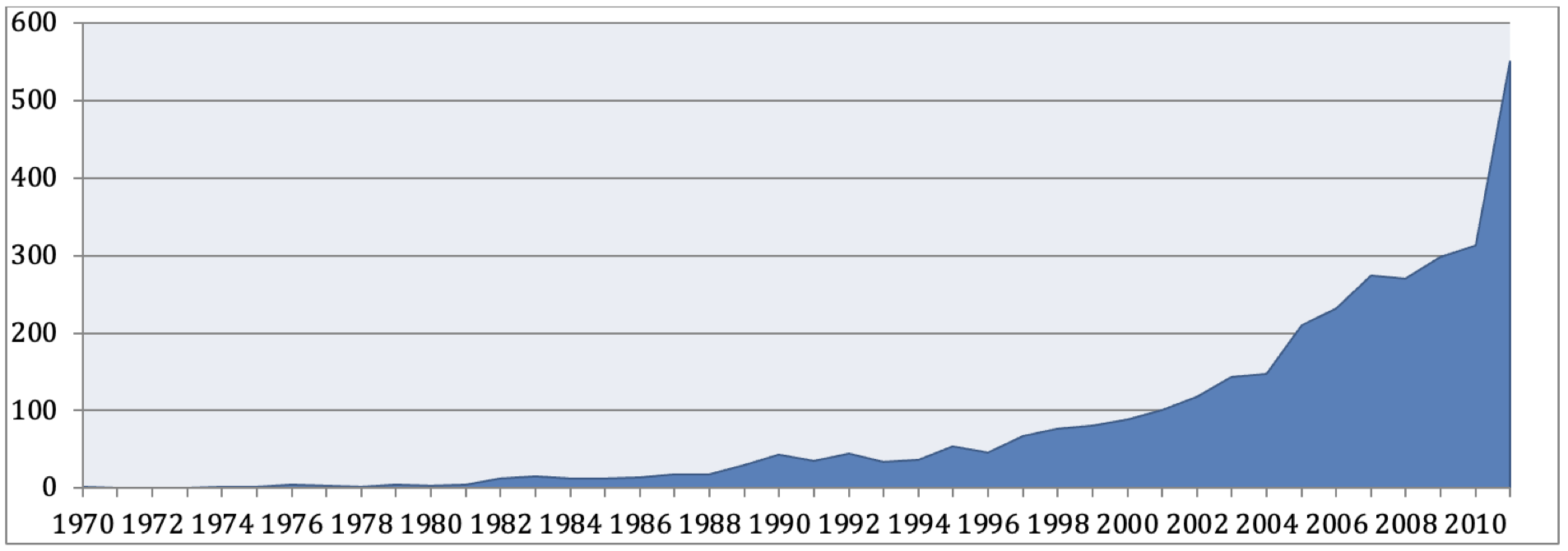
Trending: Trends are important indicators. You see trends in your grades, the economy, your health, and other areas, and trends speak loudly. If the fine-tuning argument is valid, as time goes on, new discoveries and support will increase overall, or the opposite, if not true. What have we found? You can check the trends in the scientific literature, it has grown to hundreds of examples. For those expecting a natural explanation will be found, this is hope against the evidence that has already come in, and this is why trends are so important; the evidence and trends are not impacted by opinions and hopes, but just allow us to follow the evidence where it leads. And the trend is: every month or so a new fine-tuning discovery is added and mathematically increases the evidence by one million times an intelligent creator is the only reasonable, logical, sufficient, and evidenced-based cause of the Universe. The graph is a visual representation of the trend of fine-tuned features of the Universe, taken from a query, performed by physicist Luke Barnes in July 2011, in ScienceDirect (Elsevier) database.
 Since premise one simply lists the options, and we just provided significant evidence supporting premise two, what do you believe about the conclusion? And more importantly, what reasons support your belief? Is the conclusion 100% certain because premises one and two are true, or maybe only 60% certain, or do you think a premise is false so the conclusion is not reliable? If it is only 40% likely the conclusion is true, then what would a 40% chance you will face a personal purposeful creator mean for you?
Premise 1: The fine-tuning of the Universe is the result of (a) physical necessity, (b) chance, or (c) purposeful design.
Premise 2: It is not the result of (a) physical necessity or (b) chance.
Conclusion: Therefore, it is the result of (c) purposeful design.
The image was taken, and modified slightly, from a ReasonableFaith.org video summarizing the fine-tuning argument.
What are the scientists saying?
Quotes are not proof, but it is interesting to note the following well-accepted and peer-reviewed scientists are giving the quotes below – because they have to – based on the evidence.
- “The more I examine the universe and the details of its architecture, the more evidence I find that the universe in some sense must have known we were coming.” (Freeman Dyson, Disturbing the Universe, New York: Harper & Row, 1979, p. 250)
- Paul Davies has moved from promoting atheism to recognizing that “the laws [of physics] … seem themselves to be the product of exceedingly ingenious design.” (Superforce, p. 243) He states, “[There is for me powerful evidence that there is something going on behind it all … it seems as though somebody has fine-tuned nature’s numbers to make the universe. The impression of design is overwhelming.” (The Cosmic Blueprint, p. 203) “If physics is the product of design, the universe must have a purpose, and the evidence of modern physics suggests strongly to me that the purpose includes us.” (Paul Davies, Superforce, 1984)
- “A common sense interpretation of the facts suggests that a super intellect has monkeyed with physics, as well as with chemistry and biology, and that there are no blind forces worth speaking about in nature. The numbers one calculates from the facts seem to me so overwhelming as to put this conclusion almost beyond question.” (Sir Frederick Hoyle, Engineering and Science)
- “I find it as difficult to understand a scientist who does not acknowledge the presence of a superior rationality behind the existence of the universe as it is to comprehend a theologian who would deny the advances of science.” (Pioneer rocket engineer Wernher von Braun cited in The Skeptical Inquirer 10:258-276)
- “Astronomy leads us to a unique event, a Universe which was created out of nothing, one with the very delicate balance needed to provide exactly the conditions required to permit life, and one which has an underlying (one might say ‘supernatural’) plan.” (Nobel Laureate Arno Penzias as cited in Cosmos, Bios, and Theos, 83)
- “As we survey all the evidence, the thought insistently arises that some supernatural agency – or, rather, Agency – must be involved. Is it possible that suddenly, without intending to, we have stumbled upon scientific proof of the existence of a Supreme Being?” (George Greenstein, The Symbiotic Universe, 27)
- “If we modify the value of one of the fundamental constants, something invariably goes wrong, leading to a universe that is inhospitable to life as we know it. When we adjust a second constant in an attempt to fix the problem(s), the result, generally, is to create three new problems for every one that we ‘solve.’ The conditions in our universe really do seem to be uniquely suitable for life forms like ourselves, and perhaps for any form of organic chemistry.” (Martin Rees and John Gribbin, The Privileged Planet, 206-207)
And the Bible added thousands of years prior, “The heavens declare the glory of God; the skies proclaim the work of his hands. Day after day they pour forth speech; night after night they reveal knowledge.” (King David Psalm 19:1-2)

Is there any option able to explain the fine-tuning without God?
Possibly. These quotes were chosen because they come from scientists who know the numbers as well as anyone, and most accept agnostic or atheist worldview beliefs, at least when making those quotes. So you may wonder, how someone seeing such “overwhelming” evidence for design does not then accept a designer. In an issue as significant as worldview beliefs, emotions, willfulness and a host of psychological defense mechanisms come into play, regardless of what worldview you stand within.
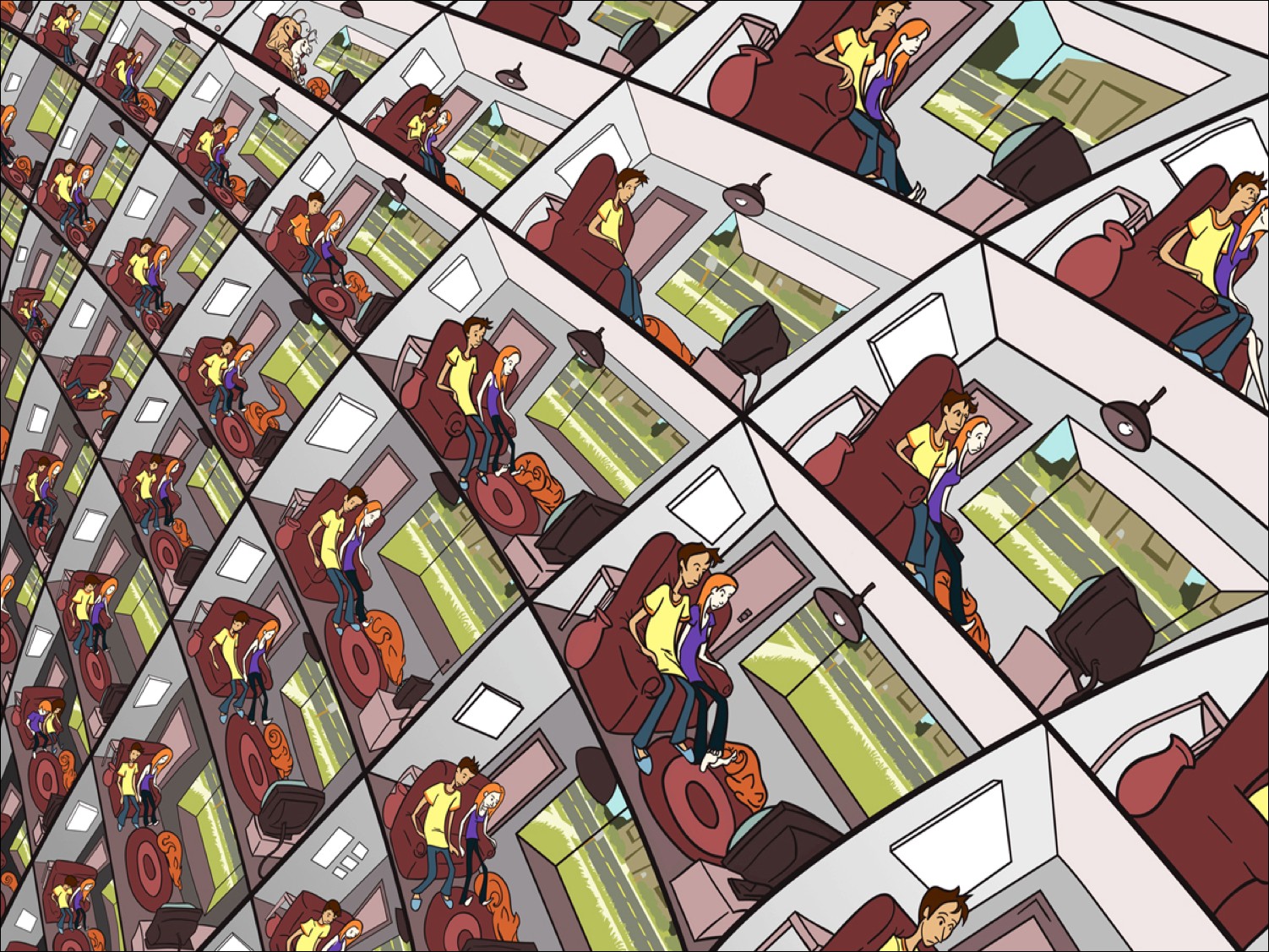
While I provided quotes from Stephen Hawking, there is more context in his books as he did not accept the biblical model. After he said the extreme fine-tuning could lead some back to the old idea of “some grand designer,” he adds, “That is not the answer of modern science … our universe seems to be one of many, each with different laws.” He believes every different thing that could possibly happen, does happen, and spins off an entirely new and equally real universe. We just happen to be in the universe that got it all right.
Is that the answer of modern science as Hawking claimed? Not at all. Brian Greene also agrees with Hawking and gave a TED talk explaining how multiple universes would be created, and compared the mechanism producing them to a French horn instrument. But, notice: he couldn’t help but to compare it to something made by an intelligent agent.
Problems with the multiverse model
- This is an admission the fine-tuning examples demonstrate purposeful design so great that it necessitates either God, or an infinite number of other universes.
- You would need something to generate all those universes, and does so with the capacity to try out every possible fine-tuning value. Such a multiverse generator would also have a BEGINNING, a CAUSE with the properties noted earlier, and would be phenomenally FINE-TUNED (like a French Horn). This just pushes the need for a cause of the fine-tuning back a step. The Borde-Guth-Vilenkin papers noted in the posts on the Cause of the Universe noted even a multiverse must have a beginning ad transcendent cause.
- What kind of multiple universe does the person believe in? Max Tegmark determined that there are 4 types, and only a basically infinite type would work to explain the fine-tuning. And do you realize what you would have to believe to accept this type of multiverse? It will blow your mind, and blow out any reason to believe in anything. We will discuss this briefly below. Tegmark’s category one multiverse is not really multiple universes, just that our universe goes far beyond what we will be able to observe. This is true. And the second category of multiverses are interesting, could potentially derive some evidence, but would not resolve the fine-tuning. Only an infinite category multiverse could potentially resolve the problem, if it did not involve its own fatal problems, such as what you must believe if such a multiverse were true.
- What EVIDENCE does the person give for that type of multiverse? There is none.
- Even if such a multiverse existed, what evidence do you have showing it already tried enough possible universes to fulfill the mathematic likelihood of generating one like ours? In addition, if there is an infinite number of universes, why don’t they collide?
- It is vastly more probably we live in a Boltzmann Brain Universe, which is an argument used to expose the absurdity of believing in an infinite type multiverse.
- This type of multiverse theory may be beyond the capacity of science to ever validate. So do not claim to believe in this theory due to science.
- Such a belief is an example of an ad futuris fallacy: Basically saying, in spite of all the evidence for a personal cause of the Universe, I will discount that data and instead just wait, because someday the evidence of a no-God-needed cause will come.
- Such a belief is about as extreme of an example of ad hoc fallacy as possible: it explains way too much.
- Such a belief also demonstrates unreasonable faith: standing on no evidence, no significant reasons making it reasonable, and refusing a model that significantly establishes reasons in the standards of testing for validity (explanatory power, scope, falsifiability, predictive power, etc.) – the Christian model.
As one of the world’s foremost scientists on multiple universe theory, Max Tegmark, claims:
“Is there a copy of you reading this article? A person who is not you but who lives on a planet called Earth, with misty mountains, fertile fields and sprawling cities, in a solar system with eight other planets? The life of this person has been identical to yours in every respect. But perhaps he or she now decides to put down this article without finishing it, while you read on. The idea of such an alter ego seems strange and implausible, but it looks as if we will just have to live with it, because it is supported by astronomical observations. (click here to see Tegmark’s article)
So you have to believe there is another being, with an identical life so far in every way as you, but decided to wear a different shirt today, and that person is living in an EQUALLY REAL universe within the nearly infinite multiverse. Do observations and science give evidence of that – no – what Tegmark is saying is observations show there is unfathomable fine-tuning, which means if you do not accept God, the only other option we are left with is a nearly infinite-type multiverse. And he did not do his example proper justice, as believing in such a multiverse means anything and everything that is possible will happen.
Therefore, there is being out there, who has every single feature of their life in common with you, looks, friends, family, experiences, thoughts, except this person is yellow, and has a green star on their belly. Where this being lives, this creature is differentiated as a “Star-Bellied Sneetch,” as opposed to another group of beings, who are the same overall, except they lack a star, thereby relegating them to “Plain-Bellied Sneetches.” So Dr. Seuss’ famous story was entirely non-fiction.
In this multiverse, an entrepreneur, who just happened to be named Sylvester McMonkey McBean (matching the story in the Dr. Seuss book, which only exists in our Universe) developed a machine the Plain-Bellied Sneetches could enter and gain a star on their belly. The star-bellied Sneetches, including the one closely matching your life, saw they were not “special” anymore, and the entrepreneur adjusted the machine to change these Sneetches, enabling them to stand out and feel superior once again.
This process repeated over and over until the Sneetches realized the ridiculousness of discrimination, and that no one is inherently better than anyone else. In case you are interested, the entrepreneur extorted enough money from the Sneetches to develop the Force-wielding powers of the Sith to build an Empire, hiring and twisting a young Anakin Skywalker (previously a Plain-Bellied Sneetch) to enforce his control, while he searched for that wretched-little-Sneetch, Yoda, who had ruined his business teaching the Sneetches about discrimination and inherent value. Sounds like I am making an absurd joke – nope – if you want to believe in the multiverse, which is the only other option if you want to avoid the need for God, then you must believe my story is absolutely true, out there, somewhere.
Nobel laureate Steven Weinberg understands the situation too, “If you discovered a really impressive fine-tuning … I think you’d really be left with only two explanations: a benevolent designer or a multiverse.”[i]
Another well-known cosmologist, Bernard Carr echoes that realization: “If there is only one universe you might have to have a fine-tuner. If you don’t want God, you’d better have a multiverse.”[ii]
[i] Amanda, Gefter, “Why it’s not as simple as God vs the multiverse, New Scientist, Dec 2008.
[ii] Bernard Carr, quoted in Tim Folger, “Science’s Alternative to an Intelligent Creator: The Multiverse Theory,” Discover Magazine, November 9, 2008.
Bottom-line: Do you believe all the fine-tuned factors, which go against astronomical statistics to all finely balance on the edge allowing life, are the result of chance plus infinite other universes, where anything possible can and will happen, or do they display the hallmarks of intelligence: purpose, meaning, design, ranges and combinations meeting requirements beyond the capacity of physical laws, etc.?
I’m sure the Universe is larger than we can observe; even the existence of some form of “bubble universes” would not surprise me, and makes for great movies. However, the idea of having the level of multiverses needed to explain the fine-tuning without a purposeful God, needs to stay in science-fiction where it fits as it comes without evidence, with a lot of problems, and also must face the comprehensive case from all fields of study bringing significant and continually growing evidence for the biblical model. I don’t have enough faith to believe in such a multiverse.
Which brings us to the next logical question: What God exists, and what does this God expect from us? As was true with the scientific evidence, only the Christian model provides evidence and reasons supporting its claims on a level none of the other belief systems has reached. This is covered in a set of blogs covering Jesus, primarily given in the section found by clicking here.
What is the PURPOSE of My Life?
The answer to what is my purpose in life and how hopeful can I be in reaching this purpose is much more simple and clear than you may think. You can actually arrive at an answer to those questions as the evidence is in.
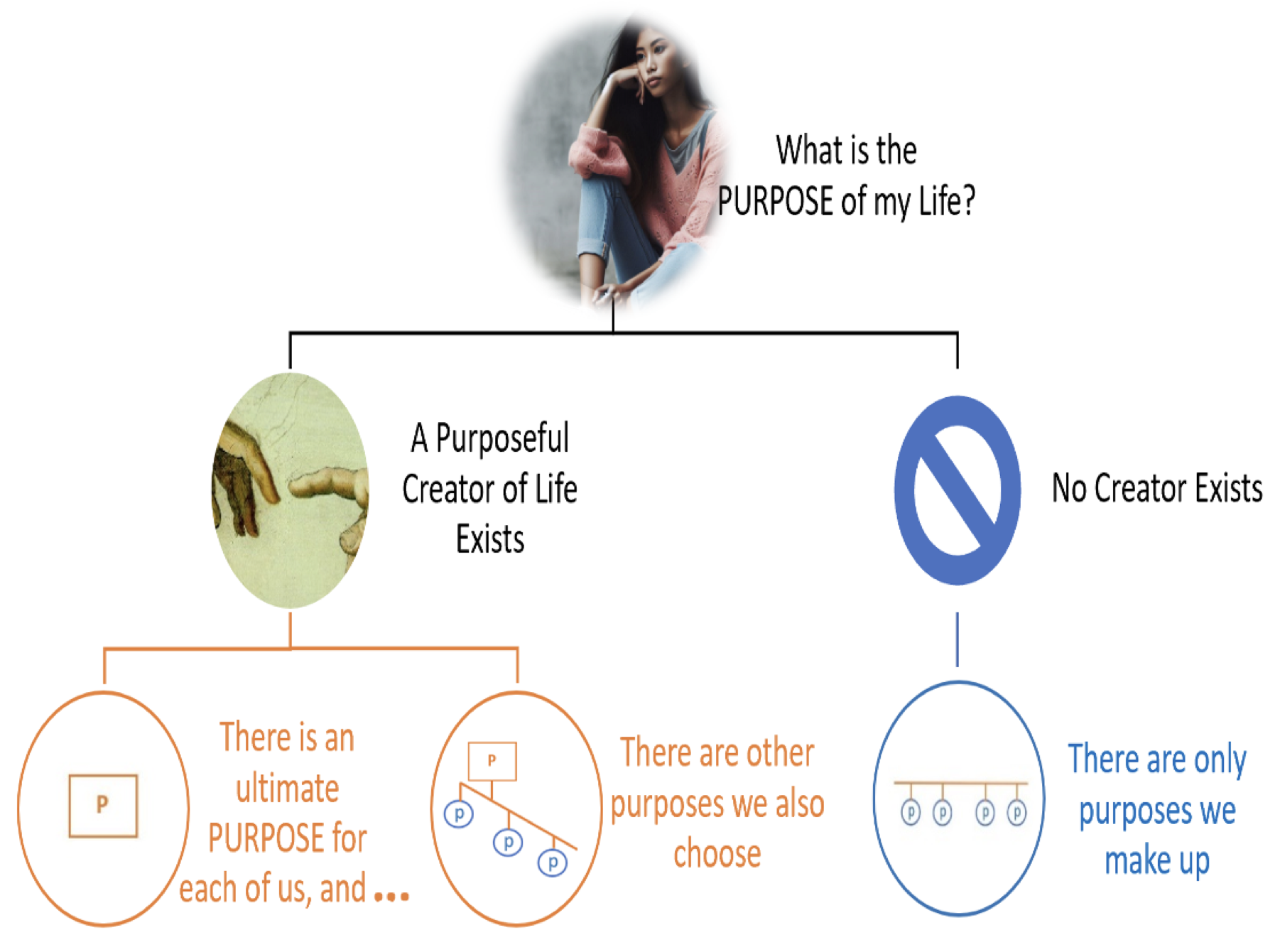
Regarding the first step and primary question, Does God Exist: atheism, agnosticism, and other belief systems are exposed dramatically by the fine-tuning evidence, which display the demonstrative hallmarks of a personal, purposeful creator. Therefore, the right-side of the flow chart goes dark, as far as evidence, or reasons to bet your life and purpose upon. Simple, as there is only one other way to go, and on that left-side, with a Purposeful Creator, we now have an ultimate Purpose, as the Creator alone knows the objective Purpose for the creation.[1] You will notice the flow chart has not only an ultimate Purpose on the Purposeful Creator side, but also secondary purpose(s) in life, which each person can choose for themselves.
[1] What is the ultimate Purpose depends upon which Creator exists, and what Purpose has been communicated to us. This topic is covered in the section of the website, Foster Your Purpose, where you can know today not only what your Purpose(s) are, but also how reliable your hope is in reaching your purpose in life.