There are endless examples, whether in movies, social media, or in your own life, when one thinks they are on top of things, they got it handled—but reality exposed how inaccurate and vulnerable they actually were.
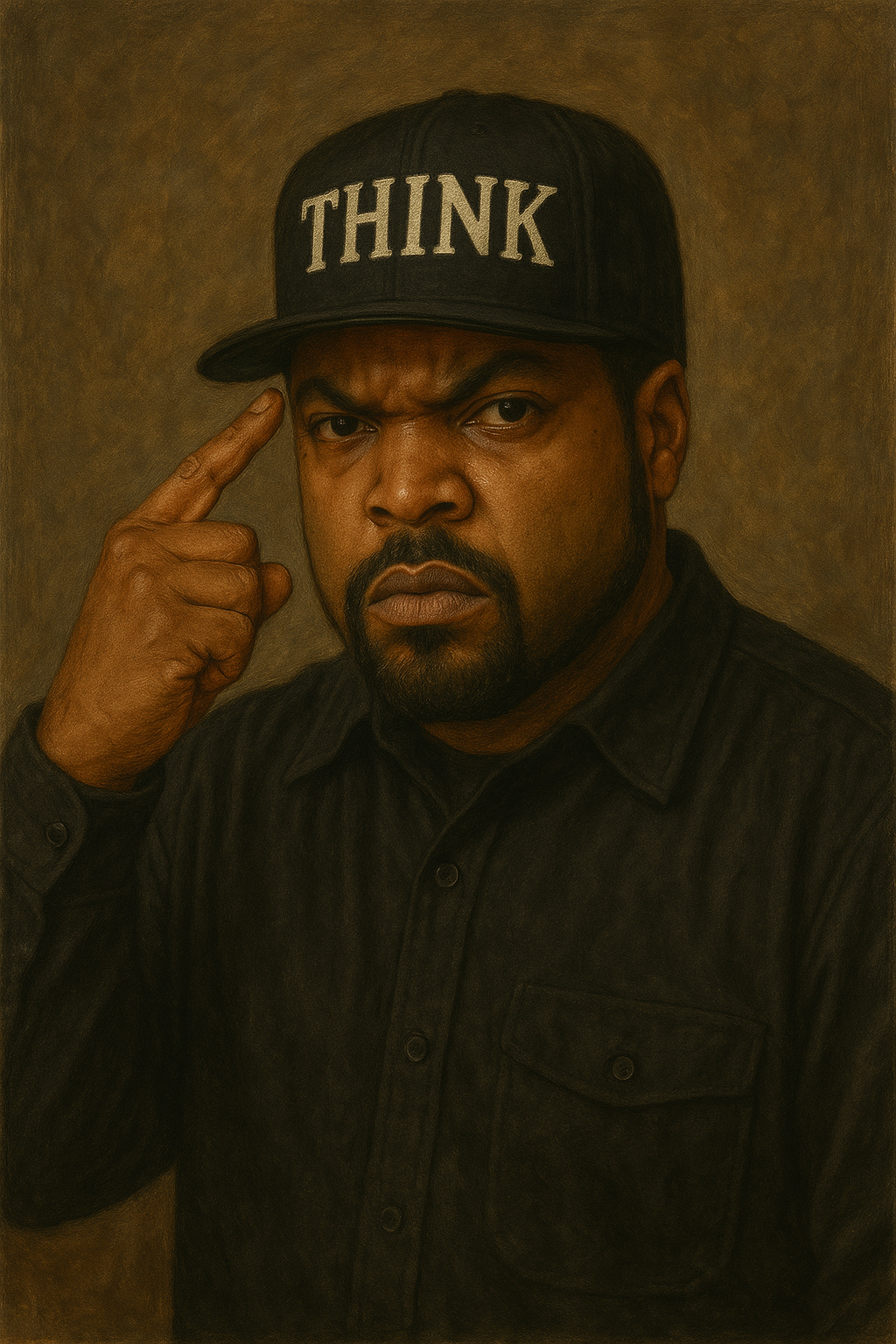
How susceptible are you to being one of those people with unreliable hope? There is a way to find out, and surprisingly, the rapper Ice Cube prompts us to it. Ice Cube did hit on one of the most underrated pieces of life advice ever written:
“You better check yourself before you wreck yourself.”
Now, the rest of the song includes shotguns and scenarios that may not apply to most people—but the core warning is magnificently universal: before life hits you with consequences, you need to run honest checks.
We already understand this principle with everything else that really matters. Ensure we are on track to reach the results we expect, and keep irreparable, unexpected consequences from occurring:
✈️ Airlines run full inspections before every flight.
🩺 We schedule physical exams and dental checkups—even when we dread them.
🚗 Car dashboards flash warning lights before the engine gives out.
The same serious need to run proper checks is true in any area of life where a choice you make will bring consequences, and your beliefs are at the highest level in that regard. Whether you’ve noticed it or not, you already have a worldview—the map that determines how you view the world and guide you choices, actions, goals and overall direction in life. You make choices every day based on this quiet framework of belief. It guides your story.
And once we get comfortable with our worldview, we tend to settle into it—like driving a familiar route without thinking. That is precisely why checks are necessary. Because habits feel safe… right up until they are not.
Life does give warning signs. Some are subtle. Others break through like sirens. People have the ability and choice to ignore them all. The check engine oil light in your car, for example, has saved many from expensive oversights. I’ve seen patients ignore symptoms until their tumors were the size of softballs. They ignored the signals—until they couldn’t. Sometimes the warning signs are ignored until it is too late.
It is your choice to either run the periodic and appropriate checks of your beliefs, or choose to do what is comfortable and easy, and ignore the long-term overall results—until you cannot.
Why This Exercise Matters — More Than You Think
A dear friend once asked me to stand beside him at his wedding. I said I would be honored, and would fully support him if he chose to marry, but first had to say something uncomfortable. I proceeded to explain why marriage for this couple would be an extremely harmful decision. He is an intelligent guy, said he would consider it, but planned to move forward.
Two weeks later, after being knocked unconscious with a table leg and dragged, along with his belongings, out into the street by his would-be spouse, he then made the more reasonable choice.
Now, the exercise below might feel more painful than getting clubbed unconscious by your fiancé, but it has remarkable power. When you write down what you believe—and why—you start to see more clearly:
- What map you’re actually walking and where you are headed.
- What supports your beliefs—or what lack of support exposes them.
- Whether your worldview can carry you through pressure, loss, love, purpose—and the end of your life.
Because if your worldview can’t hold up under honest inspection—it won’t hold up when life hits hard.
If you believe in God and a purpose to life, WHY? If not, WHY? If you are unsure, what keeps you there? What evidence ensures your choice of worldview is reliable, and warrants your avoidance of the other maps of reality?
Some try putting off the choice of which map to use, which is itself a choice and a specific map. Many others simply start drifting along in life with little assurance. Traveling without necessary thinking brings consequences, you become an infant toddling into a busy street.
This Section Is About A Topic Of Interest To You – You
Right now, you are following a specific map—counting on its accuracy. This chapter is not asking you to abandon your beliefs. It’s asking one courageous thing:
🔍 Run a check. Examine your worldview as honestly as you would examine a flight before takeoff.
You can determine how vulnerable you are to basing your life on unreliable beliefs. Pain and serious loss often succeed where logic failed—but these are brutal teachers.
A wiser instructor is available right now: the Ice Cube Challenge. Check Yo Self—before life checks you for real.
The Most Important Questions of All
If you’re unsure which belief system you’re actually standing on, one reliable way to find out is to answer the big questions. They are the compass points of every worldview map—the quiet assumptions guiding every decision, every value, and every hope you carry into the future.
Writing these answers out on paper may be a pain. Of course, we would rather be interacting with social media or a favorite hobby, but this exercise has significant value because: How often have you actually stated and supported YOUR beliefs? It is easy to say you know your beliefs, yet putting them concretely on paper not only provides a foundation for you to refer back to, but also solidifies your ideas and makes you consider how solid your current understanding stands.
a. What worldview are you currently following?
Are you navigating life using atheism, agnosticism, Buddhism, Christianity, Hinduism, Islam, Mormonism, or some other map?
b. What assurance do you have that your belief is accurate, true?
Provide just five reasons setting your belief system apart from the others, as different belief systems contradict each other on foundational points, and therefore, only one, at most, can be accurate whenever they contradict.
c. Origin—Where did it all come from?
Was it merely nature and chance, or was a purposeful God involved? If so, which God, or do you believe the answer is unknowable? This is extremely significant as it provides answers to the other big questions.
d. Meaning—Why are we here?
What is the purpose, value, direction of my life?
e. Choices— What is my current condition, and can I reach something better?
f. Destination—Is there something after this life?
If so, what is it and how do I reach what is best for me? If not, what does this mean for my life, purpose, and goals?
You can find summaries of the different worldviews’ answers to these questions in blogs using this link, this one, and others will be added. These will help make clear what you are basing your life upon.
How Did You Do?
If you have excuses but no answers…
If you struggled to produce reasons for what you believe…
If you found yourself avoiding or deferring the questions…
Then:
- The bad news: You are on unstable and unsafe ground, blindly walking into the path of oncoming reality.
- The good news: You now have an extraordinary opportunity. Stability, clarity, confidence, beauty, wisdom, and lasting purpose are available to you—not as vague ideas, but as grounded realities. Standing on solid, validated ground will not only strengthen your mind, it can change the texture of your entire life.