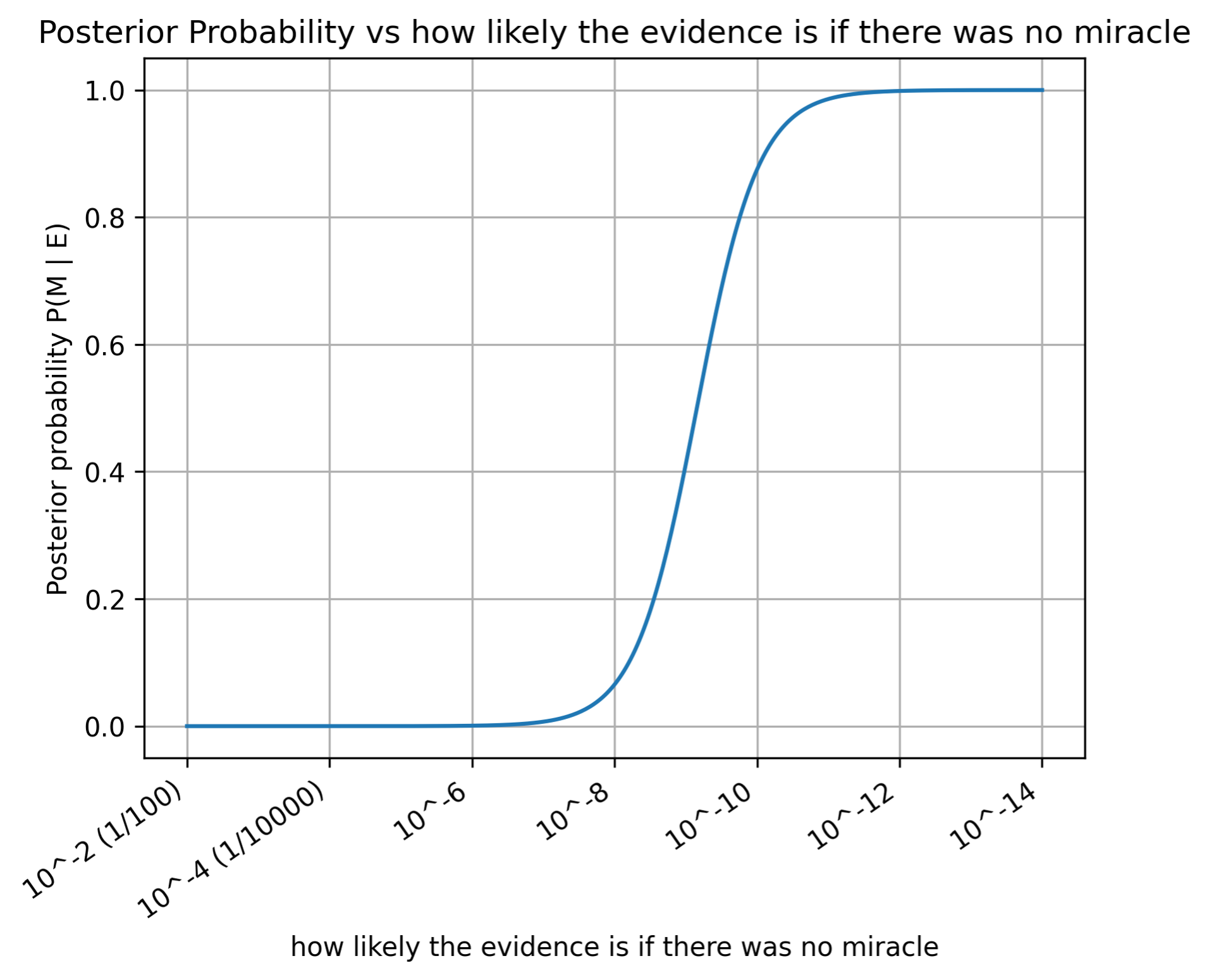

Okay, objective morality exists, but what is it based on?
The existence of objective morality brings us to the next logical question, what is needed to ground an absolute moral law? Notice we are not asking how do we come to know moral values and obligations. How we come to know what we know involves an area of study in philosophy known as epistemology. We can come to know morals possibly through upbringing, development of the human race, inner witness of either natural or supernatural conscious, society, personal experience, or a mix of any of these or other means.
Thus, we already have an answer to another of the interesting questions posed at the start of this chapter: Can atheists be more moral than theists? Answer: Yes. We all seem to have come to have a set of morals, and we can get them through much the same ways regardless of our belief systems, which means an atheist can come to share the same morals and can also choose to prioritize these moral values to direct their choices as much, and sometimes more, than some theists or agnostics or pantheists. I personally know agnostics and atheists who are extremely stringent in following morals, and I know Christians, Jews, Muslims, Buddhists, etc., who display morality on a much worse level (this is especially true of those who label themselves as Christian, Jewish, Muslim, etc., but likely only use the religion for psychological or social reasons).
Most atheists will live moral lives not too different from others, but the real interesting question is: Why? Why should an atheist choose to “do the right thing,” during situations when the likelihood of personal benefit is greater by acting against a morality just forced upon you by genetics, society, upbringing, religion, etc.? Many atheist and agnostic writers have noted the superiority of people who not only recognize there are no true moral limits, but live according to this freedom. Further, those supposed atheists, who still follow societal norms or traditions or restrictive morals, have been labeled by other atheists as just weak-minded atheists.
A number of parents spoke to me about their plan to send their children to church to learn to follow morality. Each time I asked, “Do you believe in God?” If they answered “No” or “Not really”, I asked why would you send them to learn moral values from a God who isn’t there? Your kids, sooner than you think, will be smart enough to realize if there is no God behind these morals, then it is all just an artificial push to make me act a certain way, and why in the world would I follow such made-up, unenforced, no consequence morals, when dishonesty, sex however I want, stealing, and other things beyond parental or societal limits may bring some pleasure, as long as no legal or natural consequences are likely?
While we may all come to know and even practice morality much the same, how we get this morality is not the important question. The BIG question is: what would make absolute moral values and obligations exist as a fact of reality (an area of philosophy called ontology), or on what grounds do these moral values and duties become objective, absolute, universal, instead of just subjective? If a true moral standard exists, what ground does it grow upon?
The United Nations Declaration of Human Rights (1948) affirms “the equal and inalienable rights of all members of the human family” and further claims: “All human beings are born free and equal in dignity and rights. They are endowed with reason and conscience and should act towards one another in a spirit of brotherhood.” French philosopher Jacques Maritain helped draft the document and noted a glaring omission: there is no foundation or basis or grounding for human dignity and rights. Maritain was directly involved in the philosophical discussion surrounding the Declaration, and made clear the confusion: “We agree on these rights, providing we are not asked why. With the ‘why,’ the dispute begins.”[1]
Stating a moral value and obligation exists, such as all people have inherent dignity and rights and we “ought to” or are obligated to act in brotherhood accordingly towards each other, requires a reason why this obligation actually applies to all people, places, and times, existing beyond all human opinion and should be obeyed.
Why should Israeli and Muslim nations and people treat each other with equal dignity and rights? Why is a nation, or yourself, obligated to do the good thing, rather than the bad thing? To whom is this obligation owed? Why is it rational for you to limit your actions based upon this obligation when it is against your self-interest? Why let other people’s or nation’s expectations decide what is good for you, especially if you can avoid the consequences of their disapproval? Chairman Mao and Stalin did, they ruled, they accomplished much of what they sought, and they died in their old age.
Let’s look again at the Nuremburg trial. The German soldiers were condemned by prosecutors appealing to an objective moral law standard, what Supreme Court Justice and prosecutor at Nuremburg, Robert Jackson, called “a law above the law”, a transcendent moral law which is the standard of objective morality we all are beholden to, regardless of opinions, culture, circumstances, etc. Think about what is required:
- A MORAL STANDARD, a law above all other laws or opinions of humanity, which any action in any time or place can be judged against.
- A law-giver or AUTHORITY, beyond all opinions and limits of humanity, capable of enforcing the standard.
- A PURPOSE which applies to all people, places and times, which serves as the landmark the objective moral standard always points toward. In the case of the examples given above, it would be “All human beings are born free and equal in dignity and rights.”
The requirements above were, of course, recognized in a previously noted historic document, the Declaration of Independence, whose authors similarly recognized the same need to provide the indispensable grounding for all people being “born free and equal in dignity and rights.” A personal Creator in a position to know and set the standard of moral values and obligations for all, and capable of enforcing that standard can be the indispensable grounding establishing objective moral values and obligations. While the United Nations document was produced nearly two centuries later, the logic must have dissipated over time as this later document entirely misses the essential support or grounding to justify the moral claims made.
Does the Declaration of Independence have the only way to ground a moral law, or are there other alternatives? Let’s look at failed attempts to justify absolute morality. Those who want to reject the existence of God, but also are uncomfortable with all morality being subjective typically have the best searches for alternative grounds for objective morality, so these sources are a good place to look.
A. Can Objective Morality Exist through Genetic Evolution?
We share so much physical similarity with other humans, so maybe mental and emotional traits also follow, and evolution has naturally selected traits or moral codes helping survivability of humanity. If such moral coding is throughout humanity, so we all feel this sense of right and wrong innately, can this be an objective moral standard? No.
Professor of philosophy at Florida State University, Michael Ruse, adds:
Morality is a biological adaptation no less than are hands and feet and teeth. Considered as a rationally justifiable set of claims about an objective something, ethics is illusory (emphasis mine). I appreciate when someone says, ‘Love thy neighbor as thyself,’ they think they are referring above and beyond themselves. Nevertheless, such reference is truly without foundation. Morality is just an aid to survival and reproduction, … and any deeper meaning is illusory.[2]
Even Richard Dawkins, who believes evolution produced our morality, recognizes this means there is no true right and wrong:
In a universe of electrons and selfish genes, blind physical forces and genetic replication, some people are going to get hurt, other people are going to get lucky, and you won’t find any rhyme or reason in it, nor any justice. The universe that we observe has precisely the properties we should expect if there is, at bottom, no design, no purpose, no evil, no good, nothing but pitiless indifference.[3]
Impersonal DNA has no capacity to consider what is right or wrong, much less make a choice between moral options. Genetics can only follow natural laws and conditions leading to some genetics being passed on better than others. If a lineage develops to have rape as a moral good, does this make rape objectively good? We would have only as much right or reason to judge someone expressing a different evolutionary coding for morals than we would to treat differently adaptions or coding for eye or skin color.
What if we run evolution backwards in time and let it run again; most biologists and philosophers note evolution will not develop the same every time. Therefore, if this time evolution just happened to favor having a sense of ought or obligation for abusing children for fun, are such actions now absolute good? Do not expect criminal courts to accept the defense, “My lineage made me do it; respect my evolution.”
Founding publisher of Skeptic magazine, Dr. Michael Shermer, argued evolution gives us a moral sense, but this skeptic should have been skeptical of his own claim as one need simply ask: which moral sense is better when two different moralities from different evolutionary paths contradict? In order to determine one moral sense is better than another, you need a standard to measure it. Whatever part genetics or evolution supposedly plays, it does so guided solely by natural laws and survivability, which has nothing to do with good and bad of morality. Matter and energy in nature have no moral properties, let alone mental ones.
So why should I or anyone else today follow such contrived morality? Some argue evolution shows what is best for long-term survivability or benefit of our species. However, our struggle for survival in this world is very personal, do you really think people should or would live according to moral principles maybe benefitting humanity in the long run, but hurting or even ruining our life in the short run? Think further.
Sometimes cowardice, selfishness, being unfaithful or cruel would benefit survivability, yet these are viewed almost unanimously as wrong across cultures. Such a morality would only be a left-over from chance and evolution, and rational consideration would allow any of us to ignore those artificial feelings of right and wrong as something changeable and entirely controlled by natural laws and chance, all of which renders evolution incapable of producing an objective morality.
B. Can Objective Morality Exist through Societal Norms, A Cultural Contract?
This idea has the same problems as noted above. Those who believe we come to have objective morality through attempting to live in a society confuse sociology and morality. Sociology studies and explains how we behave, morality explains how we ought to behave. Regardless of how we come to have a set of moral values (epistemology), something more is required to make objective, absolute, universal morals exist (ontology). Not everything learned through social conventions, culture, or upbringing is based or grounded upon social convention. For example, logic and math we may learn through social means, but the truth of logic and math has no societal basis, and this is the case with objective moral obligations.
If objective morality was based upon social contract, how do we determine which social contract is truly right or absolute, or even “better” than the other? Does might make right; if Germany won WWII, does this make their society’s moral “truths” right? Even within a society or culture, what decides, majority rules? The loudest or most powerful? Was slavery an absolute moral right because American society accepted it in the past?
Or maybe you may argue time and “progress” make morality objective? This thought process bypasses a necessary piece of logic: it is not possible to judge between differing nations, or times, or even know what is “progress” without a standard beyond every society to judge with. In fact, all moral reformers, William Wilberforce, Martin Luther King, Malala Yousafzai, Jane Adams, etc., would all be morally wrong, or, at best, acting against their society’s “good” but without any universal basis to claim their way is “better”. Reformers expose the social contract basis for morality as entirely subjective and untrustworthy.
Society can only provide the same type of morality an individual does: opinion, subjective, changeable, and susceptible to human error and limits. Objective truths, on the other hand, would necessarily transcend all individual, cultural, or federal laws, requiring a standard applicable regardless of individual or collective opinion.
C. Can Objective Morality Exist through “Karma”?
Karma is an ancient Indian idea that a person’s actions and their consequences are connected in a cycle of death and rebirth (reincarnation). This is a central concept in Hinduism, Buddhism, Sikhism, other eastern belief systems, and New Age movements, and is often described as a form of cause and effect. The belief is a person’s actions in this life, and the accumulated effects of their actions in previous lives, determine their future lives, and is a key concept because it serves as motivation to do good, and an explanation for why evil and suffering exist. Some belief systems, like Hinduism, believe a God or gods enforce karma, while others that do not believe any God exists, like original Buddhism, think karma is just a natural law where good or bad consequences naturally follow from a person’s actions and their intentions.
While I am not sure yet what exactly Buddhists believe as far as karma being a “natural law”, I do think the idea of karma is just common-sense cause and effect, which can be explained by psychology and sociology. A person, who is positive, behaves well and treats others well, usually has less stress, less confrontations, and more good attitudes and responses from those they interact with. And people naturally feel they earn good or bad, so when they have been acting “bad” and something bad happens to them, psychologically those coincidences stick in their minds more than is warranted to reinforce their belief of earning good or bad by their actions.
What does this have to do with objective morality? Nothing. This is incapable of producing objective morality, at most, it provides a “rule of thumb” that, over time, a person can experience some positive experiences naturally brought about by their positive behavior, or the reverse if they often act like a jerk. However, people have no obligation to follow common-sense good interaction practices. Some people may decide brutality and selfishness will gain more of what they want out of life, and sociology and history have continuous examples showing this does happen. All the necessities required to be a source of objective morality are absent in a natural phenomenon like this version of karma.
As far as the other religions believing in karma, if there actually is a Creator, in a position to know what behaviors would result in best meeting the Creator’s purpose, or the best for the history of the world overall, then it would make sense following the moral laws of this Creator would result in good and avoid bad, overall, and be accounted for through reincarnation. Having a personal being, who is beyond all human opinions, able to make judgements in complex situations, and enforce the judgement does meet some requirements of a possible source for objective morality. Yet, there are fatal flaws with this idea.
If karma was able to do its job, I was told the super wealthy and blessed people today have fantastic karma from past lives, and the very poor or suffering people today must have been terrible in past lives and deserve their suffering. Personally, I find this problematic as people have used this as an excuse to ignore the suffering of others, and justify the condescension, arrogance and domination over others by successful people. Also, what if suddenly a terrible calamity falls on the super wealthy, or massive success occurs for one who was suffering terribly and judged karma’s victim? How is this explained?
Are the God(s) just unable to administer karma? Were we just wrong about their karma, then why are people, who believe in karma, able to judge anyone at all? Seems like we all wonder “Why do bad things happen to good people”, which disproves karma on a daily basis, showing there is likely a better answer as to why evil and suffering exists. Why are there so many examples of karma making good people suffer, bad people prosper, and people at both ends of the spectrum be flipped to the opposite end for no apparent reason? If some reason were given, like claiming we just cannot know the person’s complex karma, then there will be no way to test karma whatsoever, and if you cannot test a claim, it is not a reliable claim.
Seems much more likely, and evidentially supported, karma is simply the common-sense cause and effect, which can be explained by psychology and sociology, and the examples of people’s fortunes or misfortunes are the result of many factors having nothing to do with karma.
For karma to be a reasonable source for universal morality, what is the evidence these God(s), “karma”, and reincarnation exists? There is no unique[4] supportive evidence for any eastern religion Gods or reincarnation, and there is significant evidence against. Anecdotes, or individual stories about this person or that person experiencing what seems to be karma or reincarnation, is not evidence, only anecdotes and examples of common-sense cause and effect.
[1] Bucar, Elizabeth M., and Barbra Barnett. Does Human Rights Need God? Eerdmans, 2005.
[2]Michael Ruse, “Evolutionary Theory and Christian Ethics,” in The Darwinian Paradigm (London: Routledge, 1989), pp. 262-269.
[3] Richard Dawkins, River Out of Eden: A Darwinian View of Life. 1995, p. 133.
[4] People in every religion claim to have had “spiritual” experiences they feel is evidence for their belief, but when every contradicting belief system can use this claim, then it is not reliable evidence. By “unique” I mean evidence able to be validated by scholarship in applicable fields of study, which no contradicting belief system can also claim as support.
D. Can Objective Morality Exist as Abstract Ideas or Objects
Moral Platonists are those who believe moral values exist as abstract objects[1]. May sound odd because it is odd. Abstract objects (if they exist) exist as brute facts of the natural universe, not having explanation or foundation. Examples include numbers or propositions.
Philosopher William Lane Craig critiques the idea of morals existing as actual abstract objects, asking what does it even mean to say, for example, a moral value, such as justice or mercy, exists: We naturally understand what it means to say a person experienced justice or is merciful, but in the absence of any person, it is mystifying to think justice or mercy simply exist. Craig notes: “Moral values seem to be properties of persons, and it’s hard to understand how justice can exist as an abstraction (without the need or existence of people).”[2]
Furthermore, how would I have a moral obligation placed on me by an impersonal abstraction, and why should I follow it? If I have the moral duty to be merciful because somehow this abstract object exists, then why am I not also obligated to act according to other abstract moral objects, such as greed, disloyalty, and being manipulative?
In addition, these moral abstract objects would not come with an objective standard to differentiate between them, nor do abstract objects have the properties necessary to place and enforce moral duties on personal beings, such as us. Because abstract objects are causally impotent, they cannot cause anything to happen, one can try to argue society or people can be the personal source to enact and enforce on behalf of the abstract objects, but then we are back to only subjective morality and all the associated problems noted earlier.
[1] Abstract objects: https://plato.stanford.edu/entries/abstract-objects/
[2] William Lane Craig, Excursus on Natural Theology (Part 20): The Moral Argument Part 3. February 17, 2016.
E. Can Objective Morality Exist through Nice Sounding Ideas, like Science, Empathy or Human Flourishing?
These ideas sound nice, but ask the proponent what they base such a belief upon? Science describes how the world works, it does not prescribe anything. Science can explain how it is, not how it ought to be. Scientists in diverse fields acknowledge that attempts to squeeze morality from science always require a human wringing science through their personal perspective, opinion, etc. Science depends on morality to be done properly, and cannot turn around and prescribe morality.
Science is a method or tool to study the world around us, and is just as incapable of making value judgements as is a hammer. One may use either scienceor a hammer to support their opinion against opposition, but it is always the user of the tool investing the tool with their opinions.
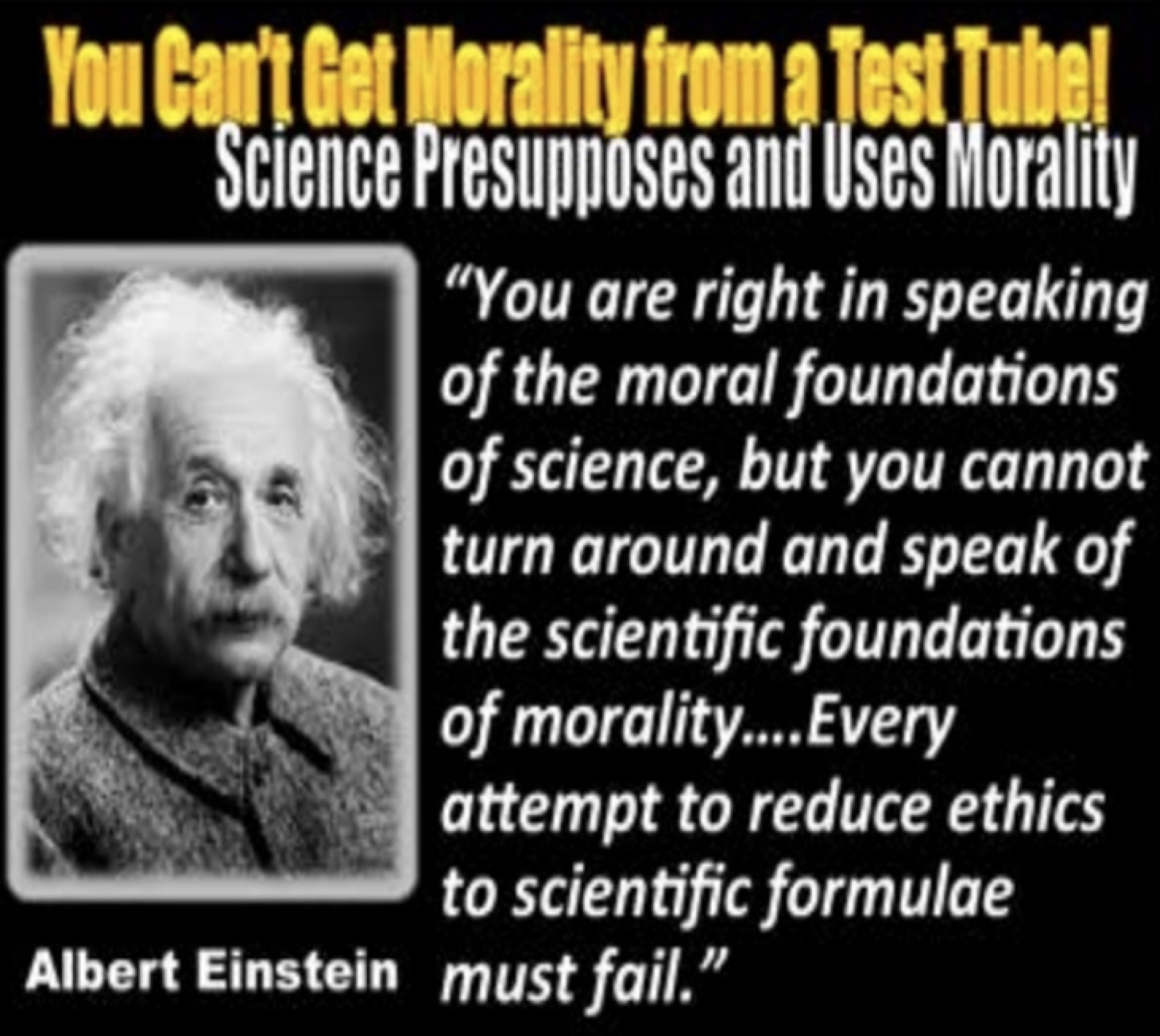
Maybe just thinking our way to the best moral values, using the empathy we all feel towards others, or as Sam Harris argues in The Moral Landscape: How Science Can Determine Human Values, establish moral values through evaluating any action by its impact on human well-being or what he calls maximization of “human flourishing.”
In making this claim, Harris steps outside the area of science and into the area of philosophy, and stumbles around as many scientists do in this different area of expertise. Harris compares establishing moral truths to “good” or “bad” moves in chess, claiming if you are trying to win the game, then some moves are more likely to lead to your victory than others, and similarly, some behaviors are more likely to lead to human flourishing than others, which in Harris’ mind makes them “good.”
Can you see the problems? How does Harris prioritize and justify overall “human flourishing” as objectively and truly good? How does he judge between some groups prospering at the expense of other groups, or between aspects of flourishing such as health, happiness, achievement, and so on? What about animal flourishing, or should this be sacrificed because humans have higher mental capacity? Then if an alien species comes along and wants to use humans as a slave and food source, would this be morally good as their flourishing should take precedence?
This type of pragmatic goodness, claiming an action is universally good or bad depending on the results, trips over reality in every step. Is it universally “good” to save a young woman from drowning in the river? What if the person doing so risks their life and dies, and had a family depending on them, while the young woman had no family? What if the young woman would later lead a business that ruined thousands of families’ retirement savings? What if humanity would “flourish” better if the person just watched the young woman be swept away by the river?
Judging by pragmatic results for the person involved or humanity can only ever be subjective morality, because the moral character of all acts are judged by the impacts on the subjects (person or humanity). Objective morality judges whether the act itself (the object of moral judgement) meets the moral standard of right and wrong. For example, if the biblical God exists, then the answer regarding rescuing the swimmer is simple, yes, because her life is just as loved and valuable as any other, and sacrificing oneself for another is one of the highest forms of loving others. The reason it can be objectively good to save a person from drowning, even if it is not pragmatic for the rescuer, is because it depends on the moral character of the act itself (the act of saving another is the object to be judged morally) apart from whether it was pragmatic for the rescuer or humanity (the subjects).
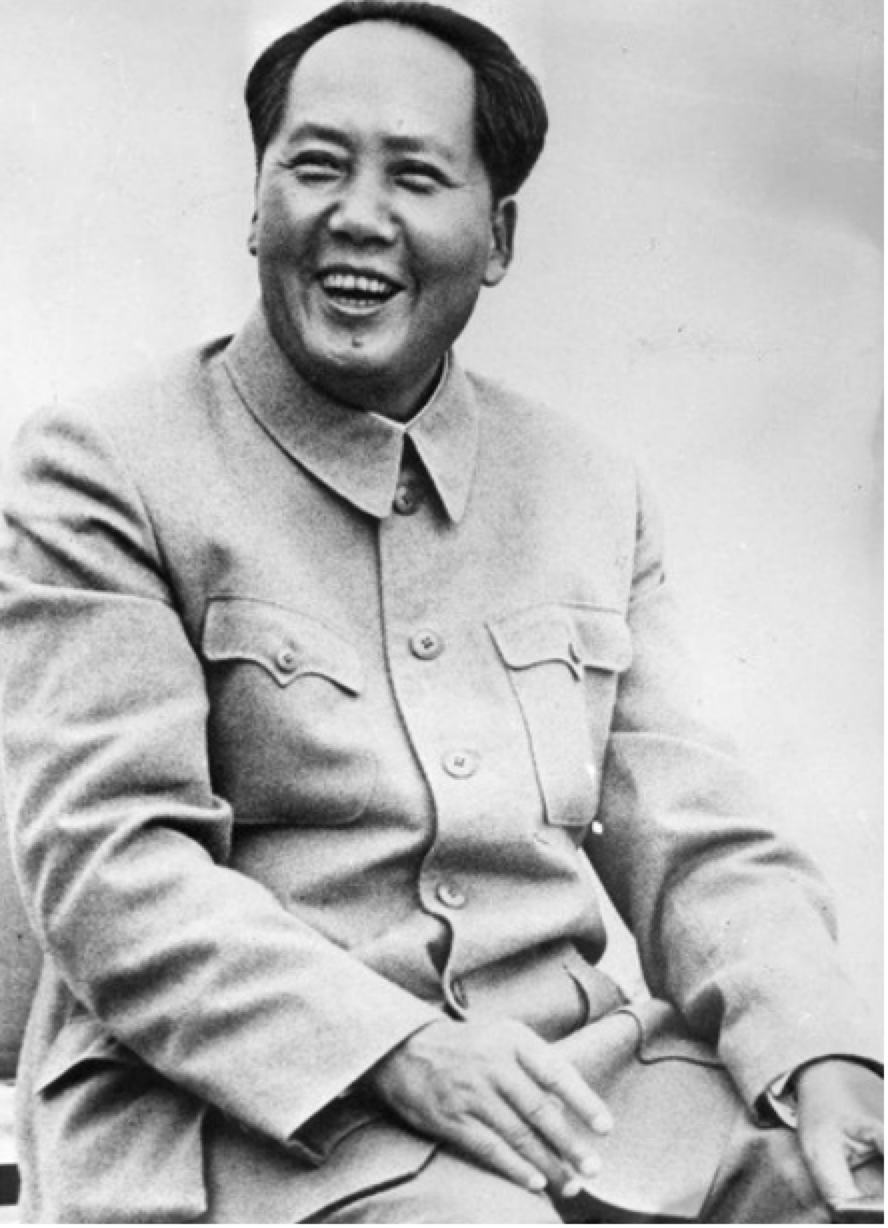 Can you see the problems trying to base morality on “human flourishing”? How does Harris prioritize and justify overall “human flourishing” as objectively and truly good? Why would Chairman Mao Zedong, founder of the People’s Republic of China, make the “good” chess move of concerning himself with overall human well-being, when his chess move of murdering those millions in his country, whom he feared, allowed him to go to his deathbed at the age of 82, having reached his political and other earthly desires. Flourishing is very personal; why should anyone choose human flourishing over their more personal and self-impacting personal flourishing?
Further, Mao would likely argue he saved even more people through his revolution and holding of power, and while both Harris and I would likely disagree with Mao’s actions, we do not know for certain, and Mao would forever be able to hold on to his opinion, and we ours. Impossible to avoid subjective opinion, incapable of attaining objective morality as Harris believes.
What’s more, Harris humorously has to bring in pre-existing moral values to justify his theory of where moral values should come from! As observed by former cold-case detective J. Warner Wallace:
How can Harris explain what maximizing flourishing is, without bringing in a bunch of “good” values? The minute we move from mere survival to a particular kind of “worthy” survival, we have to employ moral principles and ideas. Concepts of sacrifice, nobility and honor must be assumed foundationally, but these are not morally neutral notions. Human “flourishing” assumes a number of virtues and priorities (depending on who is defining it), and these values and characteristics precede the enterprise Harris seeks to describe. Harris cannot articulate the formation of moral truths without first assuming some of these truths to establish his definition of “flourishing”. He’s borrowing pre-existent, objective moral notions about worth, value and purpose, while holding a worldview that argues against any pre-existing moral notions.[1]
What place can science, empathy, or arbitrary ideas of human flourishing have in morality? Here is one area: we rightfully can and should bring facts from science and empathy to argue a moral question, for example, whether a fetus is a human, what hardship would absence of abortion would bring to the woman, family, or society’s flourishing, etc., but these facts or arguments only provide reasons why a person or group likes or does not like one choice or another, it does nothing to establish any of those values as objective obligations on all of us, truly or objectively right or wrong, why one choice or action is more right or good than another, or why we should follow such morality.
With no supported source for objective morality, historian and atheist proponent Richard Carrier provided an interesting idea while lecturing a group of Christian students, who were brought to the campus of U.C. Berkeley in an applied apologetics program by Brett Kunkle. Carrier asked us to imagine a computer on another planet, capable of monitoring all activity on earth and calculating all the good and bad effects of any choice, and Carrier claimed this means objective morality exists even if the actual computer does not.
 With AI progressing to commercial use, many of us could imagine such a computer. Although any computer, even with AI software, is entirely dependent on its source material, which is why experiments with AI found racist and other sad, unethical, and incorrect results being given because the AI drew its data from the source of human provided information.
Carrier is on the right track though, seeking necessary properties such as a source beyond just another human or group opinion, and with the necessary ability to know all the effects a choice will have. However, he makes the same mistake as those discussed in the previous paragraphs, who believe science or calculations based on human flourishing can make objective morality exist. For example:
- In order to program the computer to do the calculations determining what is “good” or “bad”, you must already have in place objective good and bad standards you are trying to create.
See the problem? A computer cannot analyze all the effects of a choice and rank these effects as good or bad unless already knowing the objective standard and purposes of good and bad.
- Carrier assumes human flourishing is the ultimate goal morality ought to seek, but this assumption is entirely subjective, and was disproven earlier in this chapter.
- The computer, and the programmer of the computer, would both be a part of the natural universe, and both would be entirely controlled by environment and natural laws.
If we are only natural beings, then laws of physics or nature determine how every atom in our brain and in a computer will behave. While a good enough computer could calculate and list, at the time of our birth, every choice we will ever make, natural laws only determine what choice we will make in any situation, but natural laws are incapable of telling us what choice we ought to make.
You would need a source able to do all the calculations of the super-computer, but also in a position to know and enforce what the overall value and purpose of humanity is, and what standard of morality supports it.
- Carrier’s computer does not enforce anything, so why would I choose to follow its morality? Maybe the values programmed into the calculations are not what I value, and if some other person or group cannot enforce this morality, there is no proper obligation or motivation.
When you only see a bunch of dead theories withered across the ground, a thoughtful person and successful gardener of truth will realize what you seek to grow (objective morality) needs more suitable grounding.
While Carrier’s idea sunk from several obvious holes, his mind was sailing somewhat towards the right direction. His super-computer capabilities are a failed attempt to mimic God. For absolute, true, or objective morals to exist, they must be based upon an authority, beyond all human opinions and changeable influences, who knows the objective purpose of creation, is in a position to know all results coming from any choice, and capable of enforcing justice. No such authority exists if atheism is true, there is no non-theist basis for objective morality.
Interacting with detective Wallace, whom I cited for the quote above, and will provide another excerpt from his writing below, I found not only a great resource, but also one who has provided insight into atheist thought. He lived his life as an outspoken atheist, until doing research for a book to refute the cold case the Gospels gave witness to (in other words, what happened to Jesus). As a Christian today, his interactions with atheist commentators are open and instructive. An atheist, John, responded to a blog of Jim’s, by criticizing fellow atheists for being unrealistic about morality in an attempt to be “too nice” when interacting with Christians, and he chided them for not accepting the lack of grounding for morality if no God exists.
[To] all my Atheist friends.
We are Atheists. We believe that the Universe is a great uncaused, random accident. All life in the Universe past and future are the results of random chance acting on itself. While we acknowledge concepts like morality, politeness, civility seem to exist, we know they do not. Our highly evolved brains imagine that these things have a cause or a use, and they have in the past, they’ve allowed life to continue on this planet for a short blip of time. But make no mistake: all our dreams, loves, opinions, and desires are figments of our primordial imagination. They are fleeting electrical signals that fire across our synapses for a moment in time. They served some purpose in the past. They got us here. That’s it.
All human achievement and plans for the future are the result of some ancient, evolved brain and accompanying chemical reactions that once served a survival purpose. Ex: I’ll marry and nurture children because my genes demand reproduction, I’ll create because creativity served a survival advantage to my ancient ape ancestors, I’ll build cities and laws because this allowed my ape grandfather time and peace to reproduce and protect his genes. My only directive is to obey my genes. Eat, sleep, reproduce, die. That is our bible.
We deride the Theists for having created myths and holy books. We imagine ourselves superior. But we too imagine there are reasons to obey laws, be polite, protect the weak etc. Rubbish. We are nurturing a new religion, one where we imagine that such conventions have any basis in reality. Have they allowed life to exist? Absolutely. But who cares? Outside of my greedy little gene’s need to reproduce, there is nothing in my world that stops me from killing you and reproducing with your wife. Only the fear that I might be incarcerated and thus be deprived of the opportunity to do the same with the next guy’s wife stops me. Some of my Atheist friends have fooled themselves into acting like the general population. They live in suburban homes, drive Toyota Camrys, attend school plays. But underneath they know the truth. They are a bag of DNA whose only purpose is to make more of themselves. So be nice if you want. Be involved, have polite conversations, be a model citizen. Just be aware that while technically an Atheist, you are an inferior one. You’re just a little bit less evolved, that’s all. When you are ready to join me, let me know, I’ll be reproducing with your wife.
I know it’s not PC to speak so bluntly about the ramifications of our beliefs, but in our discussions with Theists we sometimes tip toe around what we really know to be factual. Maybe it’s time we Atheists were a little more truthful and let the chips fall where they may. At least that’s what my genes are telling me to say.”
While blunt, blunt is sometimes needed. Jim noted many atheists interacting on his post accused John of actually being a Christian pretending to be atheist, but John confided in later interactions with Jim he was just worn out hearing his fellow atheists not be consistent and brave enough to face the reality of their beliefs.
John is correct, and the atheists angry with his post needed not to focus on John, but on his well-established points. John is supported by the consensus of atheist scientists and philosophers, who recognize without a transcendent source for morality (beyond all human opinions and in a position to know and enforce morality), there is no true standard. Leaving skeptics to try to come up with subjective moral values and justify our obligation to follow them, which is why John correctly notes they are just “nurturing a new religion,” which is a funny line if wanting to poke an atheist bee’s nest.
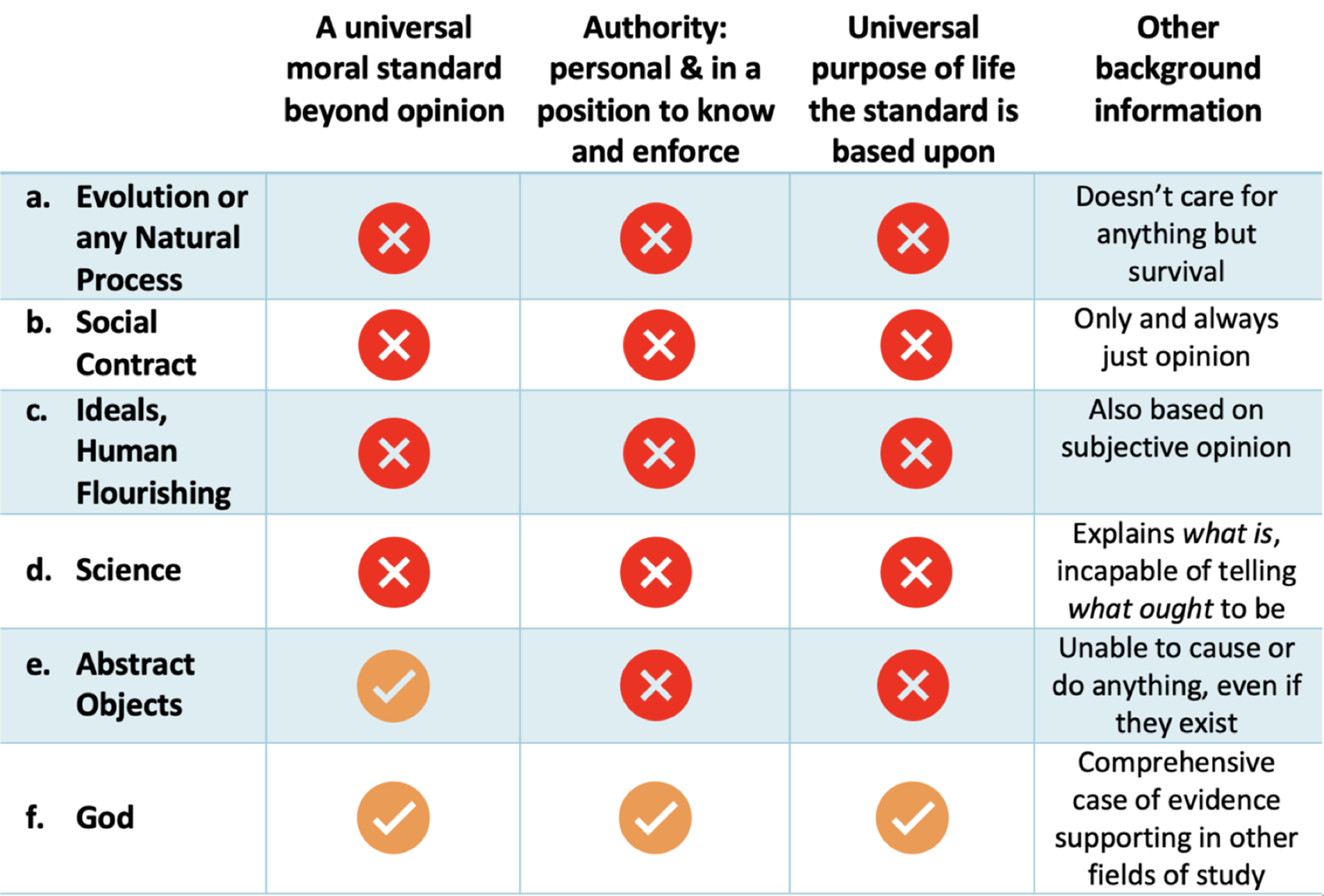
Therefore, the Declaration of Independence had it correct in recognizing the indispensable grounding of a transcendent Creator is necessary if you want to believe all people are “born free and equal in dignity and rights”. If you believe in these concepts, and in some acts being truly and always right or wrong, or even better or worse, then you cannot believe in atheism.
The moral argument for God’s existence:
Premise 1: If God does not exist, objective moral values & duties do not exist.
Premise 2: Objective moral values & duties do exist.
Conclusion: Therefore, God exists.
We just demonstrated premise 1: why objective morality cannot exist without God. Most scientists and philosophers who write on morality recognize there can be no objective morality without God because nothing else can provide an absolute moral standard. If you accept the existence of objective morality, you already accept premise 2 as true. Therefore, God exists and atheism is invalidated.
If you think God does not exist and do not accept and live by the facts previously noted in the section: “C. What the Reality is if Objective Morality Does Not Exist,” then you likely fit the description provided by leading atheists: weak-minded, unable to accept the hard facts of atheism. There is no basis or grounding to support the existence of objective morality without God.
Those who want to reject the existence of God have desperately tried to account for objective morality, which has helped to explore the possibilities, but the effort has shown utter failure, as expected.
Before explaining what characteristics are necessary to act as a ground for objective morality, we will first handle some objections. Can objective morality even be grounded in a transcendent creator, what does it take to provide the ground true ethics, right and wrong, can grow within?
[1] J. Warner Wallace. Is “Right” And “Wrong” Simply A Matter Of “Human Flourishing”? Cold-Case-Christianity website. May 24, 2017.