
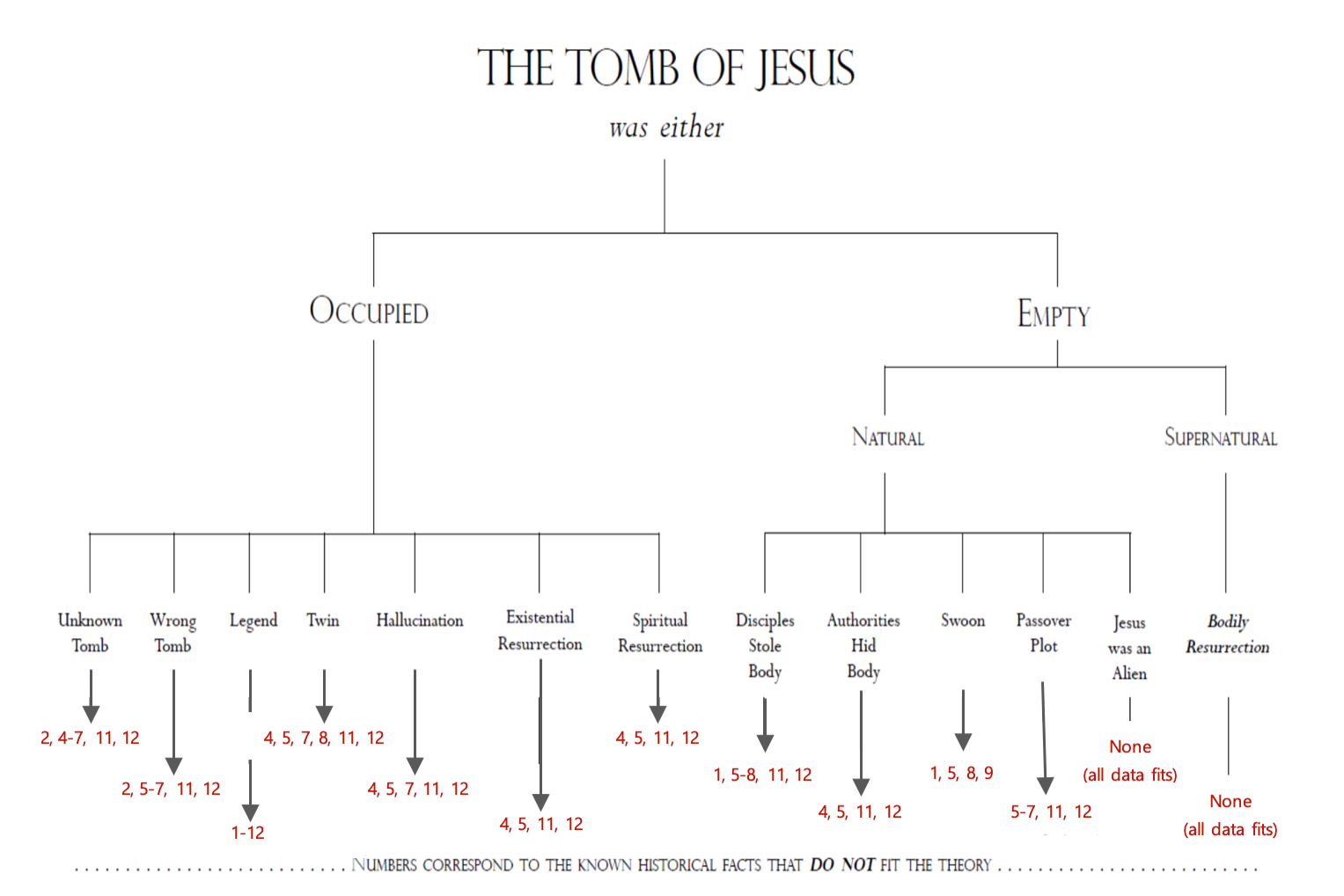

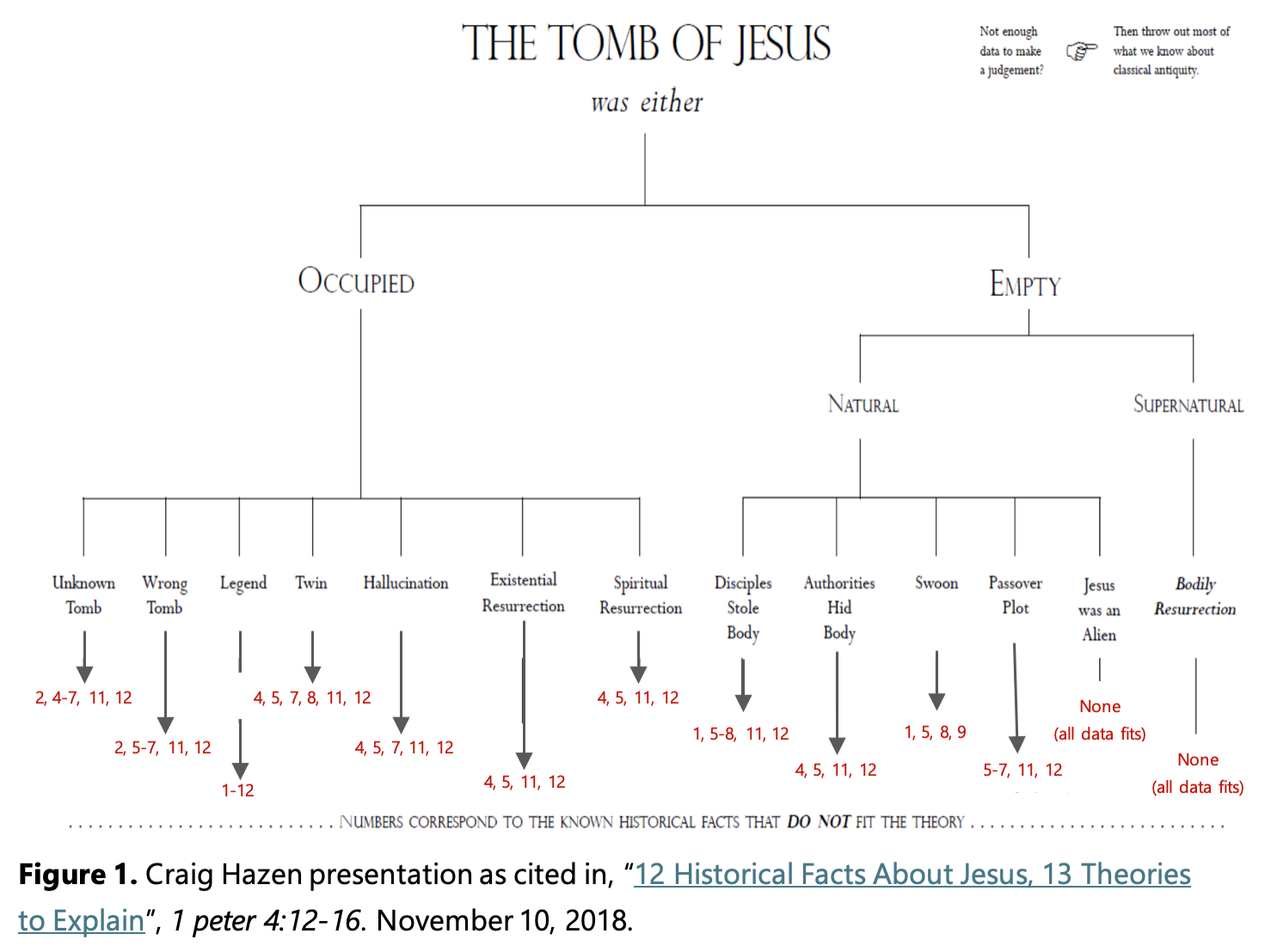
- Jesus died due to the effects of Roman crucifixion. [minimal fact #1]
- Jesus was buried, most likely in a private tomb [identified specifically in the NT].
- Afterwards, the disciples were discouraged, bereaved, and despondent, having their previous hope challenged.
- The tomb was discovered to be empty just a few days later. [minimal fact #2]
- The disciples reported experiences which they believed were actually appearances of the risen Jesus. [minimal fact #3]
- The teaching and proclamation of Jesus’ resurrection and the subsequent appearances took place very early after the disciples’ experiences. [minimal fact #5]
- These experiences [combined with their previous interactions during Jesus’ ministry] accounted for the disciples’ lives becoming thoroughly transformed, [from being afraid to identify themselves with Jesus after the crucifixion to bold proclaimers of his death and resurrection] even to the point of being willing to die for their belief.
- The disciples’ reports, preaching, and teachings of these resurrection experiences took place in the city of Jerusalem, where Jesus was crucified and buried shortly before.
- The gospel message [of the early church] centered on the message of the death and resurrection of Jesus Christ.
- The gatherings of the Christian community began at approximately this same time, featuring the first day of the week [Sunday] as a frequent time for worship.
- James, the brother of Jesus and a skeptic or at least an unbeliever before his conversion, most likely believed and became a follower after he also believed that he saw the risen Jesus. [minimal fact #4]
- Just a few years later, Saul of Tarsus (Paul) also became a Christian believer due to an experience that he also concluded was an appearance of the risen Jesus to him. [minimal fact #4]
More Facts Up, Options Down_Did the Resurrection Occur?
Share This Story, Choose Your Platform!
About the Author: Scott Symington