
Some Responses to The Minimal Facts Approach

Overview
1) The scholars are wrong
2) What is the evidence the scholars use?
3) “Amen” brother – Not so fast brother
4) I don’t believe in miracles. That is the point!
The Scholars Must Be Wrong
The Minimal Facts provides a well-established, peer-reviewed understanding on key facts directly applicable to the question of Jesus’ claim. However, because one’s beliefs are an important personal choice, too often one’s emotional response overtakes the intellectual response. While the heart can bring the best joys into life, the head is what keeps one safe (and able to best enjoy the good stuff). So how did you respond emotionally, when confronted with the analysis in the previous article? Below are some interesting emotional responses I have observed.

Some have stood against the scholarship and disagreed with the five facts. The obvious question is: Why? Disagreeing with the established scholarship is fair, and sometimes warranted, but you better have stronger reasons or evidence to support your stance? Otherwise, you are appropriately labeled as having an unreasonable faith, meaning you are fooling yourself into accepting a position going against the evidence, and most likely are standing on the wrong side of reality.
If you don’t have solid positive evidence supporting your position, and greater than the evidence the scholars used in coming to their conclusions about the minimal facts, then it says something serious about how you approach beliefs. Psychologically, some people, when not comfortable with some truth about reality, will often turn to defense mechanisms, or attempt to ignore the evidence, or simply take the easy road of negative shots at the claim they do not like, instead of doing the rational and honest thinking and following the evidence where it leads.
This is not a put-down, just reality, as all of us at some times deal with uncomfortable facts in irrational ways, or are standing on incorrect beliefs. We probably all have examples with funny results, and some with harmful results. Nothing wrong with being wrong, but something seriously dangerous about being wrong and ignoring where the evidence leads on this issue.
If a friend or family member of yours was in an abusive relationship, but used the same defense mechanisms to claim: they can’t leave because, “I am already too invested in this relationship,” or “It is not that big of a deal, and I am comfortable where I am,” or “He will get better once we get married, it will work out somehow,” etc. What would you think of their approach and choice? Based on the facts and probability, your friend is heading into some very real and bad consequences. Your possible relationship with God is not the place to allow initial discomfort, defense mechanisms, or any distractions to keep you from standing on what is accurate and best for your life; those consequences are beyond measure.
If you reject the Christian caim, but do not have a model that better fits the evidence, then it may benefit you unfathomably to evaluate where you stand and why. This also applies to a Christian who cannot answer WHY they believe WHAT they believe.
What is the Evidence the Scholars Used?
That is a fair question, and some of this is covered in the next blogs. Yet, it is interesting to me why a person would ask this question? Does the person have solid reasons to doubt the scholarship? I am unaware of significant reasons to doubt all the scholarship surrounding the five facts. Why doubt without good reasons? What is your compelling evidence for an alternative belief about what happened to Jesus? Or, do you simply not like where the evidence leads?
It is important to know why the person asks because it will show how capable the person is to honestly and correctly use the information in the discussion? If the person is honestly pursuing truth to reach the best choice in their beliefs, then it is important you provide the details they seek.
Christians who say “Amen” to that – Not so fast
When I present at churches, often I will hear people agreeing with head nods, or a “That’s right” or “Amen” here or there. At that point, I sometimes regret not starting with a nasty little trick my brother came up with when we first started presentations of this information.
We would have the church leader introduce us as atheists, who will explain why God does not exist and you cannot trust the Bible, and then take questions from the church. What my brother and I have seen is to be expected as Christians respond as people typically do when challenged on something they are invested in.
Schools removed serious discussion of God academically. Church leaders are so busy trying to help their members in all areas of life, and with all the busy-work of running the church, would not have enough time to keep up with the research necessary. Parents are so busy too. Others in the church, who are experts in the fields of study directly applicable to answering the questions surrounding beliefs, probably had their own reasons for not stepping up. The situation is understandable, but not acceptable, as bottom-line: the ball was dropped, and it shows.
A later blog will display the cost, as countless stories amass of Christians who are, as Frank Turek notes, talked out of their belief, because they were never talked into it (given sound reasons exposing opposing beliefs and supporting the biblical model). Not only were the attacks my brother and I gave against Christian beliefs rarely answered soundly, but when we ask why they believed Jesus was resurrected and verified his claims, the responses were typically similar to what those who reject Christianity also do: bring up a slew of shallow negative criticisms to the beliefs they are opposed to, as opposed to strong positive support for their point.
Posing as atheists had several goals:
- Laughs.
- Helps people experience the discomfort of having their worldview challenged.
- Highlights the need for Christians to do better in discussing and answering people’s common questions, which the Bible calls for.[1]
- The Bible also states not to simply trust what some speaker or leader tells them, but to test and examine what is said.[2]
- It is the Great Commission, not the great suggestion, and it is a problem when unprepared to approach criticisms of their beliefs.[3]
People who believe only through emotional reasons, maybe because they were raised that way, or some other faulty reason, would therefore believe something else if born elsewhere, or in a different circumstance. Those in the church cannot sit passively, not really searching for the best explanation concerning Jesus, and selectively ignoring or dismissing what they don’t like, and only taking in and saying “Amen” to something like the Minimal Facts, which does support what they want to hear. Such an approach to beliefs will be exposed as weak and unstable when life hits you with something serious.
[1] 1 Peter 3:15 states “always being ready to make a defense to everyone who asks you to give an account for the hope (trust in Jesus) that is in you, yet with gentleness and reverence”
[2] 1 Thessalonians 5:21 “But examine everything carefully; hold fast to that which is good”
[3] 1 Corinthians 10:4-5 “for the weapons of our warfare are not of the flesh, but divinely powerful for the destruction of fortresses. We are destroying speculations and every lofty thing raised up against the knowledge of God”. Why would God equip us to put down faulty arguments if he didn’t expect us to use that equipment (reasons).
I Don’t Believe in Miracles. That is the Point!
An example of someone avoiding facts they find uncomfortable was displayed by my atheist opponent in my first debate. The radio contributer and speaker at universities across North America, claimed resurrections are not part of our experience, people who die stay dead, therefore, the resurrection after death the Christians’ claim likely did not occur.
That is a claim, but with what evidence? Hopefully the university audience realized he simply attempted to avoid dealing with all the evidence presented, and based his belief against the resurrection on an error in logic known as begging the question, which is a type of circular reasoning whereby a person makes up their mind before (or purposefully without) taking in the available evidence.
The objection sounded good on a shallow level, because resurrections are not part of our normal experience – but that is the point. Jesus provided a checkable event unlike any other in all history, something unable to be accomplished naturally by any person, in order to valiate his supernatural claims.
If you do a study of the biblical accounts, miracles are clustered around certain individuals in the Bible to establish the authority of their message. It is meant to be an act beyond humanity’s ability, or natural experience, to confirm God’s message.
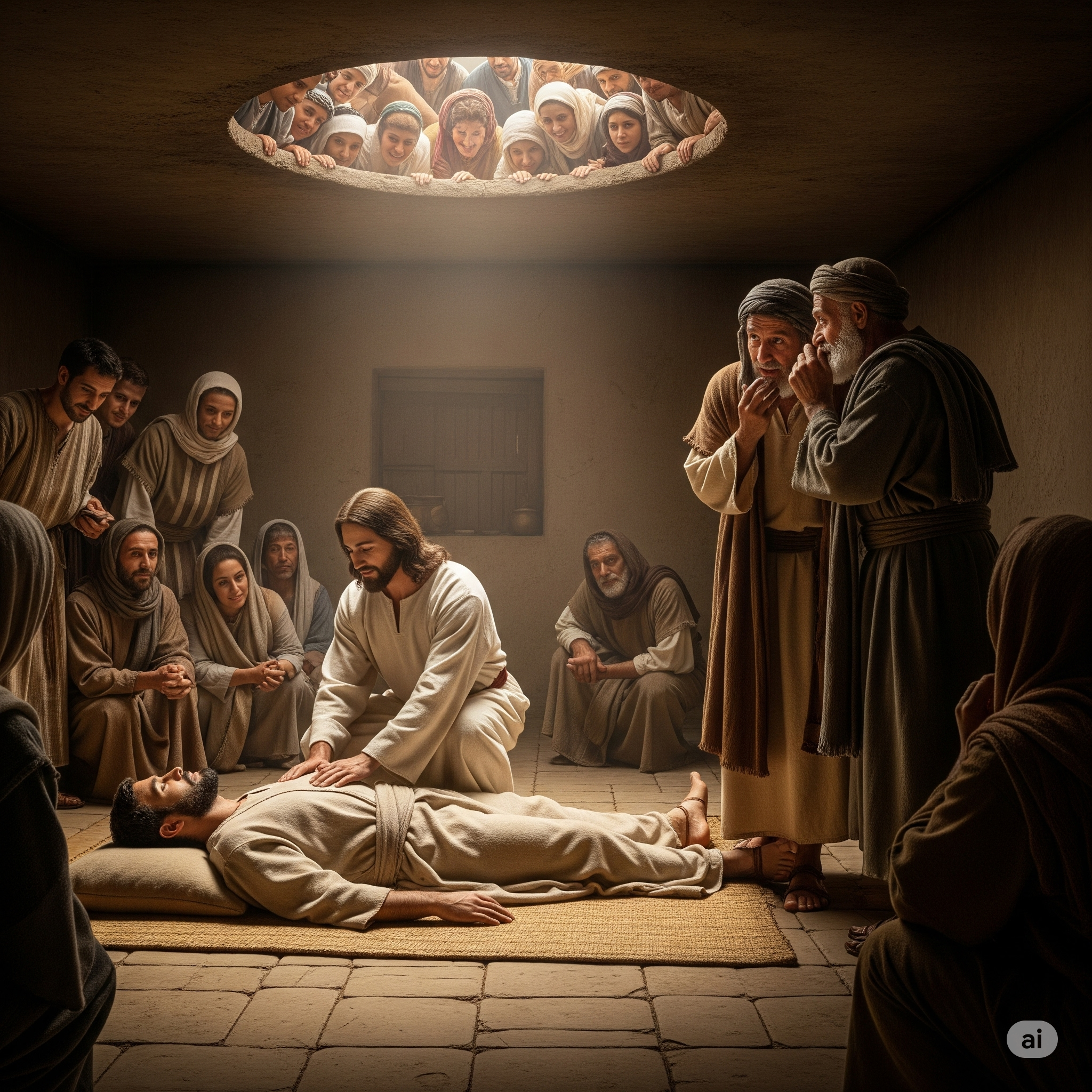 And the point was made clearly: Jesus was accused by both Jewish (in the Talmud) and Greek (for example, the critic Celsus) historical sources of using magic or sorcery to accomplish the acts. This, by the way, is very strong testimony these events occurred as even enemy testimony admits it, because the critics could not explain these things away.
Furthermore, the atheist’s argument was also narrow sighted as it ignores the background knowledge we now have. What do you think is the greatest miracle in the Bible? The greatest miracle has already been confirmed by modern science, the creation of the Universe from nothing. For a God capable of that, raising Jesus from the dead is simple in comparison. It’s like asking a master chef to make a grilled cheese sandwich. More is given in the blog Miracles: People’s Miraculous Misunderstandings.
In addition, in our background experience, we do not have claims like the Easter claim (Jesus being resurrected) coming furnished with such a level of evidence. A checkable claim like a resurrection ruins a religion if not true, it doesn’t kick start that belief system all the way to having to be persecuted brutally and outlawed in Rome itself, just 19 years later!
After presenting the minimal facts noted above to the president of the atheist club at U.C. Berkeley, and how those facts were established, I asked her what she believed is the best explanation of what happened? She said, Jesus was only in a coma, then his followers hallucinated all his appearances afterward. She chose to stand on the Coma + Hallucination Theory.
Now if you know anything medically about what Jesus experienced, or understand how hallucinations work, you may be wondering why anyone would believe such a ridiculous theory, much less two bad theories combined? On the contrary, it was at that point I knew she actually did really look into, and did understand the evidence involved; because if you do not want to accept Jesus was who he claimed to be, then her theory is probably the next most likely option. You can decide for yourself as we will look into each of the primary options next: Liar, Lunatic, Legend, Lord.