We have division, riots, crazy politics, depression in global economics and depression in personal psychology, in fact, suicide rates used to be for people more my age, but almost 3 million adolescents had a major depressive episode last year,[1] and 10-20% will have one before moving into adulthood.[2] Reality never stops coming at us it seems, and studies regarding suicide and depression prominently feature the impact of lack of purpose, lack of hope.
Hope is extremely important in life. When you think of hope, what is it? We will use a basic definition: desire and expectation for a certain thing(s) to happen. Do you have hope for your overall life? Or, is yours more wishful thinking than hope? Have to be real about this, as reality doesn’t care what you are hoping for, it is going to bring you what it is going to bring you.
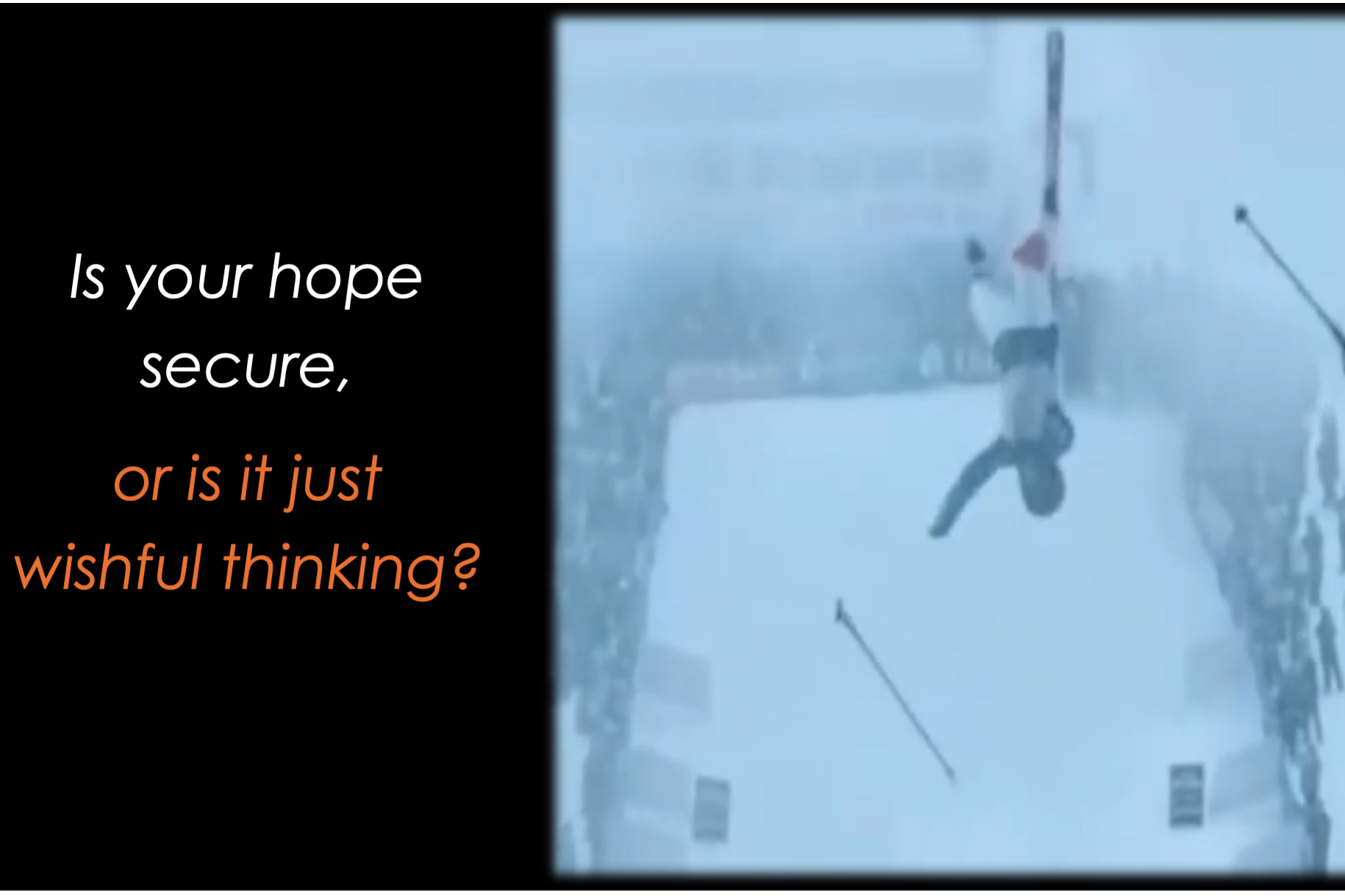
A good example is found in the story of Molly Bloom. She grew up with a dad, who was a psychologist and used all he could to push his kids to the highest levels of achievement. Her brother, Jeremy Bloom, was a two-time Olympic champion and then played professional football for the Steelers and the Eagles. Her other brother went to Harvard medical school and is now a surgeon. And now was her turn. She’ is just about to get into the Olympics herself, as the two competitive skiers ahead of her made mistakes, and now she has it all calculated out: with a solid run she is off to the Olympics, good chance to place with a medal, then start her non-profit business. Her hopes look pretty good, but, then there is reality …
Her purposes in life were what her hopes were based upon. This is a super intelligent, driven, gifted woman, with nice purposes for her life and all calculated out, everything seemed on her side. Life doesn’t care, life ripped it all away, she didn’t go to the Olympics, but instead went to the hospital, and gained extensive medical bills. She tried to re-adjust what she based her hope upon and began an illegal gambling operation, which was very successful and made her very rich, but this too was all taken from her.[3]
Her hope was not reliable, even though it sounded really reliable, so, what about yours? Is your hope reliable or will it end up like Molly’s? You can actually get your answer to that question. Here are the two questions you have to answer to determine if your hope is reliable: Does God exist? What is my Purpose in life?
Now you may be wondering how the two questions are related, and even if you recognize why they are tied together, you still are probably thinking: “These are two of the most impactful and biggest questions in all of life, which the best minds have pondered and written on throughout all of history—I doubt this guy in a few blogs is going to provide reliable answers—that would be the correct thought if the answer depended on me, thankfully it doesn’t. The answer to those questions depends on the reliability of the source I use for the answers, and the evidence supporting this source’s authority over any other.
[1] Susanna Schrobsdorff, “The Kids Are Not All Right,” Time (Nov 7, 2016): 47; also NIMH » Major Depression (nih.gov); “Suicide is about despair, and the only cure for despair is hope,” says Joel Dvoskin, PhD, ABPP, a clinical and forensic psychologist.
[2] MKC Nair, et al. The Indian Journal of Pediatrics 71(6):523-4, July 2004. DOI:10.1007/BF02724294, PubMed.
[3] You can read more of this interesting story in her memoir or the movie of the same name: Molly’s Game.
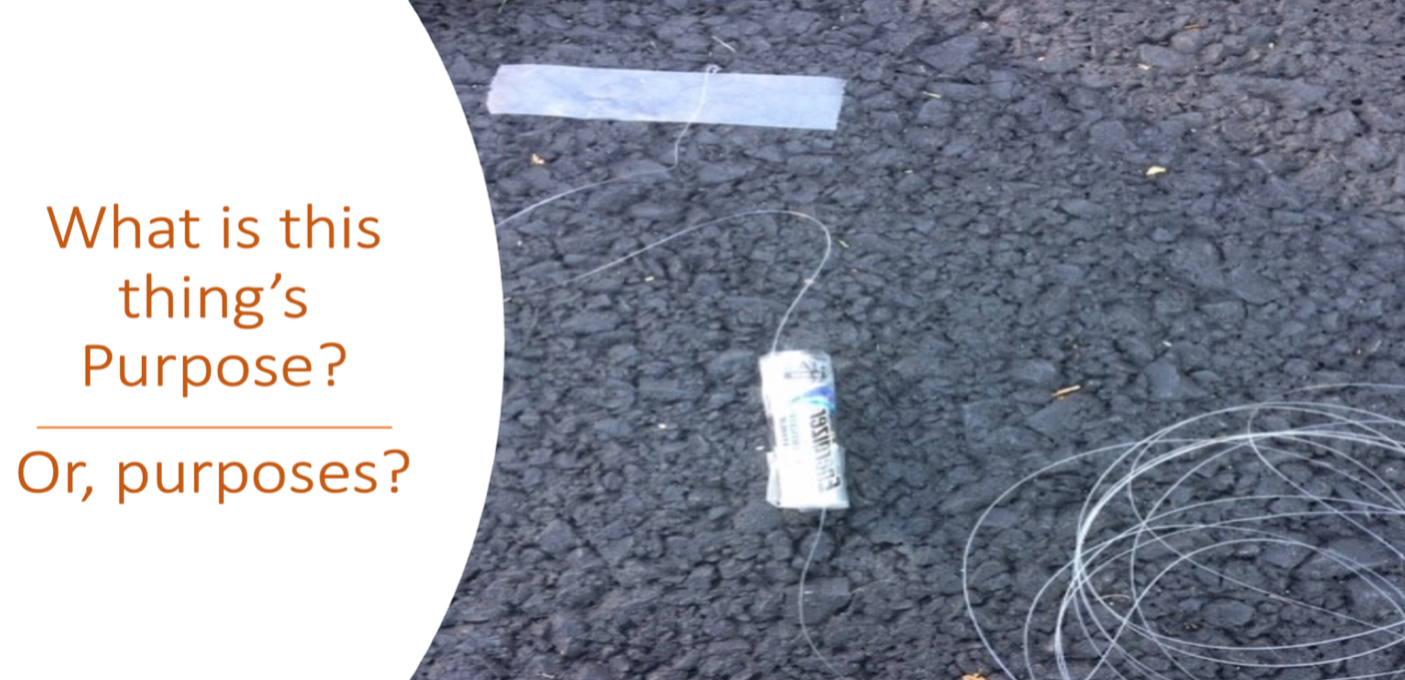
When speaking to audiences on this topic, I bring in this object and ask the questions shown above. Audiences give creative answers, such as, to swing the battery around to draw large or small circles in the sand, or tie a bug to it and use it for fishing. I usually agree this object could serve those purposes, but those are not the Purpose (with a capital “P”), meaning the primary or objective purpose, or true goal, why it was created. How can we know the objective Purpose of something? You would have to ask the one(s) who purposefully created it.
The object you see in the picture was created by myself and friends, Kris and Steve, only we as the creators KNOW the purpose for which it was made, which I can explain. We made this to knock on someone’s door remotely, while we hide across the street behind a car, or behind some bushes.
We tape the small end of the fishing line to some house’s front or back door, then reel out the long fishing line to allow us to get to our hiding place. Then, we are able to pull on the long line to swing the battery and knock on the door.
With practice, we were able to get skilled enough to make it sound just like someone knocking, and keep the battery from hitting the door when the angered homeowner swings the door open. Eventually we would make it knock while they have the door open, which really freaks them out, but had to be ready to run as either the fishing line or our laughter led the incensed homeowner directly to us.
When anything, even a remote door knocker, is created by an intelligent agent, then only the creator can provide the reason or purpose of the creation. This is why our primary BIG question (Does God exist?) must be known to answer our secondary BIG question (What’s the purpose of life?). And once you have your purpose(s) in life, you can determine how likely you are to reach what you hope for.
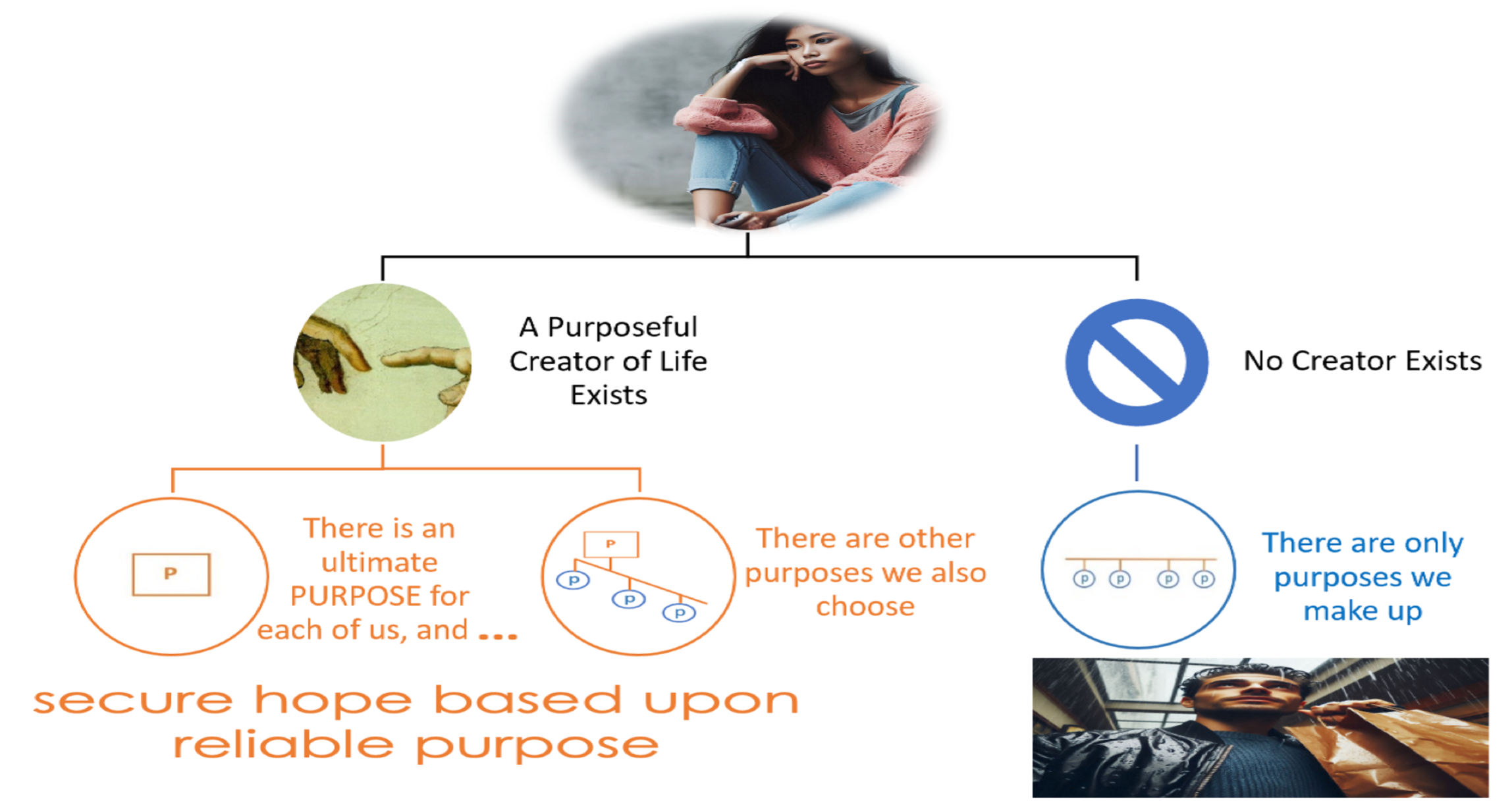
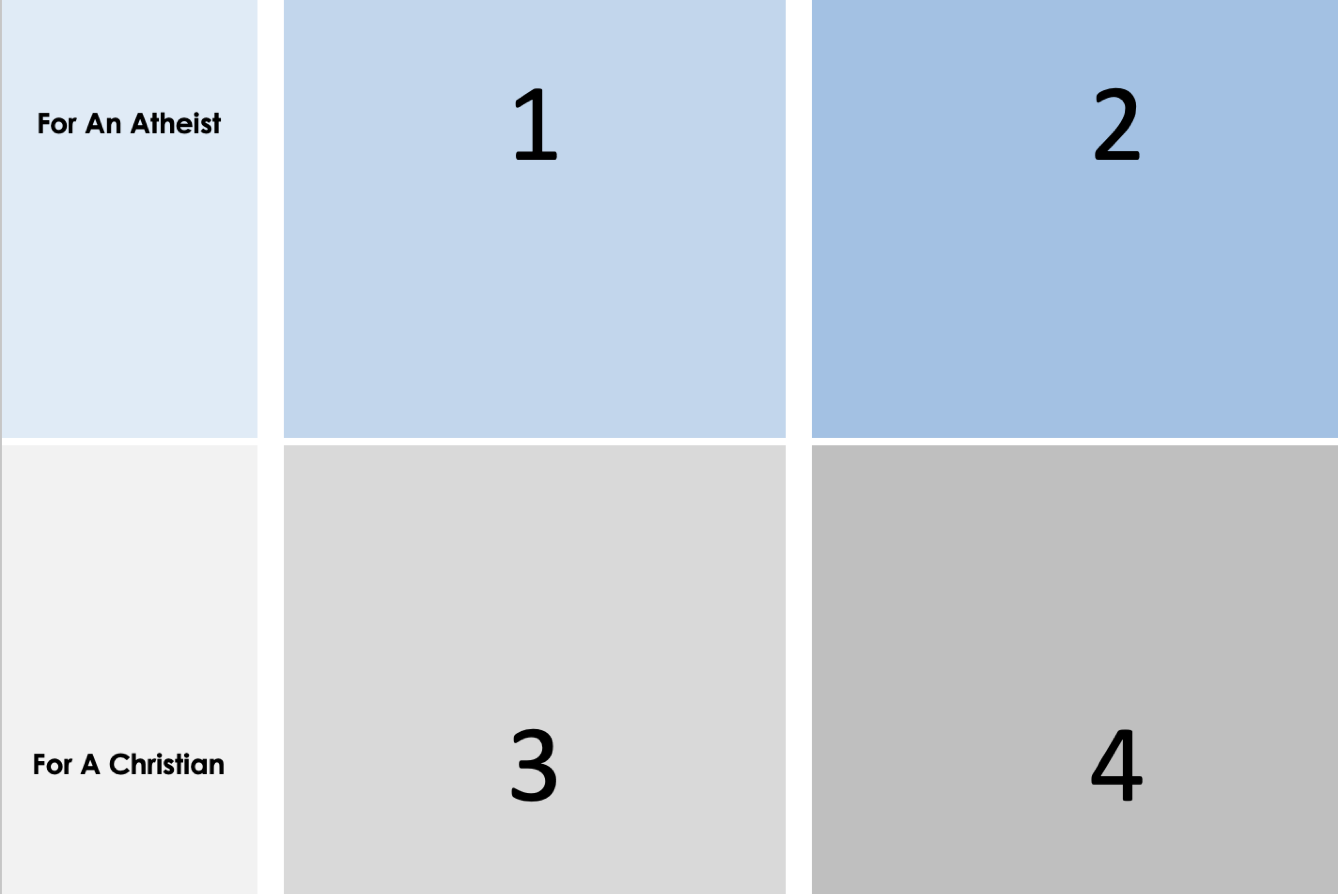
Determining the meaning or purpose of your life is much more straightforward than many realize. When the girl pictured above the flowchart seeks what the meaning or purpose of her life is, either:
- There is no creator God, and therefore, no true goal for life or objective purpose.
If we exist due only to chance and nature, then no universal meaning or goal for life exists. With no objective Purpose, we would be left to decide our own purpose(s) we seek in life, as shown following the right-side of the flowchart above. Meaning, logically, any purpose of life you choose, whether to sacrifice yourself to aid people suffering the terrors of a brutal dictator, or you choose to be that brutal dictator, any purpose a person chooses is incapable of being right or wrong, or even better or worse than any other because there is no objective, universal and unchanging standard to judge against. This fact is well-established by leading atheists in biology, physics, psychology, and other applicable fields of study. [1] These purposes we make up for ourselves are equally valid and ethically neutral, all on the same level as displayed in the flowchart.
Further, if there is nothing of you or I existing beyond this physical Universe (a soul or spirit), then no person would ever be capable of a single free thought or choice. Experts in science and other fields of study, who reject the existence of God, recognize this fact, because they have to based on the evidence.[2]
Those who reject the existence of God realize this fact is hard for people to accept, but claim because we don’t realize or feel all our thoughts are controlled by nature and natural laws, and it feels like we choose our purposes, then it does not matter these feelings are only illusion. Personally, I disagree, it matters very, very much whether there is real free will, objective purpose, and better or worse choices. And if their belief is inaccurate, God does exist, then they are also incorrect about the purpose of life.
- There is a creator God, and there is infinite meaning and purposeful value to your life established by an Authority.
A purposeful God is the only source to know and communicate to us the objective purpose of our being. As we follow the left-side of the flowchart, the question now becomes: What is the primary Purpose for my life?
This is given clearly throughout the Bible, which you can read and determine for yourself. But, you can get a good glimpse once you become a parent. What would you want most for your little creation? A relationship of love and trust with you, and for them to love and encourage others to flourish/develop in the fullest sense.
The same is true for God. If such a God exists, then your full perspective includes an eternal existence after this life, therefore, developing your relationship with God and helping others to also, would take precedence over the good or bad one may experience on Earth. As shown in the flowchart, this is the purpose with a capital “P”, and because there is a spiritual component of you, which would be capable of free thought and choice, you could also choose other purposes in life, which are not your primary or ultimate Purpose, but are parts of your life. These secondary purposes can also be good, and can be judged depending how they impact the primary Purpose or big picture. For example, playing Call of Duty or other video games does bring benefits, as long as kept in proper priority by not damaging more significant purposes, such as proper attention to family.
Now what makes your hope secure and reliable or insecure and unreliable is how well the evidence supports your answer to whether the Creator exists or not and your prioritization on your Purpose and purposes. What follows in the next article are amazing discoveries in science providing astronomical evidence to support your hope.
So here is what is next:
- The next blog demonstrates why only the left-side of the flowchart has the evidential confirmation.
- Then, we look at YOU. We provide a list of purposes in life, and you are given a unique opportunity to see your life and concretely choose your purposes and priorities.
- Finally, we will produce a graph of your purposes and priorities, which will visually display your hope, and whether it is reliable to lead to your desired and expected outcomes, or leans more towards wishful thinking. You can accurately know now whether your future holds realization of your hopes, or disheartening falling short of what you hoped or expected.
[1] This topic is covered in detail in the booklet: Morality: You have to sit in God’s lap to slap His face.
[2] This topic is covered in detail in the booklet: The Freedom Scale: Assessing Levels of Freedom Corresponding to Belief Systems.
A Big Universe, A Bigger Question
 In a debate at the University of Michigan, my opponent asked why the Universe was so vast if God made it just for us. When first asked this question years prior, I thought, “That is a good question”, and it seemed even better when I started looking into it.
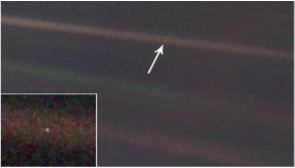
As the Voyager 1 space probe was leaving our Solar System, astronomer Carl Sagan asked for it to turn around and take one more picture of Earth, which is the pale blue dot highlighted by the arrow within the vastness of space. If our Sun were shrunk to the size of a basketball, then the Earth would be the size of a head of a pin, 100 feet away. Because the Sun is so much larger (has more mass) than the Earth and other planets, it holds these planets together by gravity to orbit the Sun in our Solar System.
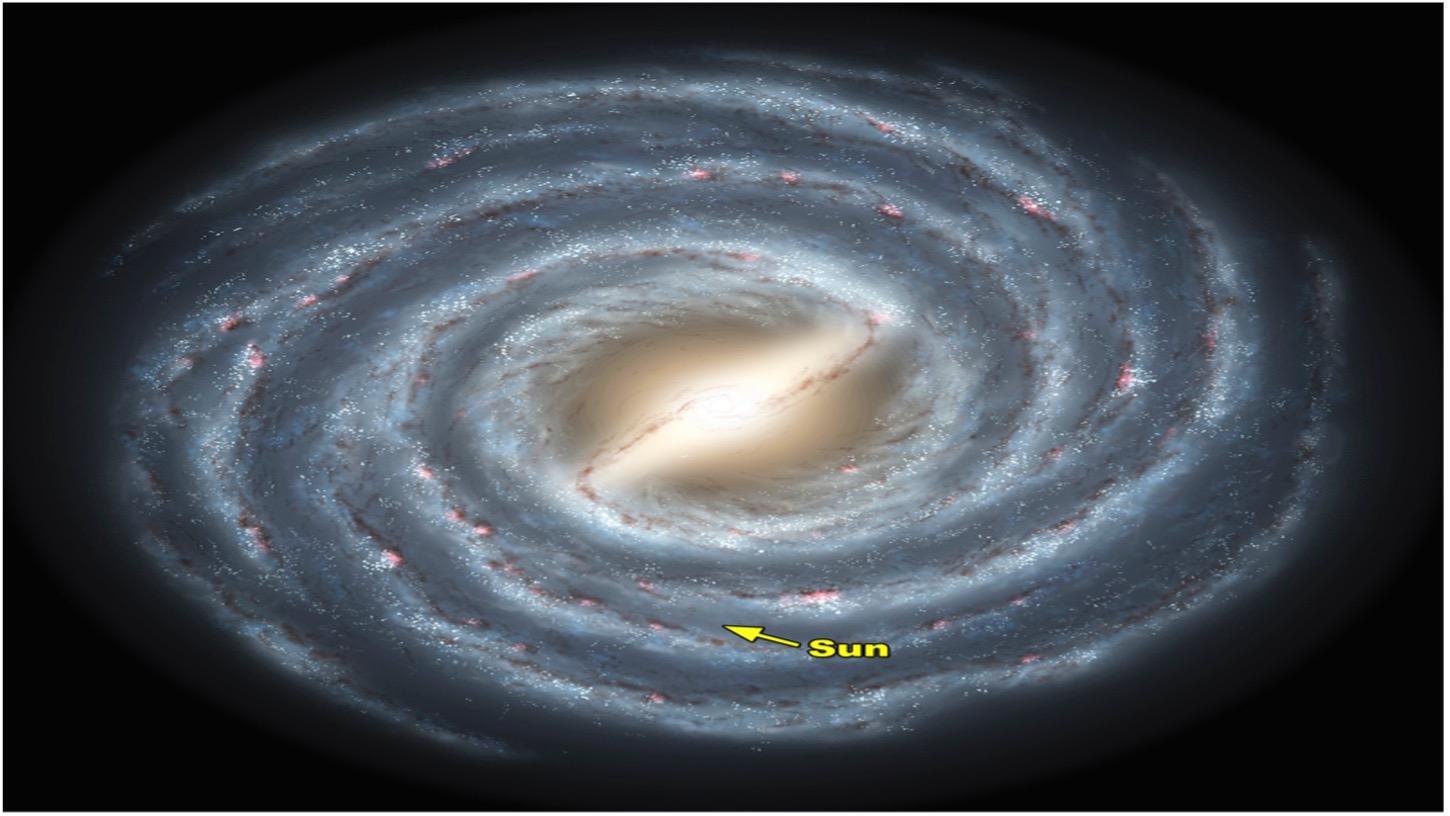
But, the Sun is just one of several hundred billion other stars all held together by the gravitational attraction of all the mass of those stars, gas and dust, dark matter, and a supermassive black hole residing in the center of a system called the Milky Way galaxy.
The Andromeda galaxy is one of our closest neighboring galaxies. Yet, if you had a friend living there, and had a ship that could travel at the speed of light, you better pack a lot of toilet paper, food, and necessities for the generations after you, as it would take five million years for the round-trip. And, our galaxy is not alone, there are billions and billions of other galaxies. If you were to hold up your little finger to the night sky, and if you were able to magnify the area of space just the nail of your little finger covered, then this image rendering from NASA is what you would see—and those are not stars—those are galaxies, each with a hundred billion or more other stars. The Universe is vast, and is expanding.
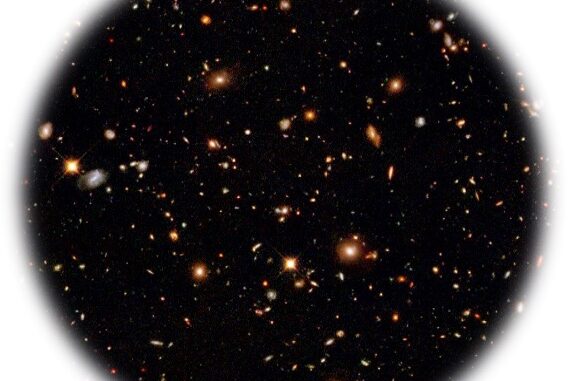
What is the meaning and value of life? It depends.
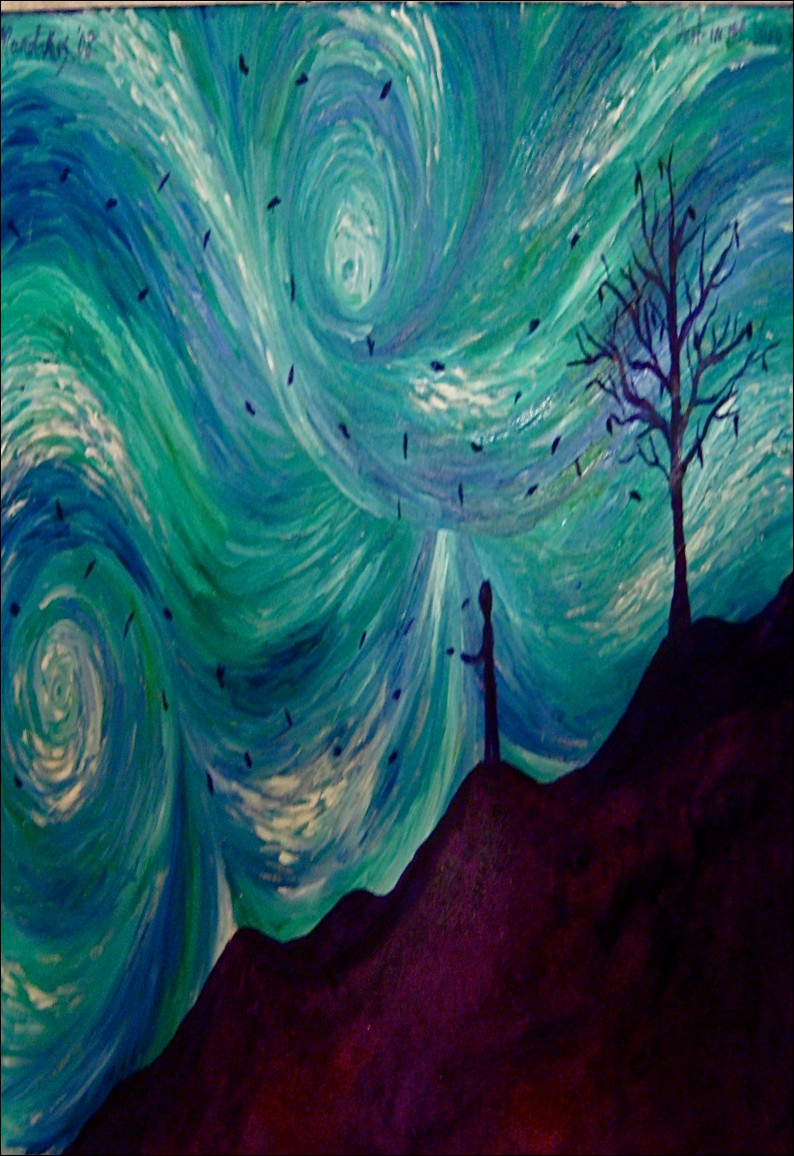 It depends on what is true. From the absolute vastness of the Universe, we are led directly to this big question about life. If atheism is true, then Bill Nye the “Science Guy,” in addressing the 69th American Humanist Association annual conference, provided a summary answer:
I’m insignificant. … I am just another speck of sand. And the Earth really in the cosmic scheme of things is another speck. And the Sun is an unremarkable star. Nothing special about the Sun. The Sun is another speck. And the galaxy is a speck. I’m a speck on a speck orbiting a speck among other specks among still other specks in the middle of specklessness. I suck.
I like how he makes light of a heavy reality, but many other well-known thinkers, writers, songs, and paintings have displayed the heavier, more practical, side of this reality – we are Dust in the Wind.
If nature and natural law is all there is, then we are carried along by forces with only the appearance that we have some control, with no meaning or purpose to life, which is just accidentally caused, can be lost at any time, is all determined by natural laws, and without lasting or objective value, at least no more than other animals.
You may be thinking we have the capacity to love, and sacrifice for family, be a “good person,” and choose what our purposes in life are, but according to understandings from diverse fields of science – no we don’t.
Stephen Hawking states: “Though we feel we can choose what we do, our understanding of the molecular basis of biology shows that biological processes are governed by the laws of physics and chemistry and therefore are as determined as the orbits of the planets.” (Stephen Hawking, Grand Design, 31-32)
Francis Crick, co-discoverer of helical structure of DNA, accurately in-line with the no-god-involved belief observes: “You, your joys and your sorrows, your memories and your ambitions, your sense of personal identity and free will, are in fact no more than the behavior of a vast assembly of nerve cells and their associated molecules.” (Francis Crick, The Astonishing Hypothesis, 1994, 3)
Distinguished Cornel University professor, William Provine, states: “Let me summarize my views on what modern evolutionary biology tells us loud and clear . . . There is no ultimate foundation for ethics, no ultimate meaning in life, and no free will for humans, either.” (Provine, W.B., Darwinism: Science or Naturalistic Philosophy? The Debate at Stanford University, see also: Origins Research 16[1]:9, 1994)
Just like other animals, or plants, there can be no chosen purpose in life, aside from passing on DNA, because none of our thoughts and actions are free, but all entirely controlled by natural laws. It sounds good to take care of your children and pass on your genetics, but there are fish doing that too. Did the salmon in your salad have the same value as you? Even though humans have more mental capabilities than fish, never forget the same fact looming over every higher functioning organism: all thoughts, feelings and actions come from our brain, and all matter and energy in our brains only and always follow natural laws, therefore, all thoughts, feelings and actions are entirely controlled or determined by nature, not us.
And how much time do you spend thinking and talking about your great, great grandparents, who felt the same sense of value about their life just a spec of time ago? Nihilists, and those that believe nature and natural laws are all there is, understand this grim reality well.
It sounds extreme to say that if there is no God, then:
- Our existence is just coincidentally caused,
- With no objective meaning or purpose to life,
- We are carried along by forces with only the appearance of having any control,
- With all thoughts, choices, feelings and actions entirely determined by initial conditions and natural laws,
- Without lasting or objective value, no inherent rights,
- All we think we have can be lost at any time,
- And with nothing for us after this life ends, except decomposition into component chemicals.
Nevertheless, if nature and natural laws are all there is, then each of these points logically follow. You can find detailed support and explanations in numerous books by leading atheists, and from non-atheists as well as the logic follows regardless of one’s beliefs, and if you want more support or details why this is true, see the booklet: The Freedom Scale: Assessing Levels of Freedom Corresponding to Belief Systems.
 So, above is one possible answer to our big question. However, there is another possibility—Life, your life, is special, with meaning and value worth more than all the massive galaxies combined, because a personal creator made it all, specifically with us in mind. Sounds really nice, but just because it sounds good, that we have real value and importance endowed by a creator, with an actual purpose for what we go through in life, is not evidence that it is true.
I understand it may seem like there is no way there can be evidence to supply definitive answers, but that assumption gets overwhelmed when you actually start seeing the answers and evidence, including some of the most amazing and important discoveries in all science.
So how can we know which of those two possibilities is true, purely natural chance or a purposeful creator? No real value & meaning, or infinite meaning established by an authority? We determine which answer is accurate to reality the same way we do with other questions in life, we follow the evidence where it leads.
Why so BIG, because it had to be EXACTLY THAT BIG
The question posed by my debate opponent at the beginning of this blog is so perfect. The question gets at the primary BIG question (Does God exist?), which also answers the secondary BIG question (What’s the purpose of life?).
Only 2 options: either there is no God, it’s all just nature and natural laws, and correspondingly, there is no real meaning to life as noted in the previous section, or God does exist, and there is infinite meaning and value to life established by an Authority.
We discover which answer is accurate to reality the same way we do with other questions in life, we follow the evidence where it leads. And the evidence is in, below is one example.
Why is the Universe so vast, and we are just living in the tiniest spec of it, if we are so special? Answer: because it had to be PRECISELY that vast!
The natural sciences have discovered many, many precise balances and aspects of the Universe, which had to land exactly within a razor thin range for life, especially our life, to exist. We have found we live in a Goldilocks Universe where everything is just right, including how vast our Universe happens to be.
As noted in The Big BEGINNING blog, the Universe came into existence phenomenally small and dense and hot, and immediately started expanding and cooling off. Within the first 3-4 minutes of its existence, the Universe’s temperature fell through a temperature range of 200 billion down to 17 billion °C. This latter temperature is similar to the core of our Sun, which allows nuclear fusion to start combining (H)ydrogen atoms into (He)lium and releases remaining energy in the form of heat and light.
Scientists have discovered if the Universe had less mass or mass density (mass is a measure of how much matter is in something) then it would have cooled faster, had less time to fuse H into He, and resulted in a Universe incapable of producing elements heavier than He, such as Carbon (C), Nitrogen (N), Oxygen (O) and other elements necessary for life—we would have a hot air balloon Universe—no life. If the Universe just happened to have a bit more mass at the beginning, then too much H would be fused into He, and our Universe would end up being a heavy metal Universe, Metallica fans would be pleased, but no fans would exist because the Universe would only be composed of metals of Iron (Fe) or heavier—and again, no life possible.
In addition, the amount of stuff that makes up our vast Universe, was also involved in another precise balance, which operated from the beginning of the Universe. This balance is between two massive forces acting against each other: GRAVITY, which acts to pull everything together, and an EXPANSION force, which acts to push things apart.
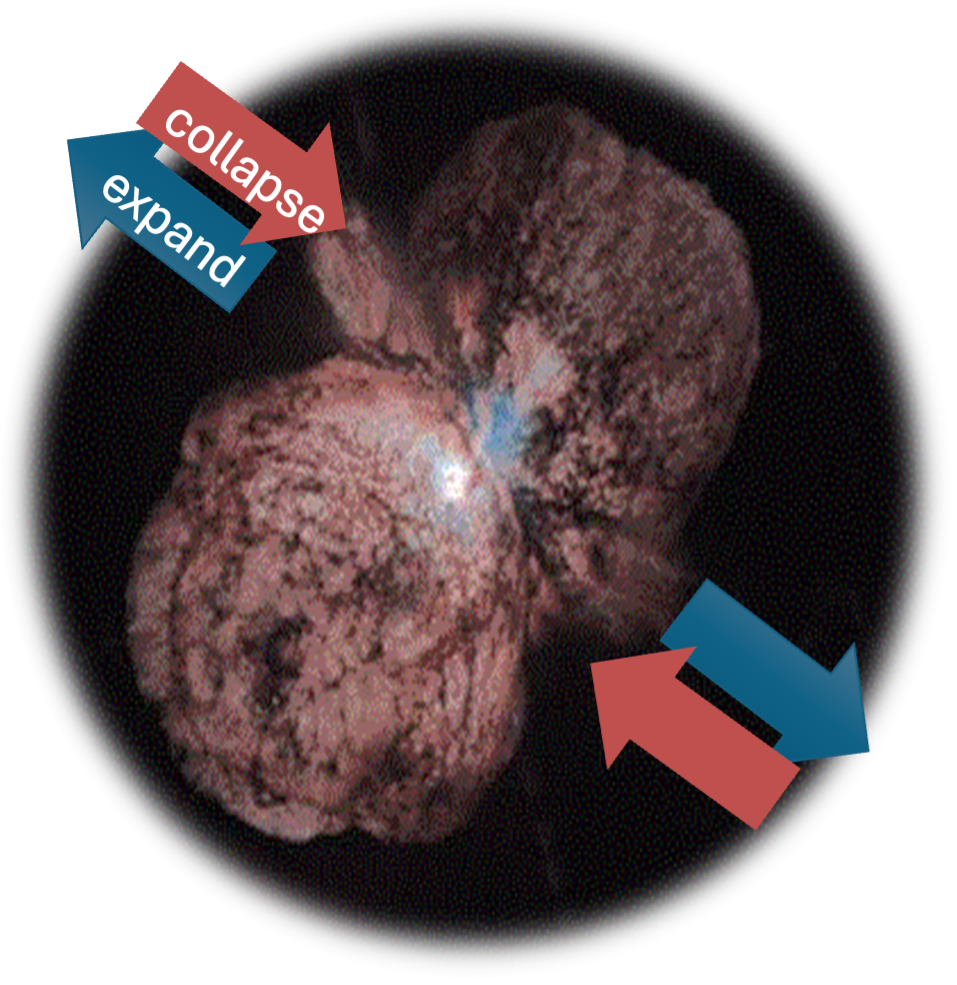 The strength of the gravity force depends on how much stuff makes up the Universe and how close together it all was near the beginning. The expansion of space comes from what has been called dark energy, it is all through the fabric of space, and is stretching out space.
If the Universe didn’t have all the stuff that would eventually make up all those billions and billions of galaxies, then the expansion force would be too strong for the gravity, and space would expand too quickly, gas and dust could not collect by gravity to form galaxies, stars and planets. If there was just a bit more mass, making gravity too strong for the balance near the beginning, everything would pull together, crushing it all into neutron stars and black holes, which means no molecules and no life.
How precise does the balance match what is necessary for life? If, this mass density differed by 1 part in 1060, no life would be here to consider this fact. Let’s put this astronomical number in simpler terms, if at the beginning of the Universe, by chance there had been less than a dime’s worth more or less mass—no life could exist!
And these odds are being generous as scientists looking into this seemingly impossible balance tried to explain it away using dark energy, the force contained within the fabric of space stretching out the Universe. Yet, as has been the trend in studying the perfect balances or “fine-tuning” found throughout nature, it was discovered the precise balance provided by this expansion force is even more precise, as if by chance this force differed by 1 part in 10120, then we would not be here to marvel at it.
So how did the Universe just happen to begin with the perfect balance of gravity and expansion, and just the right mass to enable the creation of all the elements needed for life, when it could have, by chance, begun with any other amount of mass and have no life? Only 2 possibilities, either (1) an intelligent agent ensured the precise condition was met, or (2) it happened naturally by chance.
Hoping to Win the Mega-Millions Jackpot? Over and Over Again!
Let’s put 1060 into a situation where you can see the significance of this number. You have a better chance of winning the Mega Millions State Lotto 7 times in a row, than the Universe did to land on the precise value it did in this case. If one person won the lottery 7 times in a row, what would you be thinking? How lucky? Or, would you rationally be thinking something is going on, some intelligent agent must be acting?
If you are betting against an intelligent agent being behind the creation of the Universe, then you are basing your life, and possibly eternity, on a very bad bet.
And there better not be more examples … Yet there are numerous examples, in fact, on average, every month or so, a new example is published in scientific literature, and mathematically increases the evidence literally by a million times that an intelligent creator is the only reasonable, logical, sufficient, and evidenced-based cause of the Universe—chance has no chance. If you want further details supporting the necessity of intelligent and purposeful agency behind the creation of the Universe, see blogs: Possible Causes of the Universe: There can be only 1; Personal Cause or Purely Nature—We know the Difference; The FINE-TUNED Evidence.
Therefore, the vast, vast Universe was produced with an even vaster purpose for you in mind. This idea doesn’t just sound nice, it is the only one supported by the evidence. And if there is an intelligent agent creating the Universe with a purpose involving you, then it follows there is real purpose and meaning to your life.
This brings us to the final step—getting a graphic display of your purposes and hope of reaching them—found in the next blog.
Graphing YOUR Purpose
You are already basing your life, even determining much of your day today, according to your answer to the “Purpose” question. Best to know how solid your investment is. However, because you may not be entirely aware of your answer, and most of us even have two contradictory answers—the one we claim, and the one we actually base our lives on—let’s make this concrete for you:
- First, we must look at what the options are for purposes of our life, and then use a THOUGHT EXPERIMENT to know more about you
- Second, we will create a GRAPH OF YOU (you just have to add in your list of purposes & priorities)
- Finally, using the graph we can display the LIKELIHOOD OF YOUR HOPE being realized, or your hope being falsified
An Experiment
Step 1. What are the 5 most important potential purposes for your life?
A way to come up with your list would be to think what will impact you in the highest quantity and quality of ways, what things are most important to you. Be honest, as this is for you and about you, and will be less able to correctly predict your future if you are not genuine. List these below, and place them in order of importance:
1.
2.
3.
4.
5.
If you need some options to choose from, here is a list I give to help audiences begin: career, children, education, entertainment, friends, finances, health, intelligence, spouse, spiritual or worldview understanding. Also, a chart below summarizes audience discussions regarding common examples given for purposes of life.
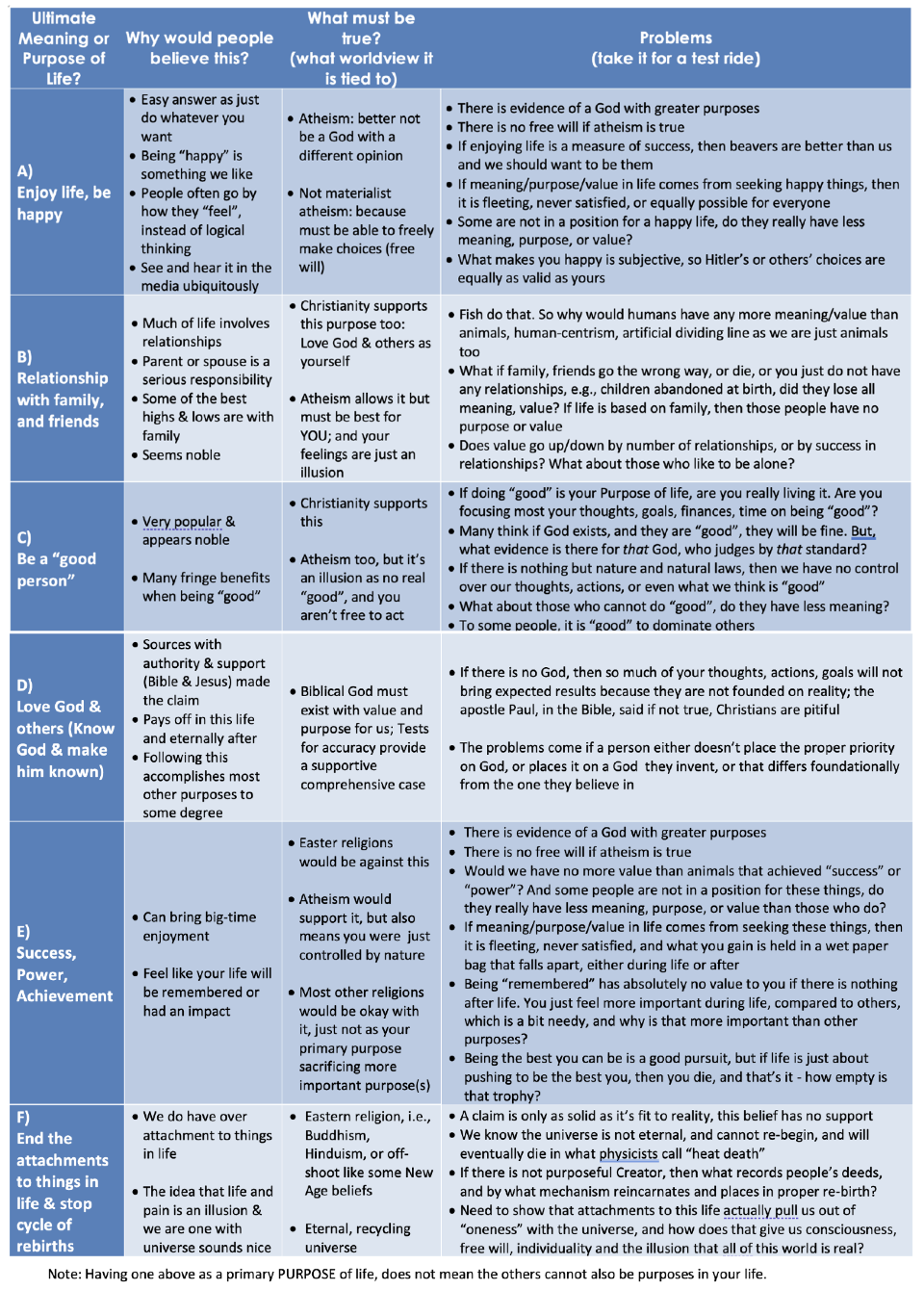
Step 2. Graph your Purposes & Priorities
Here is where the thought experiment comes in: imagine yourself before you were born, and in a position to invest into your life. If you were given exactly 100 diamonds, and told these diamonds are investments, which will bring a level of future success in life to whatever area of life you place them in. How would you divide up these diamonds among your top 5 purposes listed above? Divide the gemstones based on the importance, or how much each purpose means to you compared to the other purposes. The more diamonds you invest into a purpose, the more likely you will have what you hoped for in that purpose, but you only have 100 total to invest into those five purposes in your life.
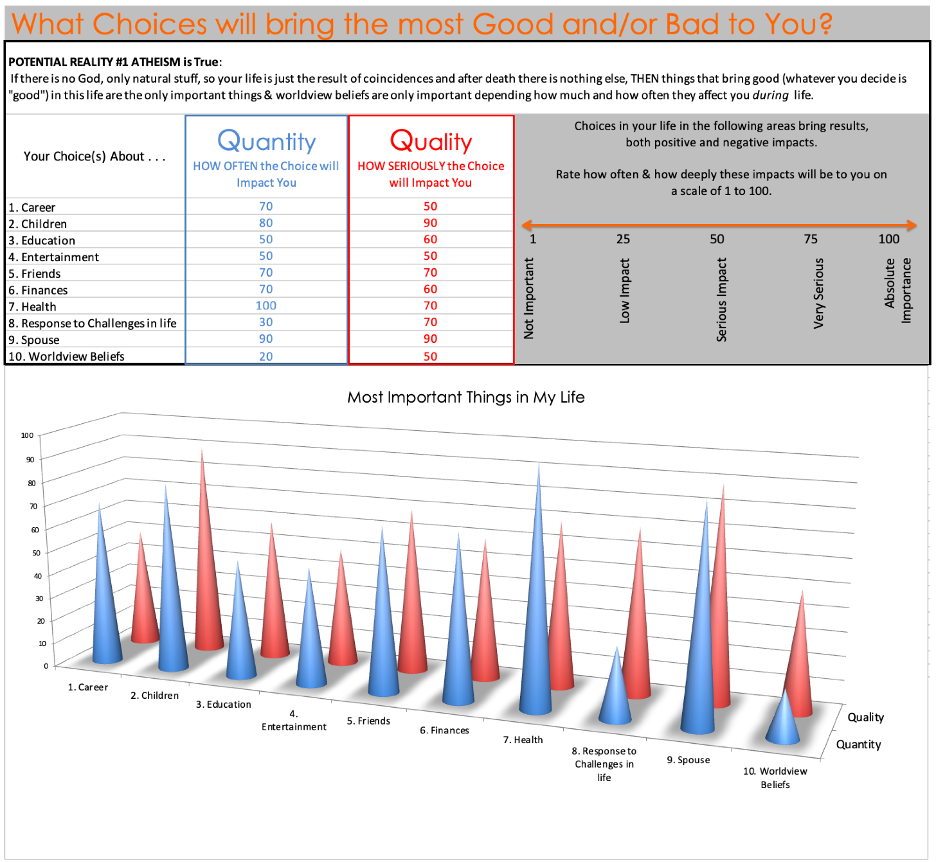
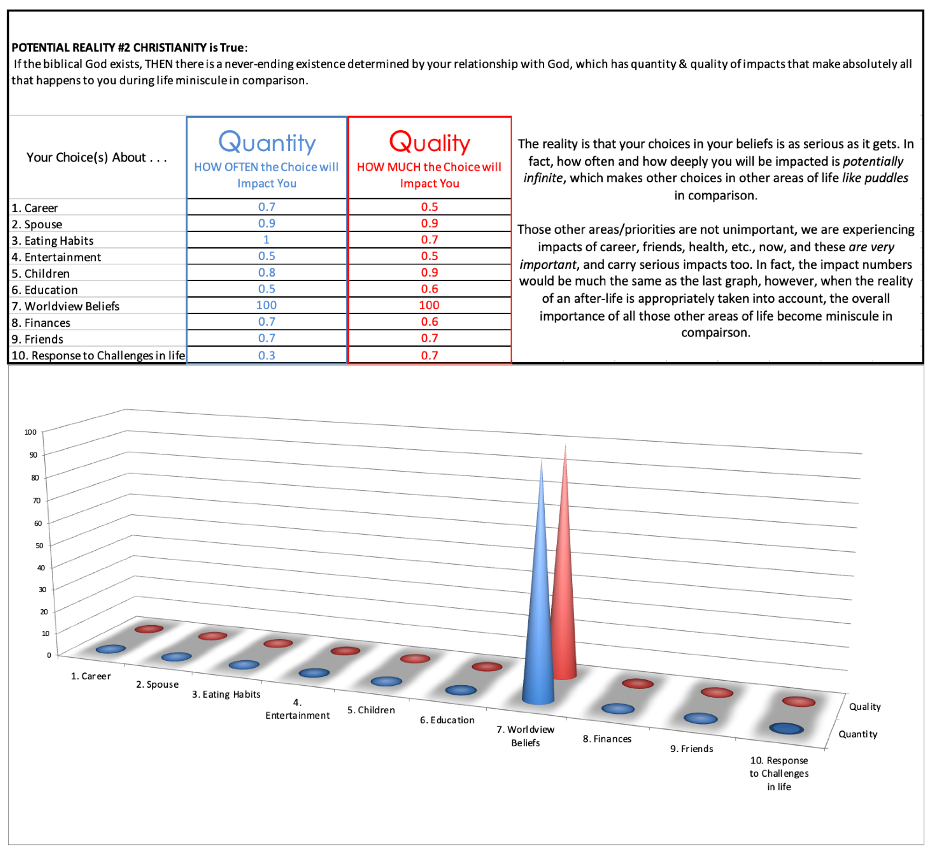
Here are a few examples to look at before you fill in your investments. The first two simply asked audiences to rank 10 most important things in life on a scale of 1 – 100 in both how often this thing would impact your life (Quantity; shown in blue), and how deeply this area of life would impact you (Quality; in red). The first graph shows audience ranking assuming atheism is true (no God exists), and the second graph shows the rankings if Christianity were true.
This last example is from one audience member, and is the graph you will make for yourself after downloading the spreadsheet.
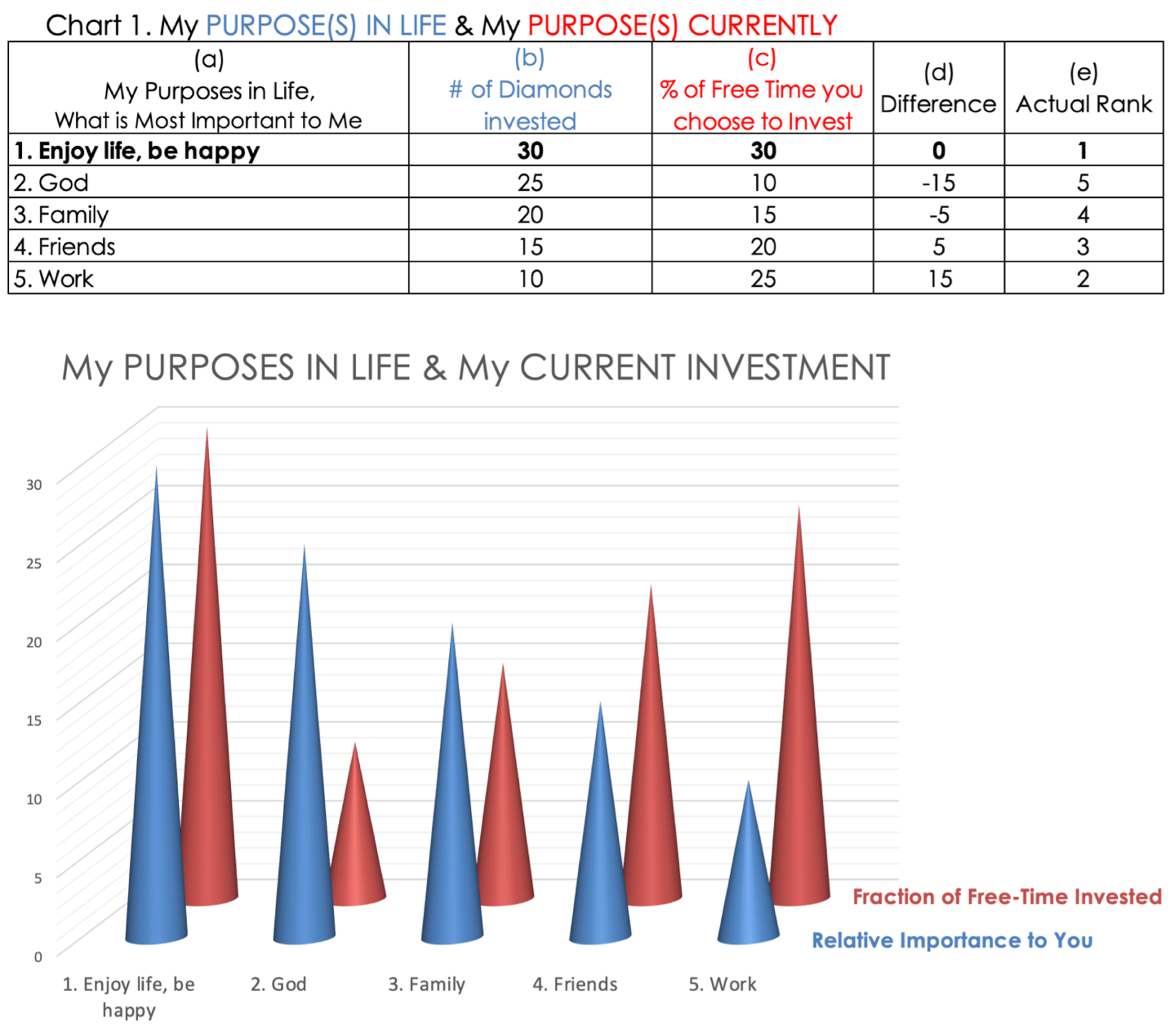
- In column a, list your 5 purposes in order of importance.
- In column b, divide up your 100 diamonds between the 5 purposes.
- In column c, provide the fraction of your free time you invest into each purpose.
When you think of your “free time,” one of the most important commodities in your life, this is the time after all your school, work, family, eating, sleeping, and any things you have to do are done, and you get to choose what to invest your time into. What fraction of that time do you invest into the 5 purposes you claim are most important in your life? This is what tells what is actually most important to you.
For example, as a teenager, if I had 4 hours each weekday, and 7 hours on both weekend days, but I only chose to invest 1/2 hour each day of my free time on activities to develop my relationship with God. Then out of 34 hours of free time per week, I spent 3.5 hours with God, meaning 3.5 / 14 = 10% is what I would enter in column c for relationship with God.
- In column d, the difference is automatically calculated between the fraction of diamonds you want to invest and the fraction of time you actually
If I gave God a 40 in column b, as my top purpose in life, but only gave 10% in column c, then there will be a negative difference in column d, meaning while I SAY God is most important, in PRACTICE I have other things more important. Negative numbers represent decreased likelihood of reaching my best goals or purpose. Positive numbers indicate in practice you care more about the specific purpose than you thought in theory.
- In column e, fill in the actual rank of your most important purposes in life, based on the values in column b.
- Predict your future with the GRAPH of your HOPES.
This is obviously not a comprehensive study, it does not account for all the factors that life may bring to you. However, it does account for what is within your control, and the closer you get to the correct fraction of free time values, the more accurate your answers will be.
Results:
- The blue cones show the relative IMPORTANCE you place on your top PURPOSES in life, and what your top Purpose in life is.
- The red cones show the relative INVESTMENT you make, which shows your current ACTUAL PURPOSES in life.
- The difference between column b and column c display the difference between what you claim is most important & what you live as most important. The greater the negative number, the more you sacrifice that purpose for other things.
- The actual rank or height of each purpose compared to the others, combined with the height difference you see between the blue and red cone for each specific purpose, provide a visual representation of the reliability, or likelihood of your hope or desired expectations being met.
- Your turn: it is up to you to make your life results match your goals. What can be done (problem-solving)?